

LUCAS LEDWABA
CORRUPTION busters have always lamented a paucity of political will by those holding office for lack of action against those implicated in graft, bribery, incompetence and financial skulduggery.
This disturbing fact is corroborated by the findings of a 2018 study, Understanding Political Will and Public Corruption in South Africa [Harris Maduku et al], which concluded “that the legal framework on its own without the support of political-will shall not overcome this cancer [corruption].”
While politicians often make sweeping and hard-hitting public statements about fighting corruption, these are often not followed up by action.
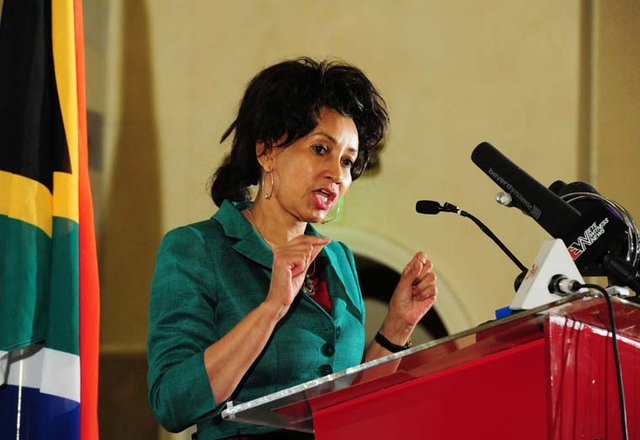
But since taking over the troubled Water and Sanitation portfolio over a year ago, Minister of Human Settlements, Water and Sanitation Lindiwe Sisulu has given an indication she may well be possessing the political will needed to aid corruption busters on their mission to curb graft in government.
Sisulu clearly had no delusions about the task at hand when she was appointed to take over the crisis-ridden portfolio in 2019.
In her budget vote debate speech last winter, the no nonsense minister laid bare her intentions in fighting graft in a department that had run up a bill of over R30 billion in wasteful and unauthorised expenditure when she took over.
She has acknowledged the short time she had been in the hotseat and that her induction into the sector “was heavy and intense, given the magnitude of the work at hand.”
But what she said next underlined her understanding of the enormity of the task ahead.
“When we came in, we found a department that no longer enjoyed the confidence of the people it served, having been eroded by a number of cases of corruption. In essence, I was told I inherited a bankrupt department with problems accumulated over many years,” said Sisulu.
“In summary, this is what the Portfolio Committee instructed me to do in the debate: “sort out this Department and its finances.”
Recent developments indicate Sisulu is on a mission to sort out this crucial portfolio.
She has since gone on a clean out of the boards, most of which had become dysfunctional and muddled in corruption and had raked up a bill of R31 billion in irregular and wasteful expenditure by the time she took over the portfolio in 2019.
In May, she terminated the term of the interim board at Amatola Water in the Eastern Cape and appointed legal administrators to manage its affairs, saying the entity had “long been characterised by instability and infighting”, which had rendered it dysfunctional.
During the same period, Sisulu appointed an executive caretaker at the Lepelle Northern Water whose board’s tenure had come to an end.
The Lepelle Northern Water is also the subject of an investigation by the SIU.
In early December, police arrested former Lepelle Northern Water Board CEO Phineas Kgahlisho Legodi, businessman Emanuel Matome Sefalafala, Bid Evaluation Committee [BEC] chairperson Gwako Micheal Moseamedi on charges of fraud, alternatively theft, forgery and uttering, relating to a R45 million waste management tender at Lepelle Northern Board.
Other bid committee members arrested alongside Legodi and Moseamedi are Mpho Chokolo, Vusi Mhlongo and Gumani Gangashe.
The minister has since issued a directive to all accounting officers of the department of water and sanitation and affected water boards to provide full support to the SIU “while ensuring that all the cases are concluded as a matter of urgency.”
Her directive came after the SIU’s briefing to the portfolio committee in October.
In August, she gave the KwaZulu-Natal based Umgeni Water board the boot citing an irregular process that saw their term extended by her predecessor, Gugile Nkwinti, who held the portfolio between February 2018 and May last year.
Sisulu could perhaps take heart to the SIU’s undertaking before the portfolio committee that it has adopted a new strategy not to investigate cases for more than one year.
This was after the committee heard that a case involving the Mhlathuze Water Board had been dragging for 12 long years.
The SIU said in cases where this happened, it will now issue an interim report on the investigation.
The SIU investigations into the boards reveal a messy trail of total disregard for basic procurement and public finance management principles and ethics.
The parliamentary portfolio committee on human settlements, water and sanitation recently heard that the SIU’s probe into the department of water and sanitation had uncovered malpractice and maladministration, including procurement irregularities, fruitless and wasteful expenditure, irregular expenditure, fraud and theft, and corruption.
That some of the declarations by the SIU date back over five years and even longer, may well point to a lack of political will by previous principals to vigorously pursue the cases.
The committee further heard that the investigations had resulted in 58 different referrals by the SIU and that the entity was pursuing civil litigation amounting to over R3 billion in a bid to recoup looted public funds.
Sisulu’s hard-line approach against corrupt and incompetent officials within the entities under her portfolio is starting to bear fruits, with some of the water boards now receiving clean audits according to the latest auditor general’s reports.
Those that received clean audits include Mhlathuze Water Board and Magalies Water.
Lepelle Northern Water, Umgeni Water Board and Trans Caledon Tunnel Authority (TCTA), all received unqualified audit reports.
While the SIU’s revelations and intentions sound promising, it remains to be seen whether indeed the wheels of justice will eventually roll into motion.
But perhaps this time Sisulu, who has served in government since 1994 in various portfolios including intelligence, military veterans, housing and public service and administration is on the money.
If her pronouncements before parliament and the hard line against the water boards is anything to go by, then corruption busters like the SIU may have found an ally who lives and walks the talk.
Maduku concludes in the research paper published by the Journal of Social and Development Sciences (ISSN 2221-1152): “When corruption becomes entrenched, its negative impacts increase. It prompts pessimism, since individuals start to view it as the standard or norm of the society. It undermines social qualities since individuals think that it’s less demanding and more lucrative to take part in corrupt practices than to look for genuine business. It disintegrates administrative authenticity since it hampers the successful conveyance of public products and ventures.”
- Inside Metros