
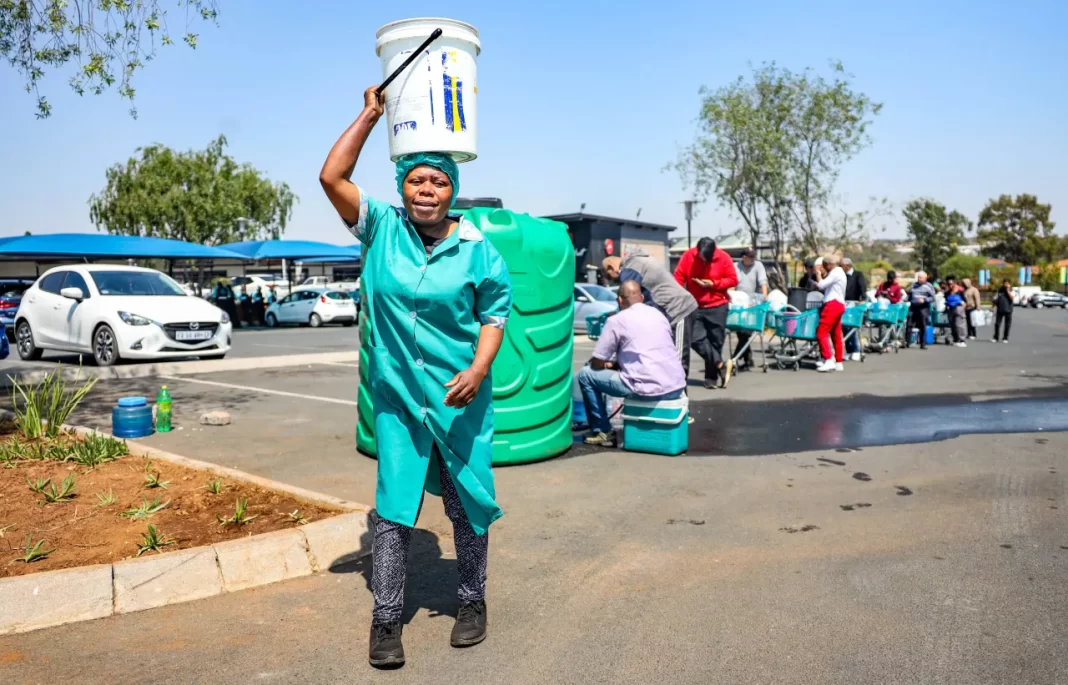

The Democratic Alliance (DA) has raised concerns about the lack of urgency in addressing Gauteng’s looming water “Day Zero.”
According to Stephen Moore, DA Deputy Spokesperson on Water and Sanitation, municipalities across the province are failing to act decisively to prevent a crisis.
Moore noted that cooler weather, consistent rainfall, and reduced water demand during the holiday period may have temporarily averted water shortages in December. However, as schools reopen, businesses resume operations, and residents return, water consumption is once again climbing to record levels.
“This crisis is not the fault of paying consumers but of failing municipalities that lose nearly half of their clean water through non-revenue water losses,” said Moore. “Until this is corrected, the high volume of wasted water will inevitably lead to a ‘Day Zero’ for Gauteng.”
Last week, Gauteng recorded its fifth-highest weekly water consumption in the past year, with 3,502 megalitres consumed—just shy of November’s peak of 3,577 megalitres.
“The City of Johannesburg alone loses approximately 575 megalitres of water weekly—over 35% of its supply—through leaks and faults,” Moore revealed. “This is entirely unacceptable and highlights the scale of municipal mismanagement.”
Ekurhuleni recorded its highest weekly water consumption in over a year, potentially setting a new record, while Tshwane is also experiencing steadily increasing demand despite lower usage overall. Reservoir levels, which had recovered from 30% in December to 70% in early January, are already dipping below 70% due to renewed demand.
“These figures serve as a stark warning that Gauteng’s water crisis is far from over,” said Moore.
Moore emphasized that the solutions to Gauteng’s water challenges are clear but require political will.
“Significant investment is needed to repair leaks, modernize infrastructure, and expand capacity. Proactive, ongoing maintenance must replace the current reactive approach, where systems are only addressed after failures occur, often resulting in prolonged shutdowns,” said Moore.
“Transparent and effective oversight of water boards and municipalities is equally critical. The ongoing mismanagement of water resources has exacerbated the crisis, yet no political leaders or officials in Gauteng have been held accountable for these failures.”
She said residents also have a role to play.
“By reporting leaks, conserving water, and participating in awareness campaigns, communities can contribute to mitigating the crisis. Every drop saved is a step toward securing Gauteng’s water future,” she said.
“Gauteng municipalities must learn from past failures or risk repeating them,” Moore warned.
“If residents face water shortages in the coming months, municipalities will have only themselves to blame.”
INSIDE METROS