

By Thebe Mabanga
South Africa’s municipalities will be equipped to better respond to disasters, while their governance and financing model is being overhauled, including a review of conditional grants to improve service delivery.
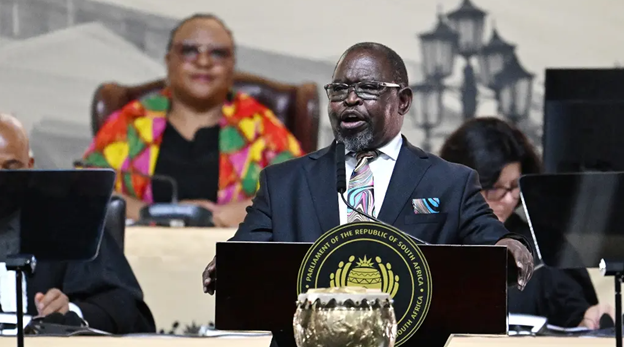
These are some of the measures contained in this year’s Budget tabled by Finance Minister Enoch Godongwana on Wednesday in Cape Town.
Municipalities are set to benefit from the latest wave of economic reforms, Operation Vulindlela Phase 2, as announced by President Cyril Ramaphosa in the State of the Nation Address (SONA).
One of the objectives of the second phase of OV is “strengthening local government and improving the delivery of basic services.”
“The decline in municipal services is evident across cities, towns and rural villages highlighting the systemic challenges faced by this varying group of municipalities,” said Godongwana.
Municipalities receive just under 10 % of nationally raised revenue, with their equitable share in this year’s budget standing at R99,5 billion.
This is then supplemented by conditional grant allocation of R 52 billion as well as an allocation from the fuel levy of R16,1 billion for a total local government allocation of R 168 billion.
The equitable share is to fund increases in the cost of bulk water and electricity costs provided for free to needy households.
Godongwana said the coming financial year, 83% of the local government equitable share provides a free basic services package of R610 per month to 11.2 million poor households.
“This package of free municipal services continues to be a key tool for reducing poverty and inequality, raising living standards and facilitating access to greater economic opportunities,” the finance minister said.
The minister devoted some time addressing weakness in disaster response.
“Our municipalities stand at the frontline of disaster response, yet they are hamstrung by ageing infrastructure, bureaucratic fragmentation, and limited access to emergency funds,” said the minister, also noting “the incentives in our current disaster management system are skewed towards relief and rehabilitation.”
He also noted that municipalities need to move towards mitigation and disaster readiness to minimise damage.
This year’s budget allocates R1.7 billion to respond to future disasters over the next three years, while R4 billion is provisionally allocated to address backlogs in recovery efforts from previous disasters for provinces and municipalities.
According to the Budget Review, “municipalities face governance, accountability and capacity challenges, with persistent irregular expenditure, rising debt accruals and declining revenue generation.”
The Review notes that additional provision for disaster risk financing reforms aim to enhance resilience while “conditional grant reforms focus on streamlining, enhancing flexibility and aligning resources with service delivery priorities.”
As part of Operation Vulindlela Phase 2, the institutional structure of local government will be reviewed through the updating of the White Paper of Local Government.
According to the minister, “the review of the local government fiscal framework will examine how to appropriately finance local government, relative to their functions and their form.”
There will also be reforms to the revenue generating services of local government, which includes water and sanitation, electricity and refuse removal.
“By ring-fencing the revenues from these services, and running operating surpluses, these business units can generate funds for infrastructure improvements to deliver quality and reliable services.” the minister said.
One of the most important conditional grants for municipalities is the Municipal Infrastructure Grant (MIG), which makes transfers to supplement the capital budgets of municipalities to address infrastructure investment priorities for poor households.
According to the Estimate of National Expenditure, for the current financial year, the MIG allocation was R17 billion.
The percentage of municipalities that receives MIG and use 60% of their allocation in a year is expected to increase from 69% in 2023/2024 to 85% in this year, highlighting the capacity challenges that municipalities are grappling with.
Budget documents also show that six of the eight metropolitan municipalities have met the minimum requirements to participate in the financial performance incentive grant, the Urban Development Financing Grant.
Further allocations of this grant depend on meeting specific performance targets.
INSIDE METROS