

By Nkhensani Chauke
The City of Tshwane has unveiled the Tshwane Automotive City Master Plan, a bold initiative to transform 7,157 hectares in Rosslyn into a world-class automotive manufacturing hub.
The project aims to drive economic growth, attract investment, and create at least 150,000 jobs.
Member of the Mayoral Committee (MMC) for Economic Development and Spatial Planning, Sarah Mabotsa, said the plan will position Tshwane as a globally competitive automotive hub.
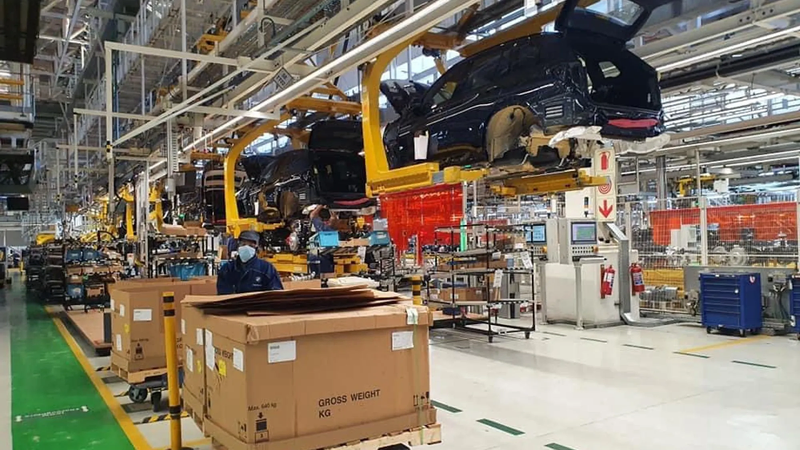
“The Rosslyn precinct is already home to four major automotive assemblers: BMW, Nissan, Tata and Iveco. The purpose and vision of the Master Plan is to transform this already important precinct into Africa’s largest automotive industrial park. This strategic infrastructure project will be implemented in phases over an estimated 40 to 50 year period of development. Investment from both the public and private sectors is required to fully implement the project,” said Mabotsa.
“The Master Plan has been developed by the Automotive Industry Development Centre in partnership with the City of Tshwane, the Gauteng Provincial Government, the Gauteng Growth and Development Agency and others. It was tabled by the Department of Economic Development and Spatial Planning to Council on Thursday 27th March 2025 and serves to support and enable the expansion of the automotive industry in Tshwane.”
Mabotsa added that the project aims to attract both foreign and local investment into this multi-billion-rand infrastructure program, transforming Rosslyn and its surrounding areas into a massive industrial park that will drive economic growth and job creation.
She said the development will feature multiple nodes, including a logistics hub to support advanced supply chain networks, a commercial and recreation zone with retail centers, malls, banks, and restaurants, a community and civic space with housing, parks, public spaces, and transport links, and an industrial sector housing factories and manufacturing sites.
“A comprehensive public participation process has been followed and as part of the process, public comments have been addressed and incorporated into the plan,” said Mabotsa.
“The Master Plan has also received unanimous support from all departments within the City of Tshwane. The Energy and Electricity Department has confirmed there is sufficient bulk capacity to support the development and, as the City is a major landowner in the area, the Master Plan provides a route for the strategic use of the city’s assets for the benefit of our residents.”
Mabotsa highlighted that Tshwane, home to over 4 million people, contributes 25% to Gauteng’s R133 billion economy and around 9% to South Africa’s total Gross Domestic Product (GDP).
However, despite this, more than a third of job seekers in the city remain unemployed due to a lack of opportunities. She emphasized that boosting the economy and supporting business growth are crucial to job creation.
She also expressed gratitude to the Council and Tshwane residents for their support in revitalizing the city’s economy.
“We thank the Council and residents of Ishwane for their support as we work to revitalise the economy of our Capital City. We must ensure that more of our residents are given the chance to provide for their families through the dignity of employment,” said Mabotsa.
INSIDE METROS