

By Johnathan Paoli
Eskom has disclosed that 87% of municipalities approved for the National Treasury’s Municipal Debt Relief Programme have not met its conditions, contributing to a staggering R94.6 billion debt burden.
Addressing Parliament, Eskom said that this mounting municipal debt poses a significant threat to its long-term viability, noting a decline in payment levels by municipalities.
The power utility attributed this trend to entrenched structural and systemic issues within local governments.
Eskom’s CFO, Calib Cassim, underscored the urgent need to steer Eskom towards financial self-sufficiency.
“Our concern is sustainability. We cannot continue relying on bailouts. The municipal debt issue is beyond Eskom’s capacity to solve alone. We need coordinated action from the Treasury and Cooperative Governance,” Cassim said.
The power utility revealed the alarming figures during a briefing to Parliament’s Standing Committee on Appropriations, warning that unpaid municipal bills—now at R94.6 billion—remain its greatest financial threat.
Despite National Treasury’s interventions aimed at stabilising Eskom’s finances, the culture of non-payment has only worsened.
Eskom’s General Manager for Finance, Rajen Naidoo, told MPs that municipalities face systemic challenges such as illegal connections, meter tampering, and inaccurate billing—factors that continue to undermine their ability to settle current accounts and reduce outstanding debt.
“Municipal debt is a key risk to Eskom’s business and overall liquidity. Energy losses are rampant, driven by theft and poor infrastructure. But more troubling is the lack of a functioning revenue model within many local governments,” Naidoo said.
The numbers paint a dire picture of municipal payment levels being on a steady decline, while the debt burden has become an anchor dragging Eskom’s recovery efforts.
This comes in spite of the Eskom Debt Relief Bill, which aims to alleviate the power utility’s debt and reduce its dependence on Treasury bailouts — nearly R400 billion in recent years.
Currently, five municipalities account for 40% of the total debt.
Eskom said it is exploring various interventions including disconnections, litigation, and a shift to prepaid electricity systems, though these measures have historically faced political resistance.
MPs from across the political spectrum expressed frustration at Eskom’s failure to aggressively enforce debt recovery measures, noting that the problem has persisted for years despite repeated parliamentary oversight.
The standing committee urged stronger cooperation between Eskom, Treasury, and the Cooperative Governance and Traditional Affairs department to ensure that municipalities adhere to Distribution Agency Agreement obligations.
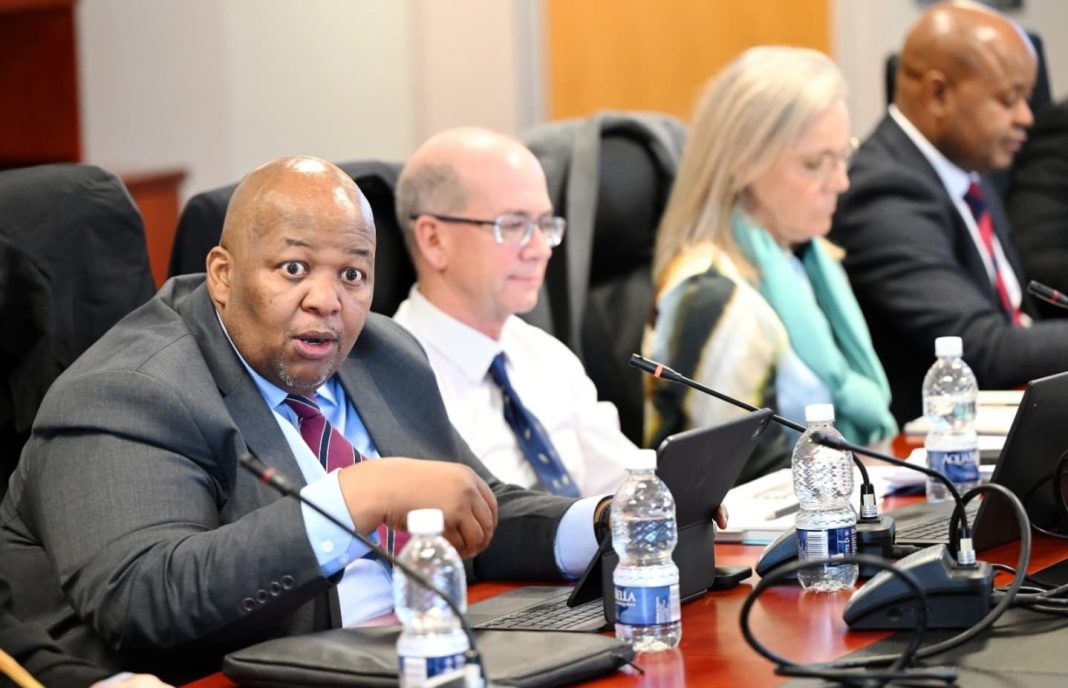
Committee Chairperson Mmusi Maimane warned that Eskom’s financial viability remains under threat.
“We fear Eskom will remain heavily indebted even with the debt relief provisions. The failure to deal with underperforming and financially distressed municipalities is undermining the entire system,” Maimane said.
The committee also criticised Eskom for failing to address “ghost tokens” in the prepaid electricity system, referring to fraudulent or duplicated tokens which have led to significant revenue losses.
Additionally, MPs called for urgent reforms to curb internal sabotage and to reduce the utility’s reliance on politically sensitive Independent Power Producers.
The parliamentary briefing comes after Auditor General Tsakani Maluleke declared the Treasury’s Municipal Debt Relief Support Programme a failure.
Presenting the 2023/24 audit outcomes for local government, Maluleke similarly revealed the majority of municipalities involved in the programme are not complying with the very conditions they agreed to.
“Lack of accountability, especially at the political level, means the problems will likely persist. Municipalities are running unfunded budgets, mismanaging indigent support, and even providing benefits to the deceased or ineligible people,” Maluleke said.
Out of 113 municipalities operating on unfunded budgets, more than 80% have been doing so for three consecutive years.
Maluleke noted that creditors are waiting an average of 286 days to be paid, and settlement arrangements with Eskom are frequently ignored or defaulted on.
Unauthorised expenditures, overdrafts and internal inefficiencies have pushed many municipalities into financial ruin, further aggravating Eskom’s collection crisis.
The combination of structural municipal dysfunction, Eskom’s own governance issues, and weak enforcement has created a vicious cycle of underperformance.
Parliament and the Auditor General agree that urgent and systemic reforms are needed to prevent Eskom from collapsing under the weight of unsustainable municipal debt.
With winter demand rising and Eskom’s finances under strain, both MPs and oversight bodies warn that without immediate, coordinated national action, the utility’s liquidity crisis could deepen, putting not only Eskom but the country’s energy security at risk.
INSIDE METROS