

By Johnathan Paoli
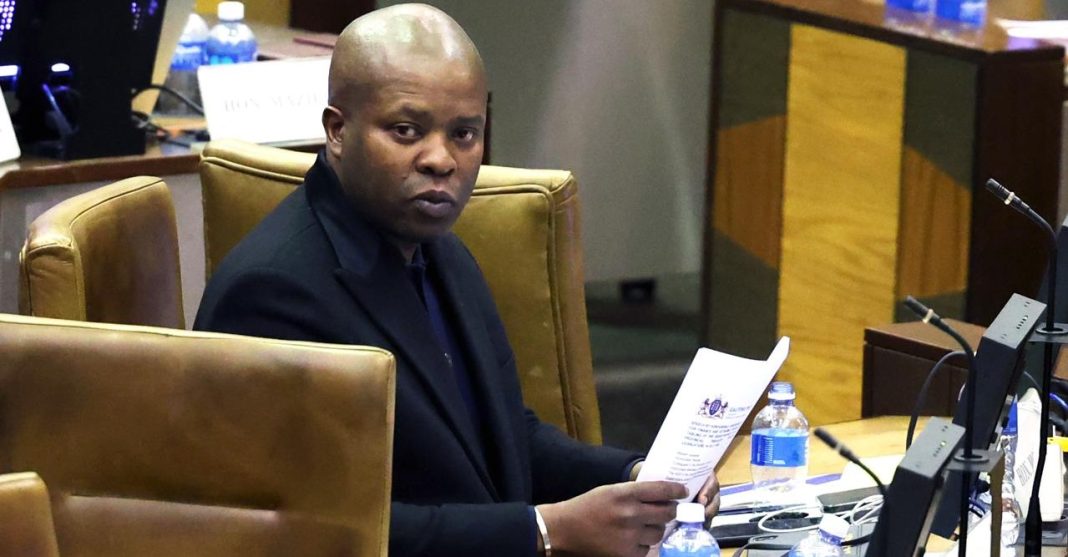
Gauteng MEC for Finance and Economic Development, Lebogang Maile, has described the provincial budget as both a financial plan and a moral commitment to the people of Gauteng, in the face of rising socioeconomic pressures, slow growth, and increasing demand for public services.
Maile tabled the Gauteng Provincial Treasury’s 2025/26 Budget Vote before the provincial legislature on Tuesday, outlining a focused departmental budget of R787 million.
“We are committed to responsive governance, clean administration, and professional public service, Because mismanagement of public finances affects the poor the most and it is for them that we must get it right,” he said.
Maile said the Treasury’s budget aims to promote responsible financial management, drive inclusive development, and strengthen local government stability.
He outlined plans to enforce fiscal discipline, boost revenue collection, combat corruption, and increase support to municipalities.
Maile cautioned that the province continues to face sluggish economic growth, high youth unemployment, and the strain of rapid population growth on service delivery.
He echoed Gauteng Premier Panyaza Lesufi’s 13 key challenges from the 2025 State of the Province Address, reaffirming the Treasury’s role in steering resources toward transformation and sustainable development.
“Managing public finances in this environment is not just a constitutional obligation, but a moral responsibility. Our duty is to ensure that every available rand delivers value, addresses inequality, and improves people’s lives,” Maile said.
The Gauteng Provincial Government’s total 2025/26 budget of R172.3 billion will fund key priorities under the Provincial Medium-Term Development Plan, including job creation, improved living conditions, and the building of a capable and ethical state.
The provincial treasury’s R787 million budget will fund internal outcomes such as: sustainable fiscal resource management (R118 million); financial governance (R137 million); provincial supply chain management (R116 million); audit services (R155 million); and municipal financial management (R85 million).
These units will drive efforts to professionalise financial management, improve audit outcomes, and strengthen the integrity of supply chain systems.
Maile announced a decisive effort to contain the provincial wage bill at no more than 60% of the overall budget to prevent crowding out service delivery allocations.
The provincial treasury will also lead cash flow and debt management strategies, particularly in anticipation of repayments related to the controversial Gauteng Freeway Improvement Project (e-tolls).
“In a constrained fiscal environment, this debt repayment requires spending restraint, improved revenue collection, and strict compliance with supply chain regulations,” Maile said.
The department’s revenue enhancement strategy, launched at a June workshop, seeks to boost provincial income collection in collaboration with departments and municipalities.
Digitisation remains a priority, with the department to implement electronic bill presentation and payment systems; e-commerce platforms to limit cash handling; and an invoice management system, introduced in April 2025 to speed up supplier payments and meet the 30-day payment policy,
Automation of annual financial statements will continue, with a rollout to provincial entities following success in departments.
This aims to reduce audit misstatements and enhance financial transparency.
Maile reaffirmed Treasury’s zero-tolerance stance on corruption, stating that the Open Tender system will continue, with all bids over R2 million subjected to probity audits.
Since 2014, over R42 billion in contracts have been awarded through this model.
The Clean Audit Strategy will also be expanded via strengthened internal audits, automated reporting, and real-time compliance monitoring.
Recognising the central role of municipalities in delivering basic services, Maile highlighted the Municipal Finance Hands-on Support Programme, which deploys technical advisors to help budget and treasury offices.
The programme has contributed to improved audit outcomes and helped several municipalities participate in Eskom’s Debt Relief Programme.
Key achievements include Emfuleni Municipality granting a R1.9 billion debt write-off; while Mogale City receiving R79 million in debt relief.
The Treasury is also tackling the issue of unfunded municipal budgets by deploying a budget funding tool to ensure financial plans are realistic and legislatively compliant.
Maile raised concerns over municipalities’ trading services operating at a loss, driven by unsustainable tariffs and high distribution losses in water and electricity. He committed to helping municipalities revise revenue enhancement strategies to ensure viability.
The Treasury will intensify initiatives such as the annual and interim financial statement accelerator programmes; and evidence-based planning, including the Gauteng Municipal Economic Review and Outlook, launched last month.
This publication is a data-driven guide for municipalities’ integrated development planning and local economic strategies.
Maile also highlighted the R14.3 billion municipal capital budget for 2025/26, with significant allocations to sanitation and energy infrastructure, while urging municipalities to expedite project delivery to close service gaps and reduce backlogs.
INSIDE METROS