

By Akani Nkuna
The Democratic Alliance’s new economic plan calls for urgent reforms to fix dysfunctional municipalities and stabilise government coalitions. The party’s plan said this could be achieved by setting electoral seat thresholds and reducing the frequency of motions of no confidence without valid reasons.
The party further said that this would prevent the revolving door of mayors such as seen Johannesburg, Ekurhuleni and City of Tshwane.
It also added that local government must be professionalised through the appointment of public servants based on merit and qualification, with zero tolerance for cadre deployment, and providing access to upskilling programmes for councillors, staff and communities must be a priority to enhance governing capacity.
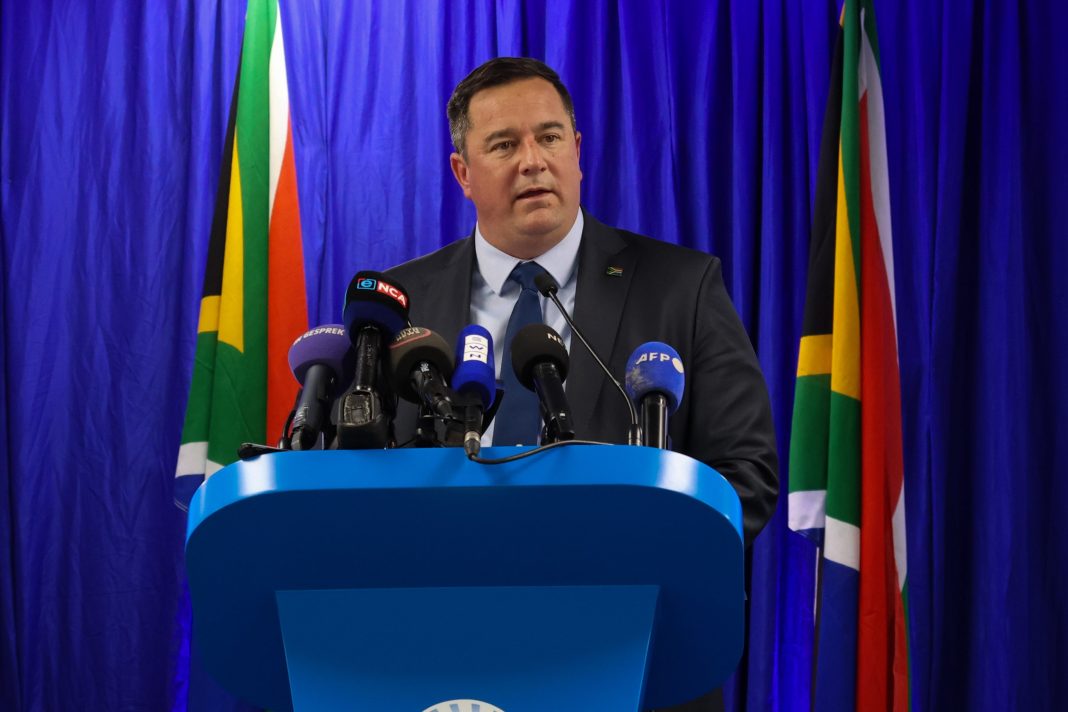
Party leader John Steenhuisen unveiled the plan on Monday, saying the DA would pressure the African National Congress to accept the proposed reforms and dismantle legislative barriers, including the Broad-Based Black Economic Empowerment Act, the Employment Equity Act and the Expropriation Act.
“Today, I launch the party’s six-point plan to turbocharge the economy. This bold results-driven plan outlines a set of non-negotiable demands to reform which will kick-start our economy and set South Africa on a path to growth and jobs,” he said in a statement.
Steenhuisen said local government is the bedrock of a growing economy.
“When municipalities function effectively, they provide the infrastructure, services, and stability that businesses need to invest, grow, and create jobs,” said Steenhuisen.
“However, South Africa’s local governments are in crisis. Of the country’s 257 municipalities, only 34 received clean audits in 2023, with the Auditor-General reporting fruitless and wasteful expenditure reaching up to R7.4 billion in 2023 across all municipalities.”
“In 2023, the number of distressed and at-risk municipalities was also at a high, 196 (or 76 percent) of municipalities. Failures and the risk of collapse of local governments are not primarily the result of structural design flaws, but rather a consequence of poor governance, corruption, and the politicisation of appointments.”
The DA’s plan says ANC’s centralised, patronage-driven model of governance is a direct cause of the dysfunction “we now see across South Africa’s municipalities.”
The party said instead of empowering capable administrations to deliver services, the ANC continues to prioritise cadre deployment.
It said this has hollowed out the state’s capacity and entrenched a culture of impunity.
The party also said municipal appointments are routinely made based on political connections rather than qualifications, leading to underqualified officials managing multi-million-rand budgets and critical infrastructure.
“Institutional memory and operational effectiveness of local governments have been decimated, which could make reform more difficult the longer they are delayed. The ANC also resists the devolution of power to local governments, fearing a loss of political control, even as central government departments have failed to perform their responsibilities,” said the DA.
“The ANC in the national government continues to restrict municipalities from making key decisions on policing, transport, or infrastructure partnerships, areas where they could significantly improve outcomes if given the authority.”
“Rather than enabling reform, the ANC has doubled down on top-down control, insulating failing municipalities from consequences while punishing reformist administrations. This command-style governance model is incompatible with the agility, professionalism, and innovation needed to turn South Africa’s ailing municipalities around.”
The party’s plan also proposed sweeping regulatory reforms to establish a business-friendly environment which enables entrepreneurship, investment and job creation.
“This includes scrapping B-BBEE and replacing it with the DA’s non-racial economic empowerment model based on the internationally recognised United Nations Sustainable Development Goals (SDGs). This model will target poverty instead of race, ensuring that no deserving South African is excluded,” a summary of the plan reads.
“In addition, key reforms to cut red tape, simplify business licensing and permits, and exempt SMMEs from bargaining council agreements must be implemented. The DA also calls for a commission of inquiry into race-based development finance institutions, to determine how much of these funds have been distributed to ANC-linked individuals at the expense of those trapped in poverty.”
Secondly, the DA seeks to energy wealth by fast-tracking the horizontal unbundling of Eskom and establishing a competitive energy market that delivers stable and affordable electricity.
It wants the ringfencing of municipal electricity revenues for infrastructure maintenance and investment, and renewable energy projects to be expanded alongside feed-in tariffs, which support “prosumers”.
Thirdly, it proposes fixing collapsing freight rail and ports by accelerating the concession of freight rail lines and port terminals to capable private operators through transparent and competitive tendering processes.
It said this must be done alongside the modernising, upgrading and maintenance of port and rail infrastructure and the strict enforcement of the law against those who damaged or interfered with essential infrastructure.
The party has called for a comprehensive review of South Africa’s tariff regime to lower input costs for manufacturers and exporters must be implemented.
To improve digital infrastructure, Steenhuisen said the rapid rollout of broadband infrastructure must be accelerated, and free public Wi-Fi expanded nationally.
On wasteful expenditure, the DA said the first step would be to conduct a comprehensive, government-wide spending review, while strengthening the implementation of recommendations from previous reviews.
“A three-month emergency review should aim to identify wasteful, underperforming and duplicative programmes, allowing the reallocation of funds to essential public services such as healthcare, policing and education by the time the Medium-Term Budget Policy Statement is tabled,” the summary reads.
“We must also introduce a fiscal rule into the expenditure framework to serve as a clear anchor for fiscal discipline by locking national debt to the level presented in the most recent budget.”
“Wherever budget waste is found, it must be cut, and a ‘ghost employee’ payroll audit must be launched to eliminate ghost workers wherever they are found.”
INSIDE METROS