

BY Lebone Rodah Mosima
The Gauteng Department of Cooperative Governance and Traditional Affairs (CoGTA) has urged municipalities to strengthen collaboration with provincial and national government in order to improve audit outcomes, enhance governance, and accelerate service delivery.
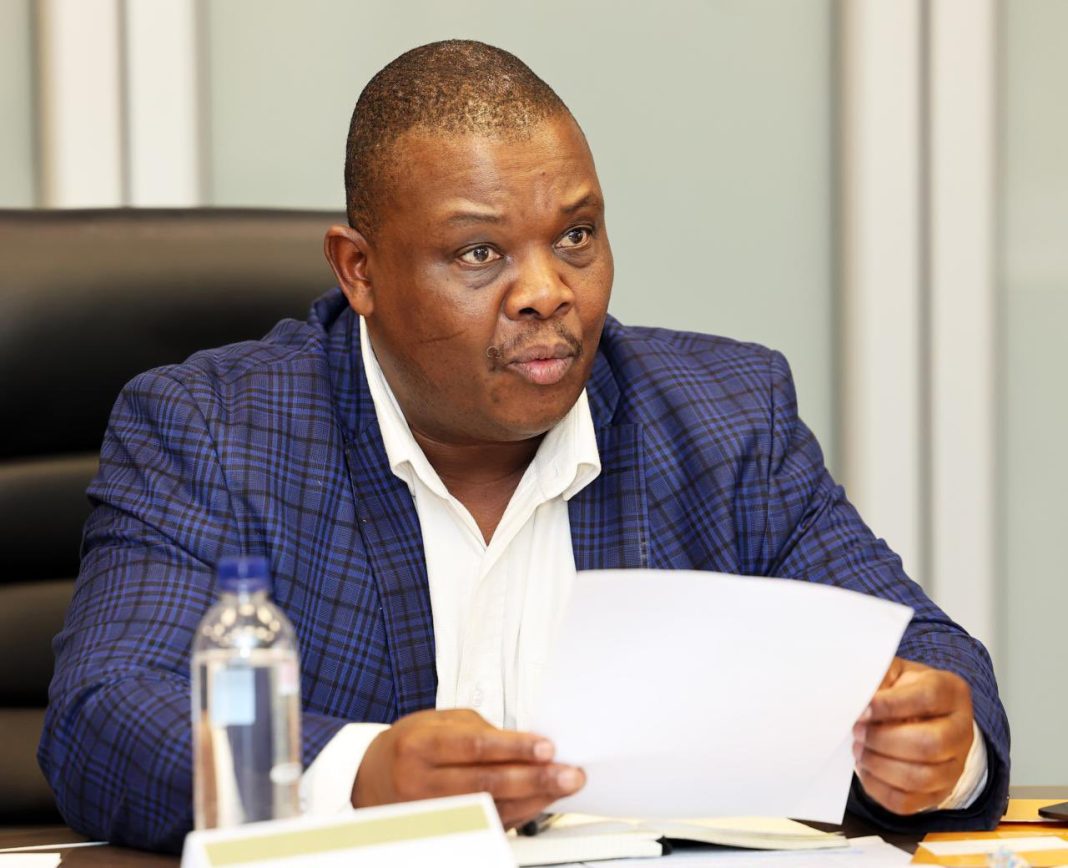
Tabling the department’s 2024/25 Annual Report in the Gauteng Provincial Legislature, CoGTA MEC Jacob Mamabolo stressed that while municipalities remain the “heartbeat of service delivery,” they continue to face serious challenges, including financial instability, poor revenue collection, unstable coalitions, ageing infrastructure, and the growing impact of crime and corruption.
“We know the pressures municipalities face. But we also know that by working together across spheres of government and with communities, we can restore trust, improve audits, and strengthen performance. Clean governance is not just about compliance, it is about making sure every cent works for our people,” said Mamabolo.
His spokesperson, Theo Nkonki, told Inside Metros that municipalities will be held accountable if they fail to act on audit findings.
He highlighted ongoing departmental interventions and support mechanisms already in place.
“…And so we are proactive and that is why, if you look at the government turnaround summit that was held last year, those work streams are meeting consistently to make sure that we don’t wait for any eventuality,” Nkonki said.
“We monitor. We support each other as the year goes, so that by the time we get to the period of audit, we know exactly where the municipalities will be standing.”
To combat corruption in the rollout of new financial systems, Nkonki noted that plans are underway to introduce preliminary audits, enabling municipalities to detect and correct issues before final audits.
He also pointed to measures to strengthen safety and security, noting that in April mayors across Gauteng signed an Integrated Safety Agreement to coordinate crime-fighting efforts.
This agreement supplements the national memorandum with metros and allows resource-sharing with smaller municipalities.
“If we’re talking about integration, how do we as Gauteng make sure that the battle against crime is a one Gauteng battle?” he asked.
“Criminals do not see borders between municipalities. When a crime is committed, it doesn’t matter if it’s in Johannesburg. Criminals don’t operate in a singular space.”
Under this framework, law enforcement can operate across municipal boundaries to collectively tackle vandalism, corruption, and lawlessness.
CoGTA continues to partner with the Provincial Treasury, the South African Local Government Association (SALGA), and the Auditor-General to strengthen financial oversight.
Initiatives include Operation Clean Audits, Audit Preparation Workshops, and the roll-out of Simplified Revenue Plans, giving municipalities tools to improve financial management, strengthen billing systems, curb irregular expenditure, and prepare for audits more effectively.
“Our role as the provincial department is to provide the necessary frameworks and partnerships. But municipalities themselves must lead with integrity, act on audit findings and ensure consequences management is implemented without fear or favour,” Mamabolo said.
Nkonki noted that the comprehensive review of the 1998 White Paper on Local Government, launched in May, is examining unstable coalitions, with reforms expected to strengthen provincial governance and enhance service delivery.
INSIDE METROS