

By Thapelo Mpatlanyane
Eastern Cape MEC for Finance, Mlungisi Mvoko, says a cross-functional medico-legal team led by the Provincial Treasury has made notable progress in reducing new claims and expediting writ processing, mitigating one of the province’s most significant fiscal risks.
Financial recovery support was also extended to distressed municipalities including Makana, Amathole, OR Tambo, Walter Sisulu, and Enoch Mgijima, ensuring uninterrupted delivery of basic services.
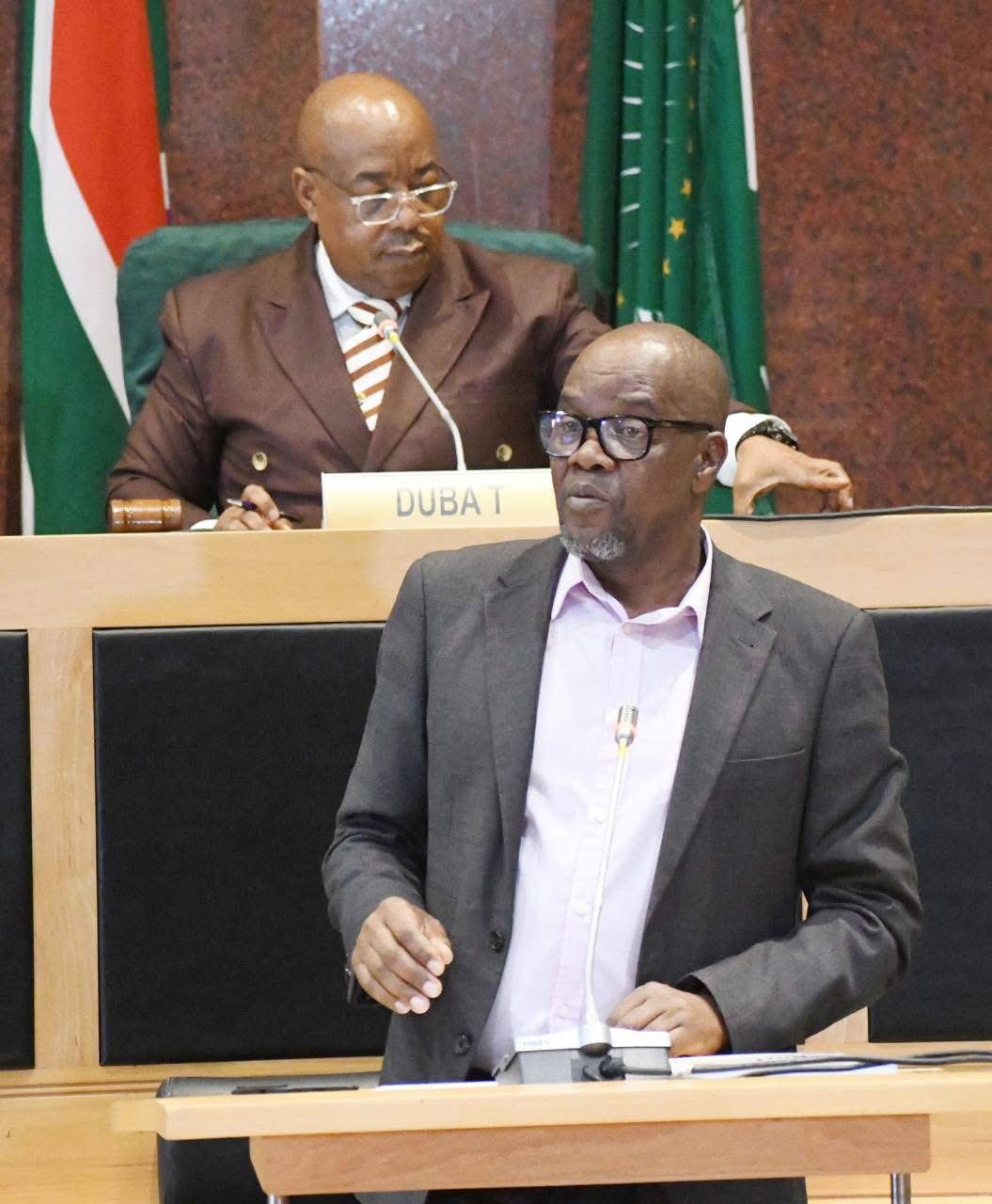
Mvoko presented the Eastern Cape Provincial Treasury’s 2024/25 Annual Report to the Provincial Legislature, highlighting progress in governance, fiscal stability, and inclusive development.
“As we enter a new strategic cycle, our focus will be on strengthening fiscal sustainability and economic resilience; driving transformation and inclusion through procurement and empowerment; modernising governance with data analytics and automation; enhancing municipal financial governance and audit support; and unlocking infrastructure investment for social and economic impact,” said Mvoko.
“Through these priorities, we aim to realise the vision of a capable, ethical and developmental state, aligned with Vision 2030 and the Provincial Medium-Term Development Plan.”
Mvoko added that the Provincial Treasury achieved a clean audit for the tenth consecutive year, underscoring its commitment to accountability and transparency.
Twelve provincial departments received unqualified audit opinions — five of which were clean — while among public entities, eight received unqualified opinions, with five also clean.
“Municipal audit outcomes improved, with 20 municipalities achieving unqualified opinions, a positive signal of progress,” he added.
The MEC noted that the financial year represented a transitional phase between the sixth and seventh administrations, a period of reflection and strategic reorientation.
“We sought to consolidate lessons from previous years while building stronger institutional capacity and accelerating inclusive growth for our province,” said Mvoko.
Grounded in the Medium-Term Strategic Framework (MTSF), Treasury’s work centred on transforming the economy, creating jobs, and enhancing education, health, and social services.
The department also achieved Level 5 in the national risk management maturity assessment, reflecting progress in embedding risk intelligence across decision-making and performance systems.
“Reaching this level signifies that the Eastern Cape Treasury now operates with risk awareness embedded in every aspect of its governance and accountability structures,” said Mvoko.
Treasury reported seven new professional registrations across engineering, quantity surveying, construction, and project management, demonstrating its commitment to skills development and gender equity.
Women now make up 58% of the Senior Management Service, surpassing the national 50% target, while 2.7% of the workforce comprises persons with disabilities.
“Transformation within Treasury is not just about numbers; it’s about fostering diversity, leadership, and technical excellence,” said Mvoko.
In promoting localisation, Treasury awarded 100% of goods and services contracts and 90% of capital expenditure to local suppliers and contractors, in line with Section 217 of the Constitution, which requires procurement to be fair, equitable, transparent, competitive, and cost-effective.
Infrastructure investment also advanced, with 27 state-owned facilities constructed or upgraded, all compliant with universal accessibility standards.
Treasury conducted 150 land surveys to verify ownership and tenure rights, strengthening asset valuation and potential revenue generation.
Through the Expanded Public Works Programme (EPWP), the department created 5,117 work opportunities, surpassing its annual target, while its Artisan Development Programme enrolled 1,200 participants, with 112 learners successfully completing trade tests.
“The development of artisans and local contractors is central to our long-term vision for a sustainable provincial economy,” said Mvoko.
Improved coordination through the Premier’s Infrastructure Coordinating Committee enhanced transversal governance and alignment across sectors, achieving Level 2 maturity in integrated planning.
However, Treasury acknowledged ongoing challenges, including limited funding, project delays, and contractor terminations that constrained infrastructure delivery.
“We must confront these challenges head-on,” said Mvoko.
“I have directed the department to develop a comprehensive infrastructure delivery recovery plan with measurable actions and clear timelines. Accountability and timely implementation will be our priorities.”
Mvoko said Treasury’s operations remain anchored in Section 27 of the Constitution, which guarantees citizens’ rights to adequate services such as housing, infrastructure, and social support.
The report was tabled in accordance with Section 65(1)(a) of the Public Finance Management Act (PFMA) and relevant Public Service Regulations, reinforcing the principles of transparency and accountability.
INSIDE METROS