

By Thapelo Molefe
The City of Tshwane says it is ramping up enforcement, emergency readiness and public transparency after releasing new data showing thousands of road violations, hundreds of drunk-driving arrests, rising fire incidents, and sustained pressure from severe weather between June and October.
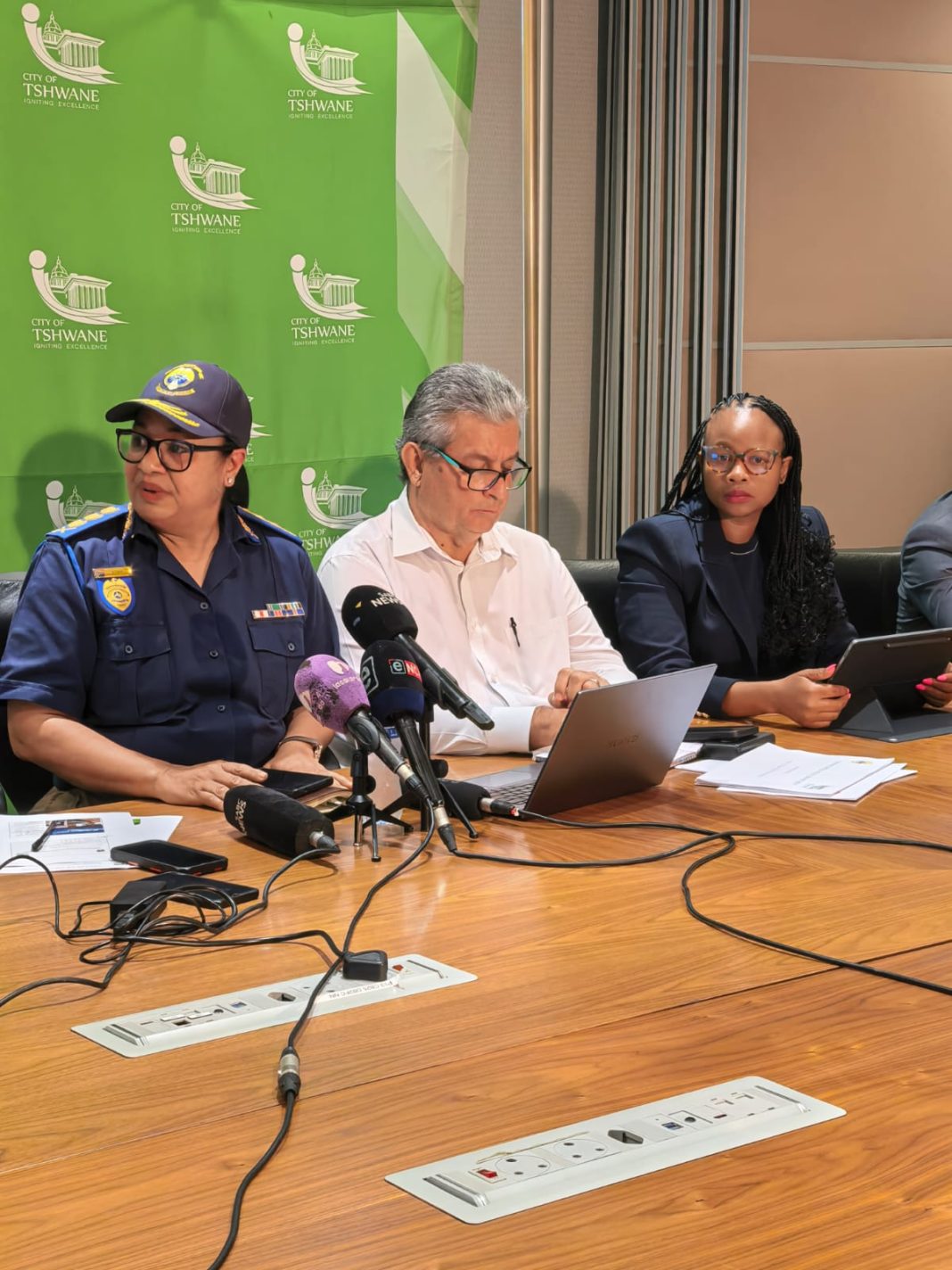
Presenting the figures at its first quarterly public-safety briefing on Tuesday, officials warned that the festive season and ongoing heavy rains will place even greater strain on policing and emergency services, urging residents to play a more active role in preventing avoidable deaths, injuries and service disruptions.
Executive Mayor Nasiphi Moya said the new public-safety reporting system was introduced in direct response to growing calls from residents for more consistent and accessible information on crime and emergency trends.
“Communities across Tshwane have asked for more transparency, more regular information, and clearer insight into what is happening in their neighbourhoods,” she said, emphasising that improved safety remains central to boosting investor confidence.
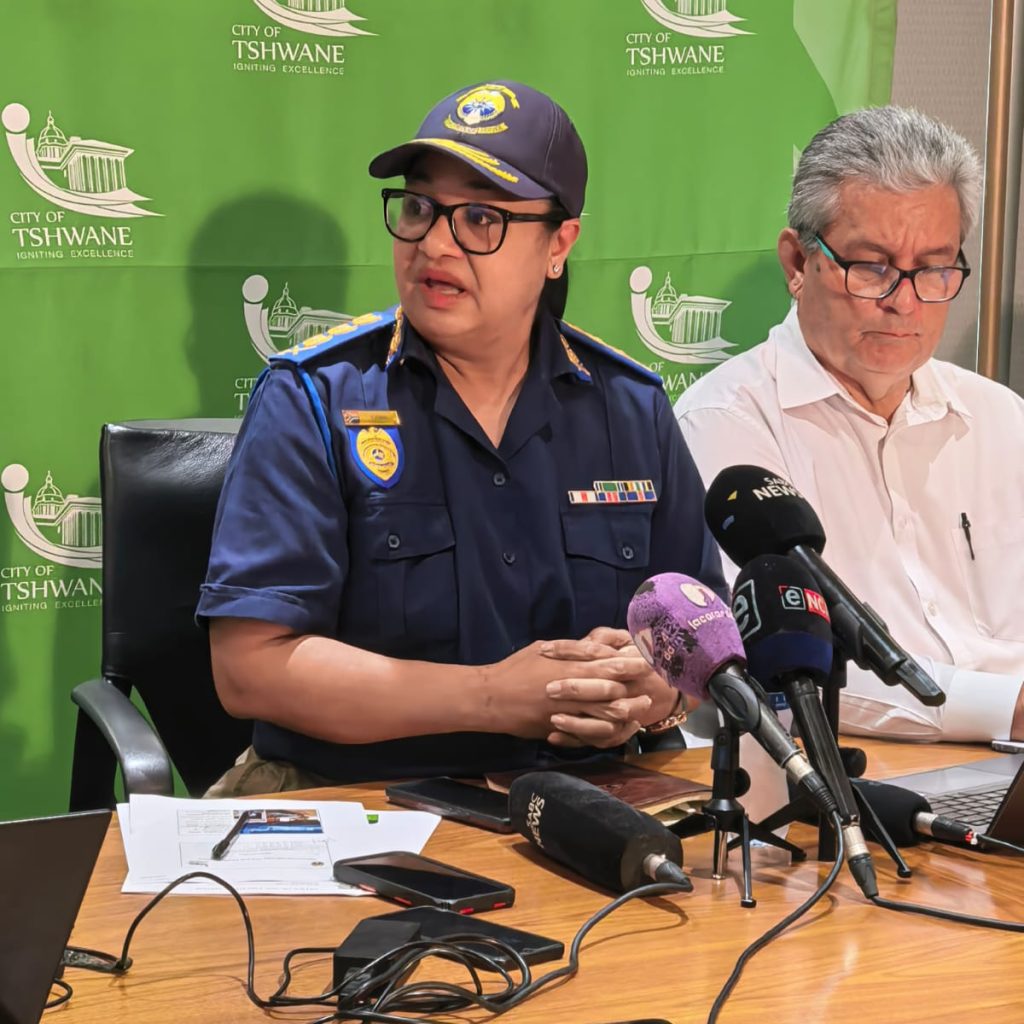
Turning to traffic enforcement, TMPD Commissioner Yolande Faro detailed an extensive enforcement drive supported by 438 road-policing operations conducted over the reporting period. Officers issued 105,937 out-to-one notices, 88,047 out-to-31 notices, and 215,657 speed infringement notices, painting a picture of widespread non-compliance with road regulations.
Faro said drunk driving continues to pose one of the city’s most serious risks, with 819 arrests recorded for driving under the influence. Regions 1, 4 and 6 accounted for the highest arrest volumes. To curb alcohol-related crashes, the city has expanded partnerships with SAB and [Outwear.org] to encourage responsible drinking.
She added that pedestrian behaviour remains a major concern. In total, 732 pedestrians were arrested as a source of danger, often for walking on freeways, with many of them being undocumented immigrants.
Infrastructure-related crime also required intensive action, with the city conducting 57 cable-theft operations, supported by quad bikes in difficult terrain, to combat one of the biggest drivers of electricity outages. Pretoria North continues to experience the highest number of incidents.
Strengthening road safety further, the city relaunched its Akasia and Centurion waybridges, which allowed TMPD to process 3,137 overloaded or suspect vehicles between July and October.
Many of these heavy vehicles were linked to cross-border transport and the busy industrial corridors around Pretoria North and Rosslyn. Officials said the renewed waybridge capacity is essential to reducing road damage and preventing fatal accidents involving heavy trucks.
Faro said that enforcement efforts extended well beyond traffic. Over the same period, the metro took part in 108 Shanela operations and 20 Rea Spana operations, which targeted crime hotspots and boosted high-visibility policing in areas of concern.
Alongside these crackdowns, the city conducted 291 social crime-prevention programmes. These included anti-bullying initiatives in schools and support activities for women’s shelters, illustrating the administration’s dual approach of enforcement and community support.
The metro is also expanding its human-resource capacity. Of the newly appointed safety ambassadors, 83 of the 120 have been deployed across malls, CBDs and SASSA pay points to assist with visibility and early response.
Planning for long-term staffing is underway as well, with 200 new TMPD recruits scheduled to begin training in January 2026. Several senior leadership posts, including seven brigadiers, are currently being finalised in an effort to stabilise the department.

Shifting to emergency and disaster response, Emergency Services Chief Moshema Petrus Mosia reported thousands of incidents recorded between July and October. The bulk of these involved 2,360 grass and rubbish fires, often fuelled by illegal burning and littering.
Emergency teams also responded to 508 structural and transport fires and 225 transport-related callouts, while 29 flooding incidents were reported as early summer rains intensified.
Mosia said emergency teams dealt with a wide range of complex rescue operations, including people trapped in lifts, livestock caught in drainage systems and cases requiring the removal of rings or handcuffs from distressed individuals.
With the South African Weather Service predicting above-normal rainfall throughout summer, the city has fully activated its Disaster Management Centre in Akasia and is coordinating closely across departments. This multi-layered readiness plan aims to manage expected storms, falling trees, infrastructure pressure and water-related emergencies.
He urged residents to avoid flooded areas, secure outdoor objects in windy conditions and report storm damage or blockages promptly to prevent secondary emergencies.
MMC for Community Safety Hannes Coetzee said the improvements seen across policing and emergency operations were supported by the Inter-Departmental By-law Enforcement Committee (IBEC), a structure introduced after the new administration took office in October 2024. Coetzee said IBEC has significantly enhanced coordination among departments and has already been replicated in other Gauteng municipalities.
He highlighted strengthened CCTV coverage, new cable-protection technology, increased infrastructure security and enhanced officer visibility as key contributors to better safety outcomes. Recent external assessments, he said, suggest Tshwane may now be the safest metro in South Africa.
As the briefing concluded, Mayor Moya cautioned that the approaching festive season, coming at the same time as increasingly severe weather patterns, is expected to place additional strain on safety systems across the metro. She said busier roads, packed shopping centres and rising storm-related incidents all heighten risk.
Moya appealed to residents to exercise caution by avoiding low-water bridges, staying alert in crowded areas and driving responsibly.
She confirmed that the city has activated a comprehensive festive-season safety plan, which includes intensified roadblocks, targeted patrols, infrastructure-protection measures and expanded rapid-response capacity.
Officials stressed that while the city is scaling up its operational response, public safety ultimately depends on partnership. They said residents must play their part to reduce preventable emergencies and ensure a safer holiday period for all.
INSIDE METROS