
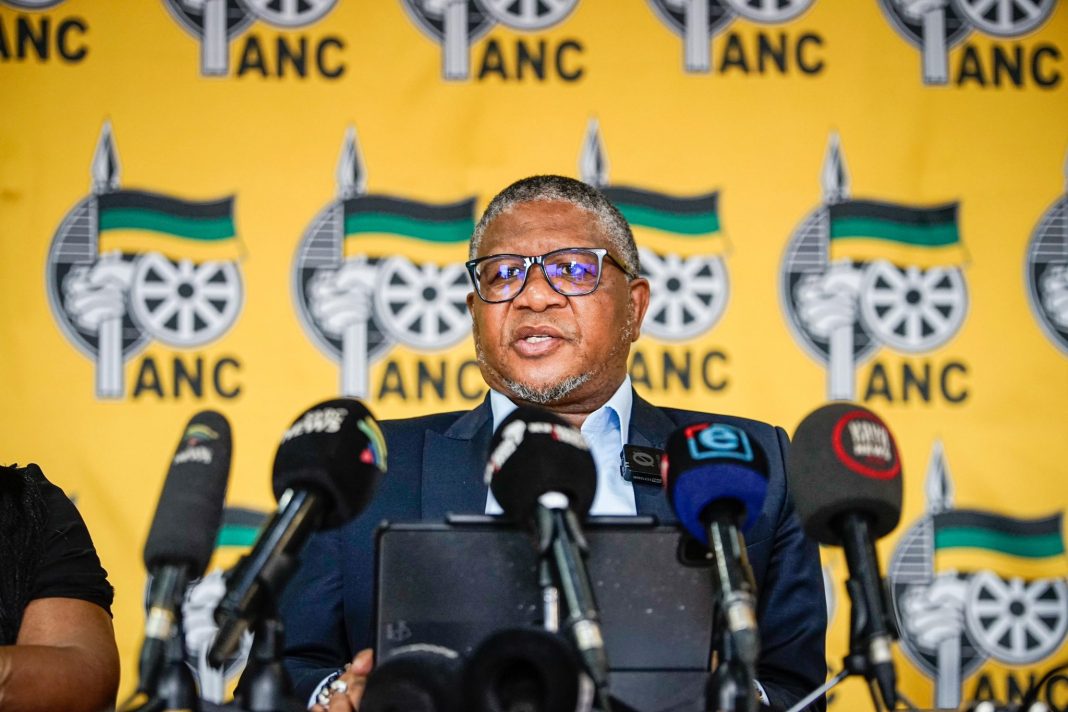
 in Gauteng is navigating one of its most precarious political landscapes since the advent of coalition politics.)
By Marcus Moloko
The African National Congress (ANC) in Gauteng is navigating one of its most precarious political landscapes since the advent of coalition politics.
With Premier Panyaza Lesufi leading a minority government, the ANC faces mounting pressure to secure support for the provincial budget and stabilise governance in Johannesburg and Ekurhuleni, according to various reports.
ALSO READ: IFP MEC says Durban’s Mandela, Tambo statues ‘incomplete’ without Buthelezi
At the heart of the challenge is the refusal of the Economic Freedom Fighters (EFF) to back ANC proposals.
EFF leader Julius Malema recently declared that his party would not vote for any ANC‑led initiatives across Gauteng, leaving the ruling party scrambling for alternatives.
The uMkhonto weSizwe (MK) Party has also proven unpredictable, further complicating the ANC’s ability to pass legislation.
Against this backdrop, senior ANC figures, including secretary‑general Fikile Mbalula, have reportedly begun openly considering cooperation with the Democratic Alliance (DA).
ALSO READ: Ramaphosa finalising water crisis committee
While historically adversarial, insiders suggest that a partnership could provide the stability lacking in current coalition arrangements.
“If the DA and ANC come together, even though we have differences, municipalities will stabilise,” one ANC source told the Mail & Guardian.
The DA itself appears divided. Provincial leader Solly Msimanga has rejected claims that he fumbled earlier coalition talks in 2024, insisting that the ANC focused too heavily on positions rather than policy principles.
Other DA leaders have indicated willingness to revisit negotiations, particularly if it means securing influence in Gauteng’s legislature and municipalities.
The stakes are high. Finance MEC Lebogang Maile tabled the provincial budget amid fears that without DA support, the ANC could face a collapse of its minority government.
Analysts note that coalition instability has already hampered service delivery, with shifting alliances in councils undermining decision‑making.
ALSO READ: WATCH: Ramaphosa agrees with Malema’s proposal to open clinics for 24 hours
For the ANC, the dilemma is strategic: continue relying on smaller parties and risk paralysis, or strike a deal with the DA and face criticism from within its own ranks.
The party’s provincial task team has emphasised engagement with all parties, framing coalition politics as a necessity rather than a choice.
“The politics of coalition require engagements, and from where we are standing as the ANC, there is no party we are not going to engage,” spokesperson Mzi Khumalo said.
Whether the ANC and DA can overcome mistrust and forge a working relationship may determine not only the province’s immediate stability but also the trajectory of national coalition politics in the years ahead.