

By Johnathan Paoli
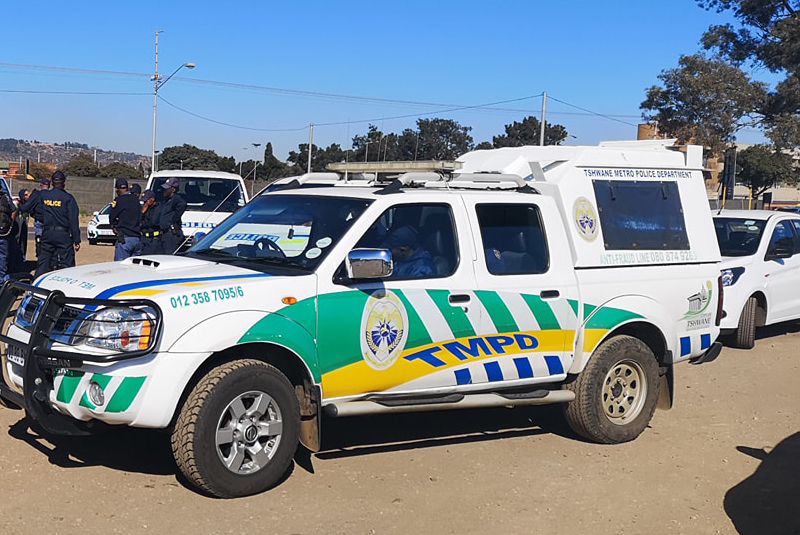
Tshwane Metropolitan Police Department (TMPD) Deputy Chief Sean Bolhuis said junior officials had no authority to allocate security sites worth millions of rand, as commissioners questioned oversight failures and the role of senior officials during alleged procurement irregularities.
Testifying before the Madlanga Commission of Inquiry on Wednesday, Bolhuis described the allocations as “totally irregular” and outside established decision-making structures.
“As the caretaker, I never allocated these sites to Gubis 85 Solutions, nor instructed Inspector Lebogang Phiri to do so, nor gave him delegated authority,” Bolhuis said.
“In my view, Inspector Phiri did not have the power to allocate sites to security service providers.”
He said it was “impossible” for a single official to allocate multiple sites across Pretoria in one day, adding the process did not follow standard procedures.
The commission heard the allocations carried monthly commitments running into millions of rand, including one case where two sites exceeded R1 million per month.
Bolhuis said the procurement process appeared to have been manipulated, citing payments made without invoices.
Emails and WhatsApp messages presented to the commission suggested efforts to fast-track payments despite incomplete documentation.
“There were payments to security companies in the absence of invoices. Exactly how that was done will likely emerge in further evidence,” he said.
On financial oversight, Bolhuis said chief financial officer Gareth Mnisi authorises payments but does not initiate departmental processes.
Commissioners also questioned the role of suspended Director of Security and Guarding Services Tshukudu Malatji.
Bolhuis said Malatji had operational authority but should have informed senior management.
“Even if allocations were within budget, I would still have a serious issue with Malatji not informing me,” he said.
Commissioner Sandile Khumalo criticised Bolhuis’ response to the irregularities.
“It does not appear that you acted. In January, 30 sites were added; in February, six more. I see no evidence of you questioning who authorised this,” Khumalo said, warning the system was vulnerable to abuse.
Bolhuis acknowledged the criticism but said events had overtaken his ability to act. He said by March the matter had been escalated to Deputy Commissioner Revo Spies on the instruction of Police Chief Yolande Faro.
He conceded that his report to Spies did not include newly identified irregular allocations, saying it covered information available only up to the end of February, when he was unaware of the ad hoc sites.
Commissioners questioned whether the omission limited Spies’ understanding of the scale of the problem as additional sites were added.
Bolhuis said there had been ongoing consultation with Spies and senior management.
“It was not a case of stepping back, although it may appear so,” he said.
The commission also examined a February 2025 extension of a broader security contract, signed by the city manager due to delays in appointing a new tender. Bolhuis said he provided supporting documentation for the extension, which covered multiple service providers, including Gubis 85.
He maintained that the ad hoc allocations driving additional spending were not authorised, estimating exposure could reach R60 million, although one month’s allocation letters reflected about R14 million.
“I am appalled at the corruption taking place in the City of Tshwane and across government. We are expected to serve ethically,” Bolhuis said.
Proceedings were adjourned, with a new witness expected on Thursday.
INSIDE METROS