spot_img

Morero has faith in measures that will be implemented to avert water crisis in Joburg

-Advertisement-spot_img

Must read

Thapelo Molefe

A high-level ministerial meeting has agreed that the City of Johannesburg must reduce the leaks in its water distribution system in order to avert a full-blown water crisis.

This after an urgent meeting to on Sunday address the challenges of water in the City of Johannesburg.

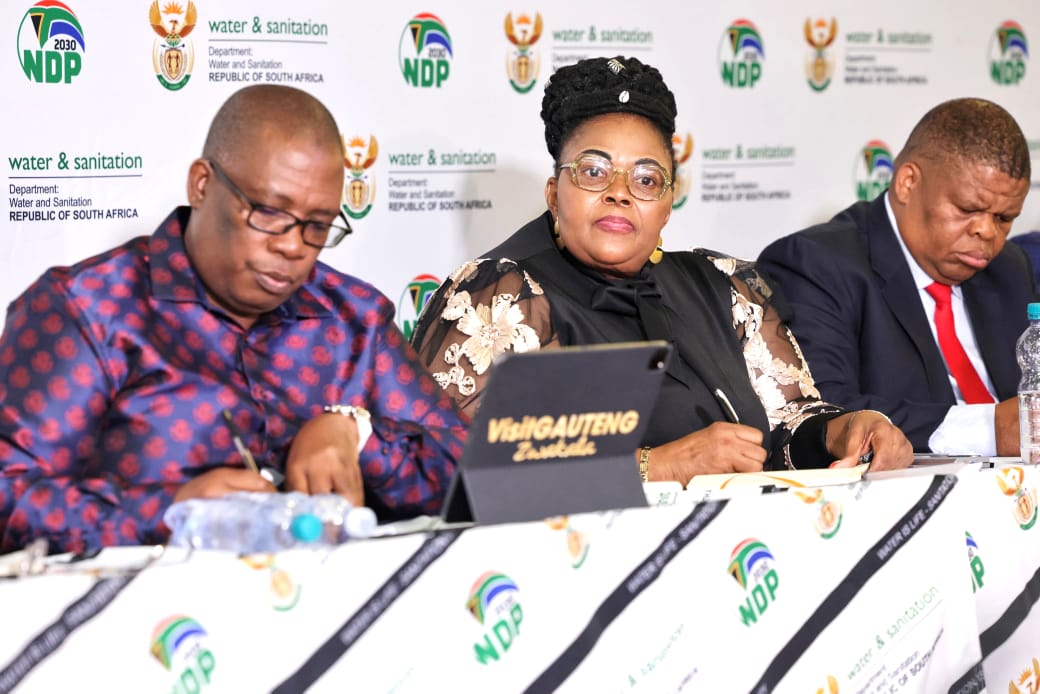
The meeting was convened by Minister of Water and Sanitation, Pemmy Majodina, and was attended by the Gauteng Premier, Panyaza Lesufi, the Deputy Ministers of Water and Sanitation, David Mahlobo and Sello Seitlholo, the MEC for Cooperative Governance and Traditional Affairs in Gauteng MEC, Jacob Mamabolo, the Executive Mayor of Johannesburg Dada Morero and the leadership of Rand Water.

The gathering pinpointed the primary drivers behind the supply disruptions and established a clear course of action to stabilize water distribution.

The meeting also urged City of Joburg to complete its current projects to construct more reservoirs and pumping stations to make its water distribution system more resilient to electro-mechanical breakdowns or spikes in demand.

Morero highlighted a major issue with water supply, noting that 45 reservoirs are in poor condition.

He further said that efforts were under way to repair 11 of the reservoirs.

“Reservoirs will then help us store sufficient water, and we’ll be able to mitigate all interruptions that might be there. We can continue to guarantee the water supply for our residents,” said Morero.

“Into the future, we’re require more innovation in dealing with our water challenges. We’ve made the decision to look into developing partnership programmes with major businesses to also come on board and assist us in our water saving campaigns.”

Johannesburg Water presented the measures which it is implementing, which included procurement of a panel of contractors for emergency repairs of large diameter pipe water leaks as well as increasing the number of teams on standby during the week to attend to leaks and burst pipes.

“Municipalities need to take accountability for not ensuring that their infrastructure is up to standard. We must work together to ensure a stable water supply for the residents of Johannesburg,” said Majodina.

“Yes, we are in a crisis. However, we are working together to implement a large-scale communications awareness campaign in Gauteng to encourage using water wisely and sparingly … Pay for your water. It is your obligation. Not paying your water bill impacts municipalities in the delivery of water to your homes.”

Majodina also noted that a public-private partnership with National Treasury was being explored to reduce non-revenue water, leveraging private sector funding and expertise to drive efficiency and sustainability in the city’s water management.

She said the demand for water in Johannesburg has grown and continues to grow as a result of economic growth and population growth.

“Gauteng’s water consumption exceeded international standards,” said Majodina. 

The province used 278 liters per person daily, surpassing the recommended 173 liters, leading to the implementation of level-one water restrictions.

The 2023 No Drop report issued by Department of Water and Sanitation found that water losses in Johannesburg were 35%, compared to the international norm of 15%.

Her ministry anticipated this growth in demand and has put in place plans to address it as far back as the 1980’s, through the Lesotho Highlands Water Project (LHWP), which supplies additional water into the IVRS from the Katse and Mohale dams built in the mountains in Lesotho.

The first phase of the LHWP was completed in 2003 and delivers 780 million cubic metres of water into the IVRS per year.

Construction of the second phase of LHWP, to deliver a further 490 million cubic metres of water per annum into the IVRS from the new Polihali Dam in Lesotho, commenced in late 2022 and is due to be completed by 2028.

The meeting further noted and strongly supported the approval by the Johannesburg City Council of a turnaround strategy for Joburg Water.

The turnaround strategy includes ring-fencing of revenues from the sale of water for the water function, as well as creating single-point accountability for the water function in the City.

The intention is to give Joburg Water control over all the functions related to managing water supply in the City, so that it can be held accountable.

Lesufi said: “We have to reduce consumption of water at a faster pace. It is at our benefit to do so, or else we will have no water to save. If we can get Johannesburg right, it will be easier to get the other municipalities right. Let’s adhere to the restrictions initiated by Rand Water. We have to change our attitude. We need to invest in a high-level communication programme.”

INSIDE METROS

-Advertisement-spot_img

More articles

LEAVE A REPLY

Please enter your comment!
Please enter your name here

CATHSSETA

spot_img

QCTO

spot_img

AVBOB STEP 12

spot_img

Inside Metros G20 COJ Edition

spot_img

JOZI MY JOZI

spot_img

Inside Education Quarterly Print Edition

spot_img

Latest article