By Johnathan Paoli
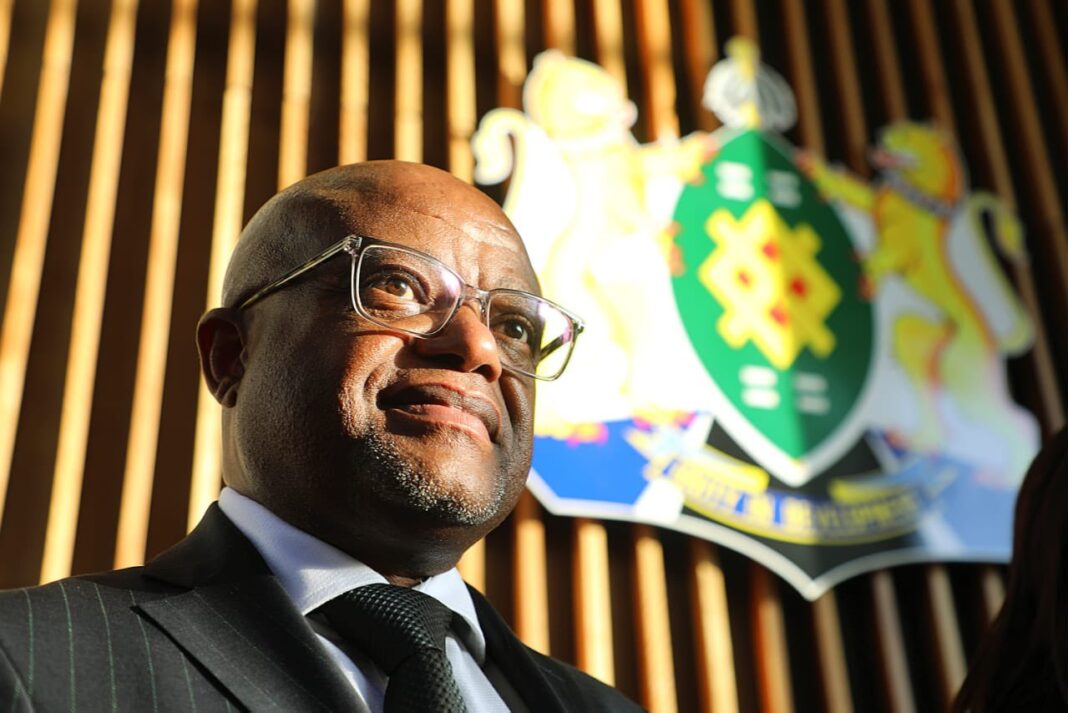
Joburg mayor Sello Morero has unveiled key revisions to the City’s 2025/2026 budget and tariff proposals aimed at easing financial pressures on residents.
The adjustments, tabled during an emergency council meeting, reflect a significant departure from the initial increases proposed in municipal service costs, property rates, and other tariffs.
Morero acknowledged the economic hardships facing Johannesburg’s residents, stressing that governance must go beyond balancing budgets.
“Households are already under immense financial strain. I am more than alive to the fact that every rand matters, and we must do everything possible to alleviate financial pressures on our residents,” said Morero.
The initial budget proposals included a 12.51% electricity hike, a 13.9% increase in water and sanitation tariffs, a 6.6% rise in waste removal costs, and a 5.6% increase in property rates.
Additionally, a controversial reduction of the property rebate threshold from R300,000 to R200,000 was suggested.
After extensive deliberations and responding to public concern, the mayor introduced several crucial amendments:
The initially proposed 5.6% increase in property rates has been adjusted to 4.6%, in line with the Consumer Price Index.
The property rebate threshold will stay at R300,000, dismissing the proposed reduction to R200,000.
There will be no increase in availability charges for both prepaid and conventional electricity meters.
The allocation of 6kl of free water per household will be maintained, ensuring ongoing support for pensioners and low-income residents.
While adjusting controllable tariffs, Morero highlighted the city’s limited influence over electricity and water costs, which are determined by national regulatory bodies such as NERSA and bulk suppliers like Rand Water.
The increases in these services are largely “pass-through costs,” meaning the City has no choice but to adopt them.
These adjustments come at a cost.
The revenue loss due to the amendments is estimated at nearly R1 billion, impacting the overall budget of R87.8 billion, which consists of R80.5 billion in operational expenditure and R7.3 billion in capital projects.
Despite the financial challenge, the Mayor reassured residents that service delivery would not be compromised.
“We cannot, in good conscience, expect residents to bear higher tariffs without significantly improving service delivery,” he said, emphasizing the need for prudent financial management and innovation in revenue collection.
With the revised budget reports now open for public participation, the Mayor urged residents and businesses to engage in the process.
Additionally, he emphasized the importance of timely municipal account payments to ensure continued service delivery.
“We urge residents and businesses to be mindful of their water and electricity consumption and to remain committed to paying municipal accounts, as these payments help us improve basic services,” he added.
A key concern raised by the mayor was the impact of vandalism on municipal infrastructure.
“Vandalism undermines the efforts of those working hard to enhance our city and protect our resources. Every act of vandalism not only damages property but also disheartens our residents,” he said, calling on citizens to take pride in protecting Johannesburg’s infrastructure.
Morero reaffirmed his administration’s commitment to governing with both financial prudence and empathy.
He stressed that while revenue generation is crucial, it must not come at the expense of struggling residents.
“Ignoring the rising cost of living while merely focusing on funding the city’s budget through charges for rates and service would be a failure of leadership,” he said.
INSIDE METROS