By Nkhensani Chauke
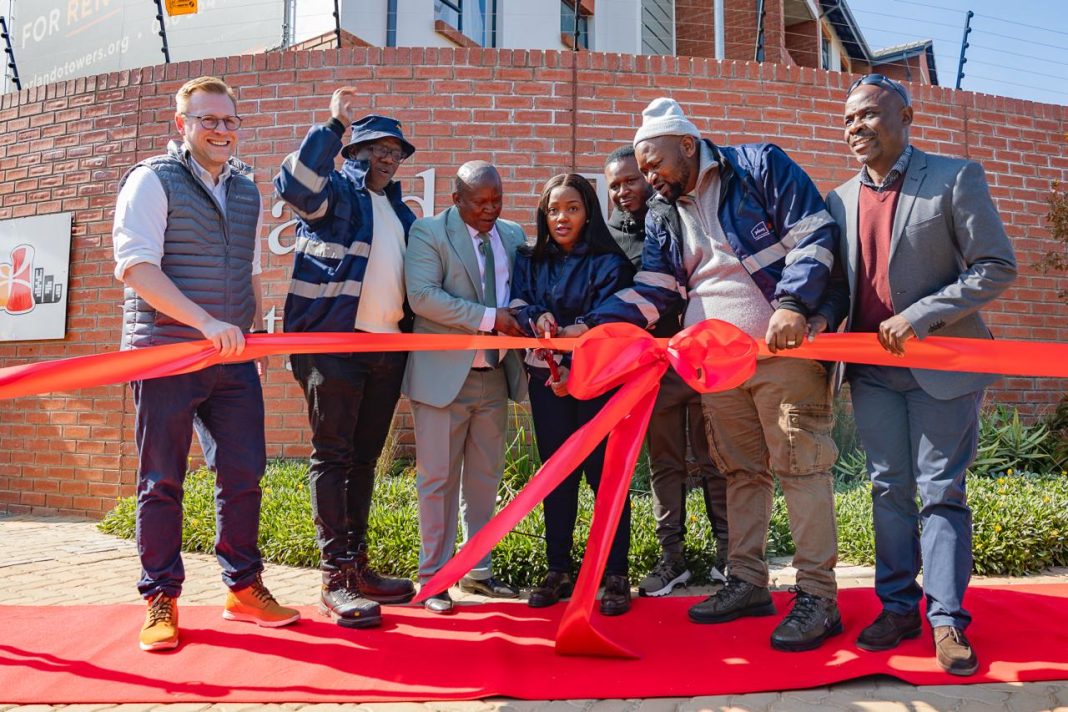
The MMC for Economic Development in the City of Johannesburg, Nomoya Mnisi, has announced the launch of the Orlando eKhaya and Power Park Housing projects in Soweto, reaffirming the city’s dedication to spatial transformation and inclusive urban renewal.
Originally initiated in 2001 during Mayor Amos Masondo’s tenure, these projects marked some of Johannesburg’s earliest efforts to revitalise Soweto into a dynamic metropolitan center.
During the unveiling, Mnisi emphasised the transformative impact of these developments.
“This unveiling is not just about buildings-it’s about restoring dignity, promoting social inclusion, and creating real opportunities,” Mnisi said.
“We are reaffirming our collective resolve to confront and reverse the spatial injustices of our painful past. We are saying to the people of Soweto: you matter, your future matters, and your place in this city is central to its growth and progress.”
One of the private partners from Raubex Building, Norman Ntabane, commended the launch and described it as a major milestone in the ongoing efforts to transform neglected areas of Soweto.
“Through a successful public-private partnership, the Joburg Property Company (JPC) has secured significant private sector investment in a local that was once overlooked. This unlocks opportunities for economic development, community upliftment, and sustainable urban growth in Soweto,” said Ntabane
The City of Johannesburg said, that the development spans around 24 hectares and will deliver approximately 5, 964 residential units, offering affordable housing in a prime urban location.
“The site is along major transport routes such as Chris Hani Road, and key public amenities including Chris Hani Baragwanath Hospital, the University of Johannesburg Soweto Campus, and various commercial centers,” said City of Johannesburg
The City of Johannesburg also announced that the private sector has committed over R439 million in investments to the Orlando eKhaya and Power Park precincts.
Several developments are either completed or currently underway.
These include student housing, with 850 beds already occupied and an additional 1,450 under construction.
In the Finance Linked Individual Subsidy Programme (FLISP) housing category, 648 units are being developed, with 136 already occupied.
For social housing on Erfs 47 and 48, a total of 1,740 units are planned; both sites have been zoned, proclaimed, and connected to bulk services.
Additionally, more than 2,000 RDP housing units are planned across several erven, including Power Park Extension 2 and Orlando eKhaya Erfs 22, 23, and 24.
Acting CEO of the Joburg Property Company, Musah Makunga, said the housing developments reflect the City’s strategic vision to manage urbanisation while addressing key socio-economic challenges.
“Phase 1 focuses on purpose-built student accommodation, with approximately 2,300 beds already completed. Notably, 848 of these beds will be made available at no cost to students, ensuring access to education and safe housing for young people from disadvantaged backgrounds,” said Makunga.
The City of Johannesburg added that the Orlando eKhaya and Power Park precincts form part of its broader spatial and socio-economic strategy.
This strategy aims to deliver affordable basic services, promote sustainable transport, create green public spaces, tackle urban inequality, and drive inclusive economic development.
“Through projects like this, the City of Johannesburg is building a resilient, inclusive, and prosperous urban future for all its residents—starting with Soweto,” the City said.
INSIDE METROS