
By Staff Reporter
The Gauteng Department of e-Government has presented a budget exceeding R1.5 billion for the 2025/26 fiscal year.
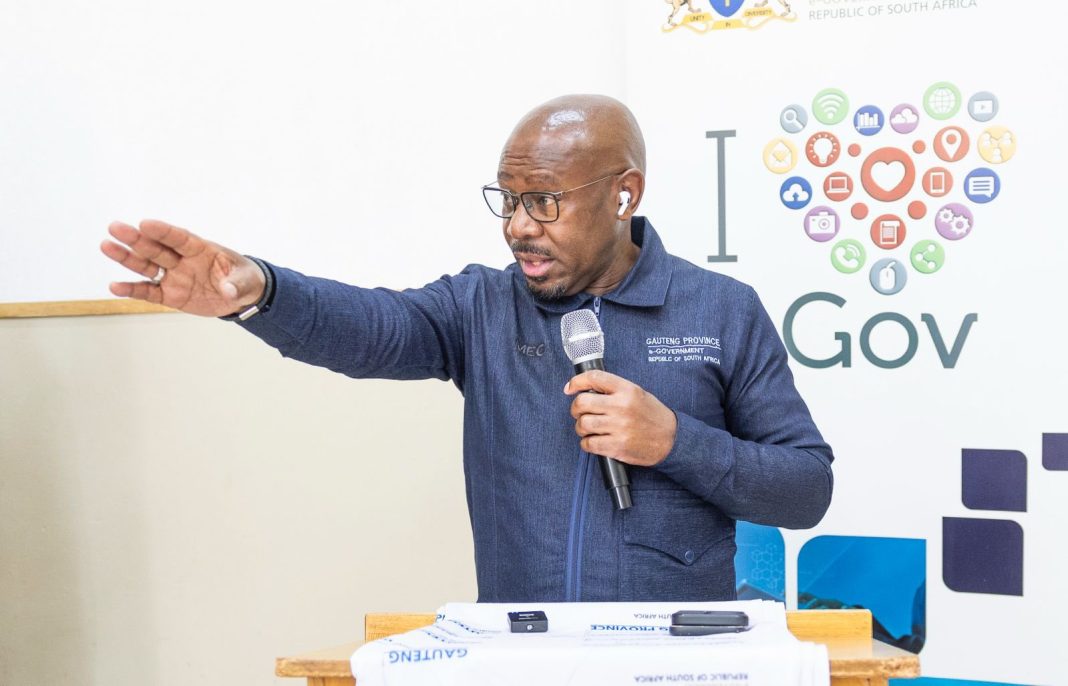
This allocation, unveiled by e-Government MEC Bonginkosi Dhlamini at the Gauteng Provincial Legislature (GPL), aims to accelerate the province’s digital evolution.
The focus would be on enhancing connectivity, expanding citizen access to services, and fostering a digitally empowered province.
“Our mission, through this Department, is to ensure that digital transformation becomes a pathway to dignity, access, and opportunity for every resident of Gauteng,” said Dhlamini.
Dhlamini emphasized the ongoing rollout of Phase 3 of the Gauteng Provincial Network (GPN), which extends robust internet connectivity to government facilities and communities.
To date, the initiative has completed 1321 Wide Area Network (WAN) and 737 Local Area Network (LAN) sites, along with establishing 119 Wi-Fi hotspots across 26 priority townships and 423 Voice over IP (VoIP) sites.
“This initiative is pivotal in establishing a connected Gauteng that supports digital services in schools, libraries, clinics, and communities, with a particular emphasis on townships, informal settlements, and hostels (TISH),” the department said.
The department highlighted technology’s critical role in enhancing safety throughout the province, citing the deployment of 517 CCTV cameras in key crime hotspots.
This effort is bolstered by a partnership with Vumacam, facilitating access to 6,399 surveillance cameras across Gauteng.
Under the province’s e-Policing initiative, physical e-Panic Buttons have been distributed, complemented by over 90,000 downloads of the mobile e-Panic app.
These measures have resulted in more than 51,000 emergency responses, addressing incidents such as car accidents, shootings, and gender-based violence, particularly in the City of Johannesburg, City of Ekurhuleni, and City of Tshwane.
In a move to enhance digital literacy across Gauteng, the department plans to conduct online training for 7,700 public servants, award 70 bursaries, and provide ICT skills training to 12,000 youths, particularly in TISH areas.
Additionally, 200 ICT entrepreneurs from townships will receive business support, aimed at empowering small enterprises and promoting digital inclusivity.
INSIDE METROS