By Johnathan Paoli
Three Gauteng MECs have announced ambitious departmental plans following their 2025/26 budget approvals, signalling a commitment to inclusive growth, sustainability, and social development across the province.
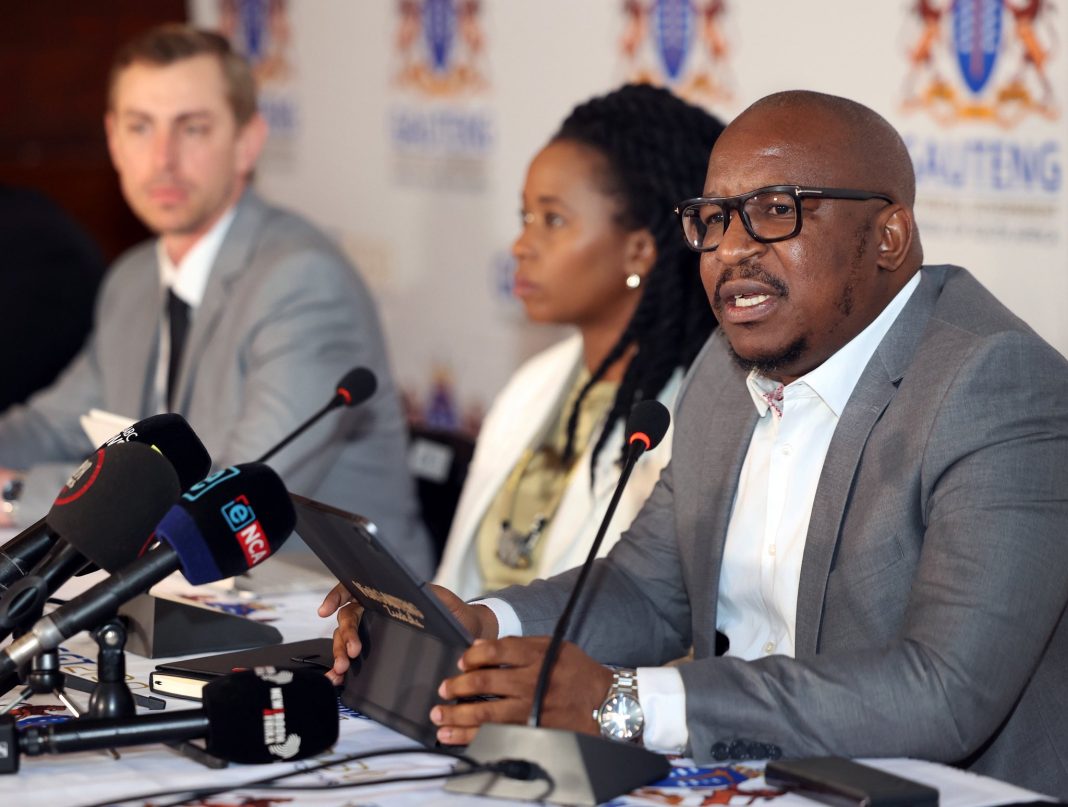
Agriculture and Rural Development MEC Vuyiswa Ramokgopa, Environment MEC Ewan Botha, and Sports, Arts, Culture, and Recreation MEC Matome Chiloane outlined their strategies during a joint media briefing in Johannesburg.
The trio highlighted a combined allocation of over R2.36 billion to tackle issues such as food insecurity, environmental sustainability, youth unemployment, and cultural preservation.
Ramokgopa presented her department’s R671.1 million budget as a transformative blueprint designed to fight hunger, commercialise small-scale agriculture, and grow rural economies.
“This budget is the seed we plant to activate a broader network of support and unlock the potential of Gauteng’s agriculture sector. We will walk this journey together, with farmers, youth, businesses, and civil society,” Ramokgopa said.
The five priority areas for 2025/26 include ending hunger, commercialising emerging farmers, supporting agro-processing, strengthening biosecurity, and building institutional capacity.
To reduce hunger by 10% over the medium term, R41 million will support backyard and homestead food production.
The department also aims to cut food waste and redirect surplus to vulnerable households.
Through the Conditional Agricultural Support Programme (CUSP), R111 million has been allocated to assist emerging farmers with grants, technical assistance, and market access.
A further R6.5 million will fund placements for unemployed agricultural graduates.
A R100 million blended finance fund for agro-processing, with R30 million from Gauteng and the remainder in NEF debt finance, will support small processors and drive rural industrialisation.
R104 million has been dedicated to improving animal health, especially in response to Foot-and-Mouth Disease and Avian Influenza.
Ramokgopa revealed that Gauteng has already administered its 135,000 FMD vaccine doses and will participate in a national indaba to boost vaccine access and local production.
On governance, the MEC noted a 16% increase in staffing costs to fill key vacancies and strengthen capacity, citing zero fruitless and wasteful expenditure in the previous financial year.
Support for women and youth remains central, with over 60% of subsistence support going to women and a 30% target set for commercial farming beneficiaries.
In collaboration with Education MEC Chiloane, her department has adopted Magaliesburg Secondary School, investing R10 million to develop future agri-scientists.
Newly appointed MEC Ewan Botha laid out his department’s R679.4 million plan to deliver a cleaner, greener, and more sustainable Gauteng.
“We’re not just cleaning up for the G20; we’re building durable, long-term systems to sustain environmental gains beyond big events. This budget is about lasting change,” Botha said.
The bulk, R353.3 million, goes to personnel, enabling enforcement and environmental planning.
Key initiatives include the Expanded Public Works Programme (R9.3 million) for youth and women in greening and waste projects; R50 million through the G20 Green Cities Initiative to upgrade 18 central business districts with durable infrastructure; and a R10 million feasibility study for an integrated eco-waste facility.
Additional waste reforms include R3.5 million for township buyback centres, R2.9 million for waste separation, and R2.5 million to review the provincial waste management plan.
On climate action, R8 million is allocated to implement the Gauteng Climate Change Action Plan, and R11.9 million will improve environmental assessments and turnaround times for development applications.
The department will intensify enforcement using Section 24G fines, having already reduced a backlog of 230 appeals to 40.
Botha stressed the importance of coordination, backed by new MOUs with municipalities and the use of Section 28 notices for urgent municipal non-compliance issues.
Innovations include plans for AI-powered mobile apps to monitor air quality, public whistle-blower platforms, and waste-to-energy pilot projects.
Botha also vowed to expand the One Million Trees campaign and remove invasive species straining water resources.
MEC Matome Chiloane detailed the R1.013 billion allocated to Sports, Arts, Culture and Recreation, stressing the need for collaboration.
“Government alone can’t do everything, but when we find alignment with strategic partners, we achieve greater development outcomes for our people,” Chiloane said.
The budget prioritises four programmes: Libraries and Archives (R320 million), Sport and Recreation (R308 million), Arts, Culture and Heritage (R219 million), and Administration (R165 million).
Key investments include R120 million to support community clubs and local leagues; 101 new sports coordinators; R10 million to expand the Wednesday League to 810 schools; and R40 million for major sporting events such as the Springbok Test matches and the Basketball Africa League.
In arts and culture, R22 million will fund commemorative days, while a R29 million allocation will finally operationalise the Women’s Living Heritage Monument.
Efforts to repatriate and honour exiled liberation heroes continue, with only two cases still pending.
Dance will also be elevated as both a sport and cultural asset.
Library upgrades will continue, with 36 sites set for improvement and two new libraries opening in Mogale City.
Digital transformation will also be deepened to support learning and recreation.
Strategic partnerships with industry players such as BMW and Ford are being harnessed to scale impact.
The post-budget media briefing underscored the interdependence of agriculture, environment, and culture in driving inclusive growth.
INSIDE METROS