20 C
Johannesburg
- Advertisement -

Cities are engines of change, says Joburg mayor at U20 Summit

- Advertisement -
- Advertisement -

Must read

By Thapelo Molefe

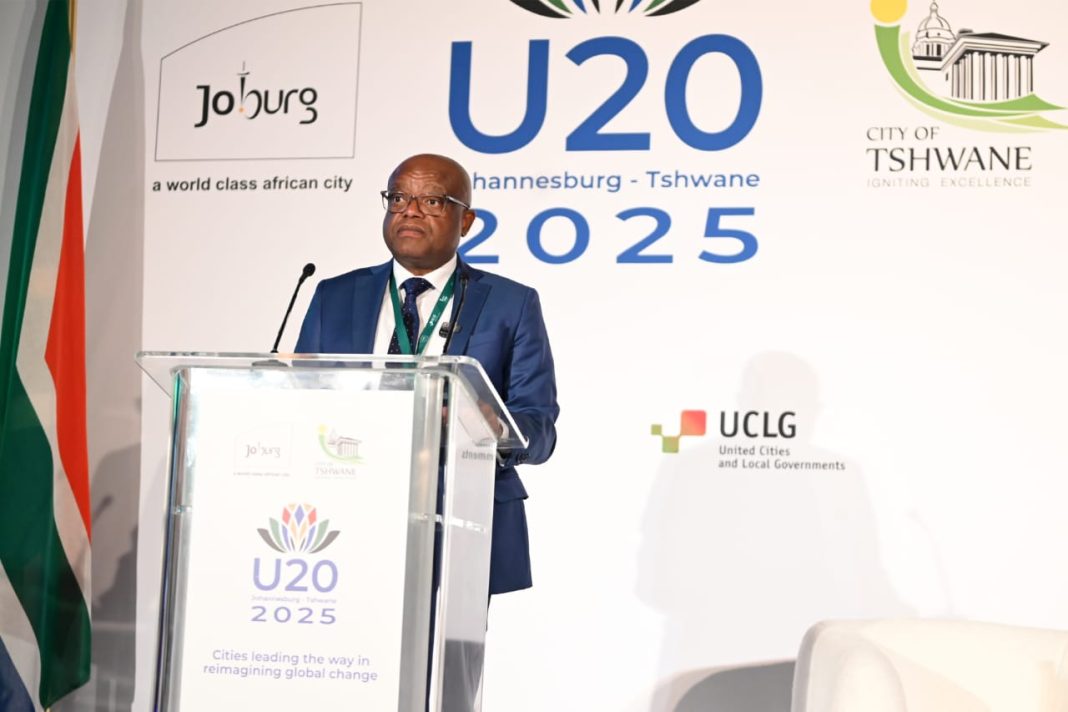
Cities are not only sites of global challenges but also “engines of economic opportunity and social care,” with the power to drive solutions to some of the world’s most pressing issues, Joburg mayor Dada Morero said as he opened the Urban 20 (U20) Mayoral Summit on Friday.

The three-day summit, held in Sandton, north of Johannesburg, has brought together leading figures in local government from across the globe.

City leaders from 20 cities – including Ahmedabad, Freetown, Accra, Rotterdam, and Amsterdam – are in Johannesburg this weekend for the first Urban 20 summit ever held in the African continent.

The gathering unites mayors, policymakers, and urban innovators focused on building sustainable cities, advancing inclusive governance, tackling climate change, and driving digital transformation.

Morero told international delegates that cities can only succeed if they have the financial tools to match their ambitions.

“Hosting the U20 Mayors Summit in Johannesburg is not about prestige; it is about possibility. Here, local challenges meet global solutions, and our city becomes the bridge between lived realities and global commitments. Johannesburg is not simply a host—it is a messenger for the cities of the global south, carrying forward their struggles and their solutions to the table of the G20,” he said.

“From climate action to social services, from housing to local infrastructure, municipal finance is the bridge that turns ambition into results.”

He noted that the summit, held on African soil for the first time, provides a platform to mobilise resources so that no city or community is left behind.

Highlighting Johannesburg’s resilience – from its origins as a mining town to its current status as a metropolis of over five million – Morero framed the U20 as a historic step in strengthening the influence of local governments within the G20 process.

“This is a pivotal moment for city diplomacy. Cities are not junior partners, but global political actors in their own right,” he said.

Tshwane mayor Dr Nasiphi Moya, co-chairing the summit, reinforced Africa’s leadership role in global urban governance.

She pointed to the African Mayors’ Assembly in June, where over 40 leaders spoke with a united voice.

“Africa is not a bystander. Africa is the driver of solutions,” she said.

“As the administrative capital of South Africa, Tshwane is proud to add its voice to the global chorus of cities at the U20 Summit. Our city embodies both the immense potential and the acute challenges of urban Africa. From our journey towards a smarter, greener Tshwane to managing the realities of rapid urbanisation, we understand that the local actions we take have a global impact. The U20 is not a distant talking shop; it is the essential arena where this local-global connection is forged.”

Moya announced that Tshwane had recently secured R86 billion in investment pledges at a city investment summit, describing it as part of a broader strategy to raise capital for infrastructure.

“Too often municipalities have the will and the vision, but lack the financial resources to drive those ambitions. We cannot continue to allow this to limit progress,” she said.

Both leaders tied the summit’s agenda to four priorities: economic opportunity and financing, climate action and urban resilience, social inclusion and equity, and digital transformation and innovation.

“Our experience hosting the Sherpa Meeting in June was a powerful testament to this. It crystallised a stark injustice: while cities like ours are engines of national economies and on the front line of the climate crisis, we are stifled by a critical lack of investment,” said Moya.

“For African cities to receive less than 4% of the required climate finance is not a gap—it is a chasm holding our entire continent back. That is why Tshwane stands firmly with over forty African mayors in our urgent call to the continent’s Ministers of Finance: we must unlock direct access to climate funding. Empowering cities is the most direct route to achieving national climate goals.”

Over the three-day summit, city leaders are expected to shape these discussions into a communique that will influence G20 decisions under South Africa’s presidency.

South African Local Government Association (SALGA) President Bheke Stofile used the platform to call for a reformed funding model, noting that municipalities in South Africa receive just 9% of national revenue compared to a global average of 20%.

“If municipalities are underfunded, the nation limps,” he said, urging greater recognition of local governments as equal partners in shaping global policy.

Stofile also linked city leadership to peace-building, warning that wars and conflicts devastate local infrastructure and drain resources from development.

“Cities must become advocates for peace,” he said.

Speaking at the summit, the mayor of Freetown, Sierra Leone, and Co-Chair of C40 Cities, Yvonne Aki-Sawyerr OBE, stressed the central role African cities play in this transformation.

“Cities are the engines of an inclusive, urban transition, delivering climate action that creates jobs, builds resilience, and boosts inclusion for all, especially young people in Africa,” said Aki-Sawyerr OBE.

“In C40 African cities, over 2.2 million green jobs account for nearly 12% of total formal employment. Backed by our cities’ technical and practical expertise, African cities are leading the charge on urban climate action, and the U20 summit is where we will showcase how this experience can drive global solutions,” Aki-Sawyerr OBE said.

C40 Cities Executive Director Mark Watts reinforced this message, noting the urgency of coordinated urban action in a time of slowing climate progress and geopolitical tensions.

“In a moment marked by slowing climate progress and geopolitical tensions, the united front shown by city leaders at U20 sends a crucial message of multilateralism and collaboration. By presenting a common agenda to the G20, these leaders create a powerful foundation that will be carried forward towards COP30 in Belém. Cities, with their focus on effective action and tangible, socially just solutions, are more central to global climate action than ever,” he said.

United Cities and Local Governments (UCLG) Secretary-General Emilia Saiz further emphasised the transformative power of local multilateralism.

“In times of challenges to the multilateral system, the U20 in Johannesburg demonstrates how local multilateralism can become a space for global engagement—a space built around local realities, care, and social equity,” said Saiz.

“Through this platform, local and regional leaders are shaping global social priorities, showing that inclusive public services, housing, human mobility, and development are central to resilient and just societies. As we engage with national and international partners, the U20 is proving that cities are not just participants but key architects of a global agenda grounded in solidarity and people-centred governance.”

Videographer: Kgalalelo Setlhare

INSIDE METROS

- Advertisement -

More articles

LEAVE A REPLY

Please enter your comment!
Please enter your name here

Inside Metros G20 COJ Edition

JOZI MY JOZI

Inside Education Quarterly Print Edition

- Advertisement -

Latest article