16.2 C
Johannesburg
- Advertisement -

KZN to chase R1.5bn in annual savings under new recovery plan

- Advertisement -
- Advertisement -

Must read

By Thapelo Molefe

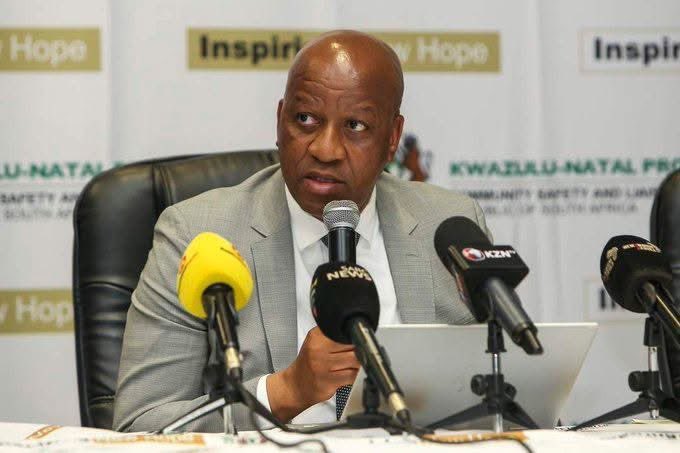
KwaZulu-Natal Premier Thamsanqa Ntuli said on Wednesday that the province’s new five-year financial recovery plan aimed to deliver annual savings of R1.5 billion, and that the era of unsustainable spending and short-term fixes was over.

“Where waste exists, it will be eliminated. Where processes are inefficient, they will be reformed,” Ntuli said.

He was addressing the media in Durban, where he laid bare the depth of the financial strain inherited by the Government of Provincial Unity (GPU), saying the province entered the 2024/25 fiscal year carrying R9.5 billion in accruals and owing service providers approximately R10 billion.

The launch formed part of an initiative described by the provincial government as a core pillar of the GPU’s commitment to building an ethical, capable and financially sustainable developmental state. The plan was developed under the theme “Creating Fiscus Confidence Together”.

“Three months into the new administration, and precisely 100 days into office, I briefed the public on the state of our provincial finances,” Ntuli said. 

“At that time, I highlighted that our provincial government is navigating significant headwinds in public financial management. Cash flow projections need to be managed carefully, and unnecessary expenditure must be curtailed.”

He said the wage increase implemented in April 2024 exerted further pressure on the budget, forcing government to absorb the adjustments in the current financial year.

Ntuli said the previous administration left behind serious liabilities that demand “disciplined budget management, including an average of R150 million in annual adjustments over the next seven years”.

The premier admitted that austerity measures imposed across departments came at a cost. 

“In Health, constrained budgets delayed the procurement of critical medical supplies, intensified staff shortages, and placed additional pressure on our hospitals and clinics,” he said. 

He added that the Education Department faced overcrowded classrooms, postponed infrastructure repairs and inadequate learning materials, conditions he warned “threaten the future prospects of our children”.

Ntuli said he was giving this background to ensure that the public fully understood the context in which the administration took office.

“It is important that our citizens know this truth: difficult decisions had to be made. We could not continue on a path of unsustainable spending. We had to choose discipline over drift, focus over short-term comfort, and long-term recovery over temporary relief.”

Ntuli described the 2025–2029 financial recovery plan as a “decisive intervention — a roadmap to reverse a pattern of unsustainable spending, protect frontline services, and restore the integrity of our provincial finances”.

The provincial government said the plan introduces clear strategies, measurable targets and defined implementation timeframes designed to stabilise finances, tighten expenditure controls and promote value-for-money in public service delivery.

It also includes measures to strengthen collaboration with civil society, labour, business and other sectors to bolster confidence in the province’s financial systems.

He said the plan seeks to achieve savings of R1.5 billion per year, guided by seven strategic objectives: restoring fiscal stability, achieving targeted savings, protecting core service delivery, strengthening revenue optimisation, reducing and improving expenditure efficiency, leveraging technology for better financial management, and rebuilding public confidence through transparent communication.

 He stressed that citizens must not bear the burden of previous financial mismanagement, saying: “Our approach is guided by one central principle: the citizens of KwaZulu-Natal must not bear the burden of financial mismanagement.”

A central feature of the plan is the strengthening of internal government capacity. Ntuli said departments would undergo structured capacity-building programmes to ensure officials are equipped to execute the reforms effectively. 

“This administration has no intention of burdening public servants with expectations they are not supported to meet,” he said.

“We are building a professional, capable public service that can deliver under pressure and adapt to the demands of a rapidly changing fiscal environment.”

He emphasised the pivotal role of Heads of Department, saying they would be given clearer authority, better monitoring tools and stronger performance-management systems. 

“Our message is simple: the success of this plan depends on all of us working together — with accountability at the top, commitment throughout the system, and a shared determination to restore fiscal stability.”

Ntuli said that the Provincial Treasury will lead the process.

“The Provincial Treasury remains central to ensuring responsible fiscal stewardship and transparent governance,” Ntuli said, echoing the provincial government’s advisory that the institution will guide the drive toward sustainable economic recovery for the people of KwaZulu-Natal.

“Our goal is to create a province where financial prudence is not an event, but a culture — not a reaction to crisis, but a way of governing,” Ntuli said.

“We know where we started, we know where we must go, and we know that the journey ahead requires unity, transparency and collective responsibility,” he said.

INSIDE METROS

- Advertisement -

More articles

LEAVE A REPLY

Please enter your comment!
Please enter your name here

Inside Metros G20 COJ Edition

JOZI MY JOZI

Inside Education Quarterly Print Edition

- Advertisement -

Latest article