By Charmaine Ndlela
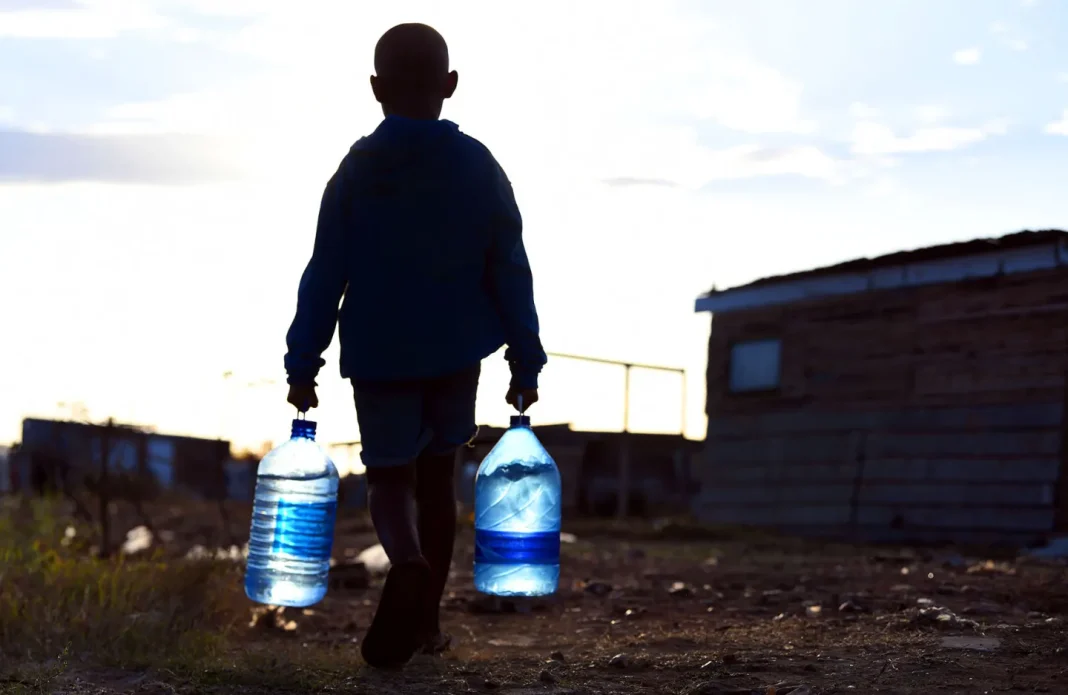
Angry residents of Midrand, north of Johannesburg, took to the streets on Tuesday to protest the ongoing water crisis that has left some neighbourhoods without supply for nearly a week, forcing households to buy water daily for basic needs.
Residents said taps ran dry last Wednesday, with the hardest-hit areas including Noordwyk, Ivory Park, Ebony Park, Rabie Ridge, Kaalfontein, President Park, Glen Austin and surrounding Midrand suburbs.
ALSO READ: Midrand water supply improves slightly after week-long outages
City authorities said the disruptions stem from a sequence of incidents in Rand Water’s bulk supply system over the past week that directly affected Johannesburg Water’s Midrand network.
According to a City of Johannesburg media briefing on Tuesday, Rand Water notified Johannesburg Water on 26 January that emergency repair work was required at the Palmiet Pump Station, requiring isolation and repairs to critical pump infrastructure.
While the work was initially expected to be completed quickly, technical and operational delays prolonged the process, according to the city.
A day later, a power trip at Rand Water’s Zuikerbosch Treatment Plant reduced supply into the Palmiet system by affecting the Eikenhof and Zwartkoppies supply systems, the city said.
It said that although partial pumping capacity was restored, the combined incidents significantly reduced the volume of water fed into the Palmiet system.
The city said a further power failure at the Palmiet Pump Station on 31 January destabilised supply again, leaving critically low levels at the Klipfontein Reservoir, which supplies Johannesburg Water’s Midrand system.
ALSO READ: Ramaphosa calls for tech-driven housing to tackle climate and urban growth
It added that a leak identified at the Klipfontein Reservoir on 1 February was repaired and commissioning finalised the next day.
As a result, reservoirs including Erand, President Park, Grand Central, Rabie Ridge and Diepsloot were impacted, the city said.
On Monday, Johannesburg Water and Rand Water said supply was beginning to recover, but that reservoir levels were still insufficient for stable distribution across all affected areas.
“There is a slight improvement. Incoming supply to the Erand Reservoir has commenced and reservoir levels are slowly increasing. However, current levels are not yet adequate to allow for sustained supply to dependant areas.”
The city said further improvements were recorded in supply to the Erand, Diepsloot, Rabie Ridge and President Park reservoirs, with outlets opened in a controlled manner to support recovery. Low-lying areas were now receiving water, it said, and supply would progressively extend to higher-lying areas as levels improved.
However, the city said Grand Central Reservoir was still recording limited inflow and remained too low to support sustained supply to all dependent areas.
Residents criticised limited communication, unclear timelines and conflicting information from the municipality and related entities.
ALSO READ: Premier must take responsibility for financial collapse at Mogalakwena, says OTM
“The impact on residents has been severe, affecting households, schools, healthcare needs, and local businesses, yet meaningful intervention and accurate, timely updates remain absent,” said Midrand resident Nompilo Dlamini.
Johannesburg Water confirmed that some areas in the Erand tower zone had started receiving water, and the utility was expected to meet residents to provide an update.
The city said alternative water supply remained in place through roaming water tankers and would continue until normal supply is fully restored.
INSIDE METROS