spot_img

State audit regressions show impunity culture worsening – AG

-Advertisement-spot_img

Must read

Johnathan Paoli

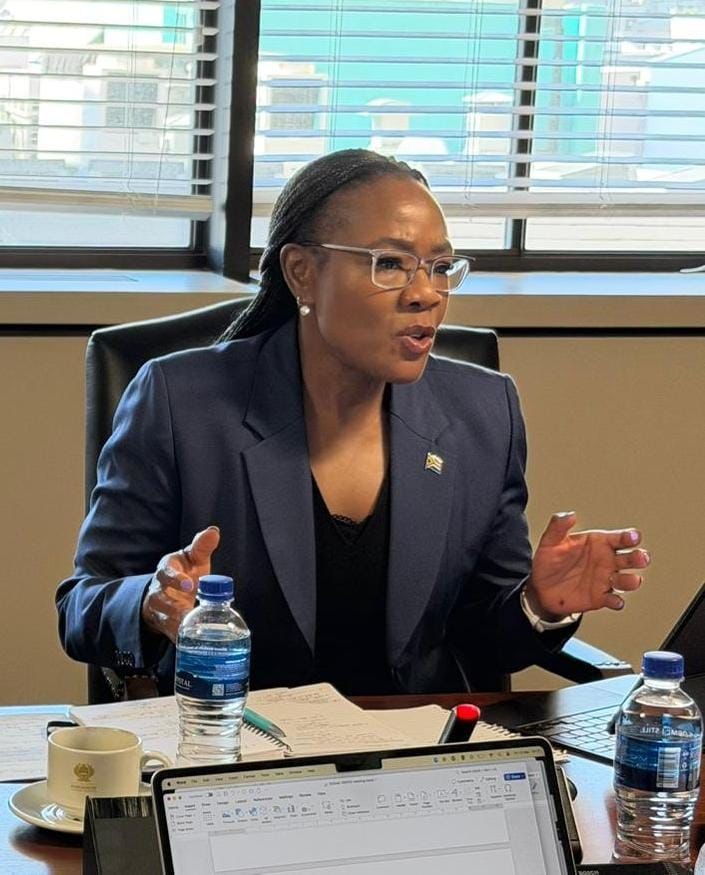
Auditor-General Tsakani Maluleke said on Thursday that regression at dozens of national and provincial institutions showed that South Africa’s “culture of impunity” was worsening.  

“What we’re seeing is that instead of progression in the right direction, there is actually regression. The culture of impunity is unfortunately deepening rather than getting better,” Maluleke said, while presenting the 2024-25 consolidated general report on national and provincial audit outcomes.

ALSO READ: Nkabinde scolds Chauke legal team over late affidavit

The warning came as the Auditor-General of South Africa flagged regressions in audit outcomes at 45 auditees, including 22 high-impact institutions responsible for delivering essential services such as healthcare, education, infrastructure and water. Those regressions covered R523.42 billion in expenditure.

“The root causes to poor audit outcomes, the root causes to this gap between what’s promised and what’s actually practised and delivered, the root causes to this growing and widening trust deficit, the root cause to the weakening capability within public institutions are those same things, governance failures and a lack of consequences and institutional integrity. We come back to a root cause being inadequate institutional capability,” she said.

Out of 417 auditees across national and provincial governments, 151 institutions, or 36%, achieved clean audits. But those institutions accounted for only 12% of total expenditure, while the remaining 266 auditees, responsible for 88% of spending, failed to achieve clean audits.

High-impact auditees alone accounted for about R2 trillion, or 91% of the total expenditure budget, and 64% of modified audit opinions.

ALSO READ: Department says work-from-home not policy as fuel hike looms

A dominant trend remained the large number of auditees receiving unqualified audit opinions with findings. The AGSA said 161 institutions fell into that category, meaning their financial statements were considered credible but they still had material weaknesses in compliance and performance reporting.

“This category is not one where people should stay, complacency has unfortunately set into the system. Thirteen institutions have been in the unqualified zone for 10 years, 44 for between five and nine years,” Maluleke said.

Those institutions accounted for 61% of irregular expenditure, 45% of unauthorised expenditure and 63% of fruitless and wasteful expenditure.

Non-compliance with legislation remained widespread, affecting 58% of auditees. Maluleke said procurement failures were a major driver, with institutions frequently bypassing fair and competitive processes through contract extensions and other deviations.

Irregular expenditure for 2024-25 totalled R42.58 billion, although Maluleke said the real figure was likely to be significantly higher because a further R32.04 billion had not yet been disclosed pending investigations and assessments.

“The 42 billion is not the right number, we have identified R32 billion not disclosed. The number should be somewhere far north of R70 billion,” she said.

Financial management weaknesses also remained entrenched. She said 159 auditees, or 41%, submitted financial statements containing material misstatements, while departments overspent their budgets by R6.23 billion. In total, 67 departments, or 45%, operated at a deficit.

State-owned enterprises continued to pose a major fiscal risk. Maluleke said many remained stuck in the unqualified-with-findings category despite having the means to recruit skilled personnel and improve their control environments.

ALSO READ: Tourism committee slams slow rollout of equity fund for black entrepreneurs

“These things should not be beyond the lot of SOEs because SOEs are able to recruit talent, to afford top quality talent, and they have the space to ensure that they have the capabilities that they need. So, we remain concerned that this situation of having so many SOEs in this unqualified-with-finding zone is simply not improving,” she said.

Eskom and Transnet’s combined liabilities were approaching R866 billion, while government guarantees stood at R453.48 billion.

There was also persistent weakness in infrastructure delivery. Of 152 projects audited, 136, or 89%, had findings, including delays, cost overruns and poor-quality construction.

In the human settlements sector, the AGSA assessed 24 housing projects worth R5.67 billion and found shortcomings in 96% of them, with some projects delayed for almost 20 years and some completed without essential services such as water, sanitation and electricity.

Weak accountability remained a key underlying problem. The AG said some institutions still failed to investigate fraud and misconduct allegations or act against officials responsible for non-compliance and financial losses.

Maluleke said stronger leadership, better coordination and consistent consequence management were needed if government was to rebuild public trust and improve the delivery of basic services.

INSIDE METROS

-Advertisement-spot_img

More articles

LEAVE A REPLY

Please enter your comment!
Please enter your name here

QCTO

spot_img

AVBOB STEP 12

spot_img

Inside Metros G20 COJ Edition

spot_img

JOZI MY JOZI

spot_img

Inside Education Quarterly Print Edition

spot_img

Latest article