
By Charmaine Ndlela
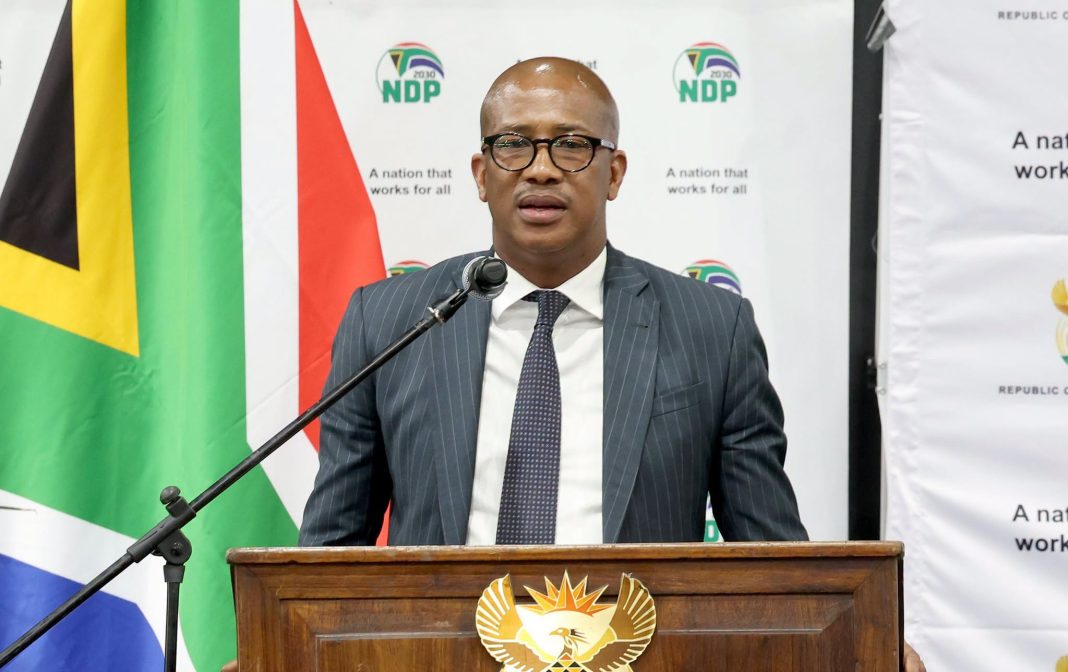
Deputy Minister in the Presidency Kenny Morolong on Thursday launched 300 Anti-Crime Councillors in Pietermaritzburg as part of a new initiative aimed at strengthening community-led efforts to combat crime and violence in one of South Africa’s hardest-hit districts.
The councillors were inaugurated during the launch of the uMgungundlovu District Multi-Stakeholder Anti-Crime Council in Caluza township, KwaZulu-Natal.
Morolong was welcomed by uMgungundlovu District Mayor Mzi Zuma and attended the event on behalf of Deputy President Paul Mashatile, who had been scheduled to launch the initiative but delegated the responsibility as part of his oversight of the District Development Model (DDM).
The initiative forms part of Mashatile’s delegated responsibility to oversee the implementation of the DDM, which seeks to improve coordination across the three spheres of government while addressing crime, unemployment, poverty and poor service delivery.
Addressing delegates on behalf of the Deputy President, Morolong said the initiative marked a significant step towards building safer communities through collective action rather than relying solely on law enforcement.
“We congregate here today for the launch of the uMgungundlovu District Multi-Stakeholder Anti-Crime Council. This initiative is a great advancement in our shared commitment to strengthening safer and more secure communities,” he said.
Morolong said the council gave practical effect to former President Nelson Mandela’s vision that fighting crime required the active participation of every sector of society.
Quoting Mandela’s 1999 Crime Prevention Campaign address, Morolong said the battle against crime must be “a many-sided one” requiring “the active participation of every corner of society.”
He said the newly appointed Anti-Crime Councillors would mobilise communities, improve coordination between stakeholders and strengthen accountability in crime prevention efforts.
“Areas like Pietermaritzburg exemplify these ongoing safety challenges, necessitating urgent and coordinated responses from authorities and communities,” he said.
The Presidency described the launch as an important milestone in advancing a collaborative approach to community safety, saying the councillors would work alongside government, police, business and traditional leaders to build safer neighbourhoods across the district.
Morolong acknowledged that crime continued to threaten the country’s development despite improvements in some crime categories.
He cited the 2026 Numbeo Crime Index, which ranks Pietermaritzburg as the world’s most dangerous city, with a crime index of 82.8 and a safety index of 17.2.
He also referred to the latest South African Police Service crime statistics, which show that while national murder cases declined to 5,181 between January and March 2026, KwaZulu-Natal remains among the provinces recording the highest levels of violent crime.
Morolong warned that organised criminal syndicates, cross-border crime, human trafficking, illicit trade and undocumented migration exploited by criminal networks continued to undermine public safety.
“Our fight is not against migrants, but against criminality in all its forms. We must work together to secure our borders, protect vulnerable communities, combat organised crime and uphold the safety and security of everyone living in South Africa,” he said.
He argued that policing alone would not defeat crime, saying unemployment, poverty, inequality, substance abuse and limited opportunities for young people continued to fuel criminal activity.
Morolong said government was addressing these underlying causes through programmes such as the Presidential Youth Employment Intervention, the Expanded Public Works Programme, the Social Employment Fund, artisan development and TVET college training, while working to attract investment that creates sustainable employment.
He said the Anti-Crime Council would complement existing crime prevention structures rather than duplicate them by providing a permanent platform to coordinate the work of government departments, community organisations, traditional leaders, business, labour, private security and residents.
“We cannot remain passive while crime erodes our people’s dignity, safety and peace of mind. Everyone in South Africa is entitled to live, work, learn and thrive without fear,” he said.
Morolong urged the newly appointed Anti-Crime Councillors to serve with integrity and focus on delivering measurable improvements in community safety.
“You will not be judged on the number of meetings you convene but on the difference you create in the lives of the people of uMgungundlovu,” he said.
He expressed confidence that the district’s model could serve as a blueprint for similar crime prevention initiatives across the country.
“The success of this Council will be measured by our readiness to work together and remain resolute in our commitment to a better South Africa,” Morolong said.
INSIDE METROS