By Thapelo Molefe
Nelson Mandela Bay Municipality is under growing financial pressure as low revenue collection, mounting arrear debt and water and electricity losses threaten its ability to maintain infrastructure and meet rising demand for basic services.
More than six years after the Covid-19 pandemic, the metro continues to face financial and operational challenges, including weak revenue collection, underfunded mandates, water and electricity losses and poor performance on conditional grants.
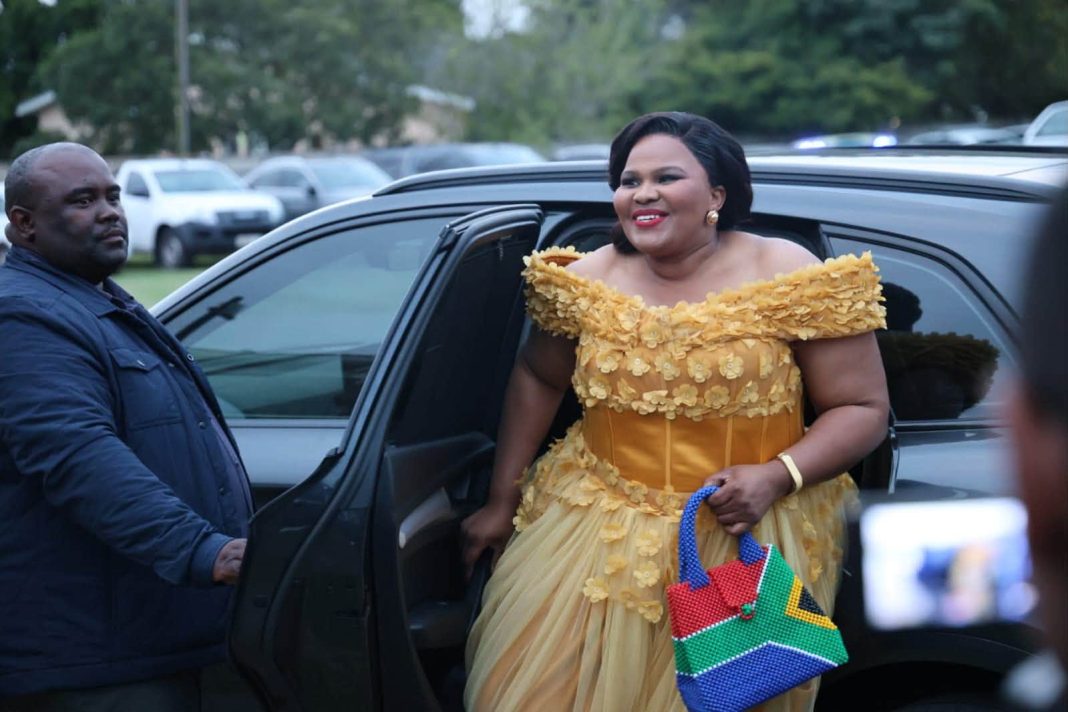
Executive mayor Babalwa Lobishe said the municipality’s monthly collection rate improved from 76.6% in June to 78.3% in July, but warned that significant financial challenges remained.
“Other financial viability challenges include arrear debt, water and electricity losses, underfunded mandates, poor conditional grant performance and slow implementation of mSCOA [Municipal Standard Chart of Accounts],” Lobishe said in her 2026 state of the metro address on Thursday evening.
The financial strain comes as the metro faces ageing infrastructure, maintenance backlogs and continued vandalism of municipal assets.
“Our infrastructure is ageing. Vandalism continues to damage municipal assets. Maintenance backlogs remain significant. Funding does not always match the scale of infrastructure needs and demand for services continues to increase,” Lobishe said.
Water remains one of the metro’s biggest challenges after years of drought and the threat of a “Day Zero” scenario.
About 98% of households have access to water, but the municipality still has about 4,692 buckets in circulation. The rapid expansion of informal settlements is also placing additional pressure on water and sanitation services.
“The proliferation of informal settlements poses a severe challenge in providing water and sanitation to all residents,” Lobishe said.
The municipality has invested about R1.3 billion in drought mitigation projects, including interventions at Impofu Dam and Nooitgedacht Water Treatment Works, as well as pipelines, pump stations and wellfields.
Thirty boreholes have also been commissioned, producing between 20 and 30 megalitres of water a day.
The investment comes as the metro grapples with revenue constraints and losses across its existing water network.
The municipality has replaced 23,570 water meters, repaired 1,186 leaks at indigent households and established monitoring systems to measure non-revenue water.
Electricity faces similar infrastructure and financial pressures.
About 94% of households have access to electricity, but the municipality continues to deal with network reliability problems, illegal connections, tampering and ageing infrastructure.
The metro refurbished 26 power transformers and carried out maintenance on high-voltage transmission lines during the period under review.
It is also pursuing renewable energy projects, including the proposed 15MW Greenbushes Solar Farm and 25MW Parsons Power Park Solar Farm.
Lobishe said the municipality needed to improve its management of existing resources.
“We must improve billing. We must collect what is legitimately owed. We must combat illegal connections and tampering. We must reduce water and electricity losses,” she said.
The metro’s financial problems are compounded by a weak local economy, with unemployment at 33.1%.
Lobishe said young people were particularly affected, while the municipality also faced limited access to funding for small businesses, slow economic growth, investor uncertainty and declining manufacturing competitiveness.
The closure of the Goodyear manufacturing plant in Kariega has added to concerns about the future of the metro’s industrial base.
Manufacturing remains a major part of the local economy, contributing about R44 billion a year and accounting for more than a quarter of economic activity in the metro.
The municipality is also facing institutional capacity challenges, with a high vacancy rate and numerous acting appointments at senior management level placing additional pressure on the administration.
“The high level of acting appointments at senior management level has placed pressure on the institution,” Lobishe said.
The metro was further affected by two severe floods in May and June, which caused an estimated R1.5 billion in infrastructure damage.
About 10,000 people were affected in high-risk informal settlements, while 4,282 people were displaced and 2,857 households evacuated to shelters.
Despite the challenges, the municipality reported progress in service delivery.
It said 17km of gravel roads had been tarred over two financial years, 23,565 potholes repaired and 6.8km of sidewalks constructed.
A further 2,089 households were connected to water and sanitation, while 472 households received electricity connections.
The municipality also reported R1.45 billion in investment facilitated during the review period, resulting in 1,240 permanent jobs. A further 16,492 work opportunities were created through public employment programmes.
Lobishe acknowledged that the progress did not resolve the metro’s underlying problems.
“Whilst we recognise these achievements, we must not become complacent,” she said.
The municipality has allocated R1.4 billion in its current Medium-Term Revenue and Expenditure Framework for water and sanitation projects and R1 billion for electricity infrastructure.
A further R1.7 billion has been set aside for roads and stormwater infrastructure.
The municipality plans to intensify debt collection, tackle illegal connections and tampering, improve conditional grant spending and strengthen financial management.
It has also budgeted R105 million for a new financial management system aimed at improving the reliability and transparency of municipal financial information.
Lobishe said the metro still had significant work ahead as it sought to stabilise its finances while meeting growing demand for services.
“Our financial position is under pressure and we face increasing arrear debt, revenue constraints and grant performance challenges,” she said.
INSIDE METROS