By Akani Nkuna
City of Tshwane executive mayor Nasiphi Moya says her tenure will be successful when residents can go a month without needing to turn to their ward councillors to report service delivery problems.
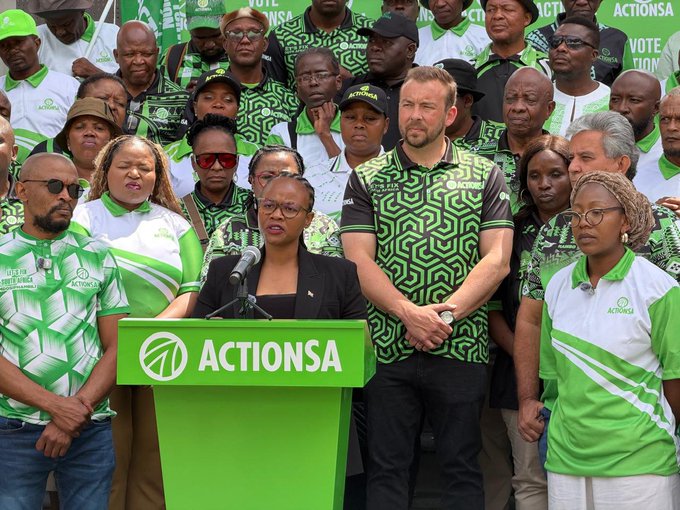
Speaking at the unveiling of ActionSA’s Tale of Tshwane document in Pretoria on Wednesday, Moya said the municipality’s priority was to improve basic services so residents would no longer have to rely on councillors to resolve persistent problems.
“The day I call myself a successful mayor is when residents can go a month without needing a ward councillor. That would be a measure of success, because the work would be done, residents would be left to live their lives and we would take care of basic services,” she said.
The document, presented under the theme “Turning the Page on Failed Government in Our Capital”, outlines the city’s progress since Moya took office in October 2024.
Tshwane had recorded four consecutive unfunded budgets and accumulated more than R13 billion in debt before the current administration took office.
Moya said the city had reduced its Eskom debt by R2.5 billion, from R6.7 billion, over the past two years.
She said improved revenue collection and expenditure controls had also enabled the municipality to adopt funded budgets for the 2025/26 and 2026/27 financial years.
The city’s cash reserves had increased from R835 million to R1.8 billion, she added.
Moya said the municipality aimed to grow the local economy by attracting investment and creating more than 80,000 jobs by 2029.
“Yet, economic progress cannot be measured only through major investment projects. It must also include the informal trader, the township entrepreneur and the small-business owner working to grow a business and sustain jobs,” she said.
Moya also highlighted the Ithuba Youth Economic Development Programme, saying more than 9,000 young people had registered by the end of July, with more than 1,500 securing job opportunities or receiving skills training and development.
The city was also rebuilding the Tshwane Metro Police Department, with 200 additional officers and trainees recruited during the 2025/26 financial year. A further 227 trainees had been allocated to the policing academy, she said.
“Our progress does not mean every problem has been solved, but it shows that a municipality can change direction when leadership is prepared to make difficult decisions and implement them,” Moya said.
On infrastructure, she said the city had replaced more than 28 kilometres of ageing water pipelines and repaired leaks, although some areas continued to experience water shortages and deteriorating infrastructure.
The municipality had also improved water-treatment capacity in Hammanskraal, upgraded electricity infrastructure in Soshanguve and resurfaced more than 220 kilometres of roads, while expanding pothole repairs.
“These interventions matter because residents should not have to organise their lives around broken infrastructure and unreliable municipal services. A city must ultimately be judged by whether its people can live with dignity, security and confidence in their communities,” Moya said.