By Thebe Mabanga
South Africa’s municipalities secured a minor but significant victory when their share of nationally raised revenue was increased from a historical level of 8% to 10%. However, municipalities are unlikely to receive much more in the short term.
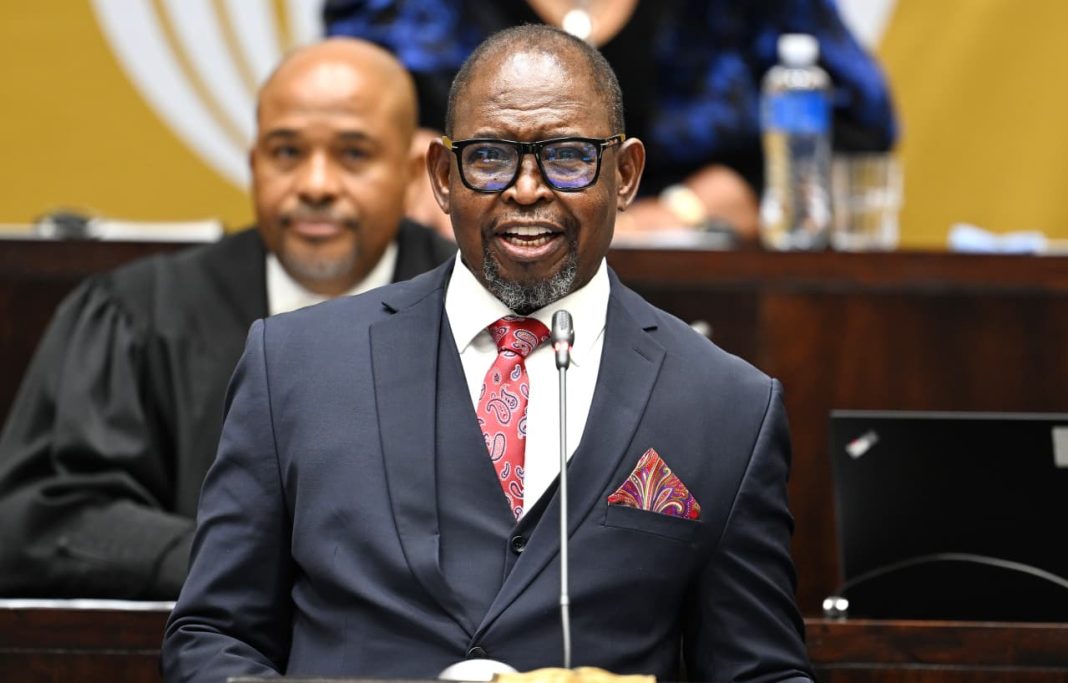
This emerged from the Medium-Term Budget Policy Statement (MTBPS), presented by Finance Minister Enoch Godongwana on Wednesday.
Municipalities also face a review of the infrastructure conditional grant and the Municipal Finance Management Act (MFMA), alongside an additional R3.5 billion allocation for smart meters to improve electricity revenue collection.
Godongwana reminded Parliament of how closely municipalities are connected to communities.
“Citizens experience the state most directly at the local level. Yet, the financial and operational performance of many municipalities remains weak. This is untenable. It affects the delivery of basic services. It undermines economic activity. And it erodes public confidence,” he said.
Godongwana announced that, over the medium term, or the next three years, national departments would receive 47.4% of available non-interest spending, provinces 42.6% and local government 10%.
“Reaching a 10% share is a significant milestone. It reflects government’s commitment to strengthen service delivery where citizens live, work and raise their families,” Godongwana said.
An additional R21.8 billion has been allocated to the local government equitable share to cover the higher bulk costs of providing free basic water, sanitation, electricity and refuse removal.
Government is also increasing the general fuel levy allocation by R13.4 billion, restoring the metros’ share to 23% over the medium term.
“We are also adding R20.5 billion to the provincial equitable share to help provinces meet the higher costs in health and education,” Godongwana said, in an allocation that strengthens the case for retaining provinces.
During the review of the Local Government White Paper, municipal body the South African Local Government Association (SALGA) called for the municipal share to be increased to as much as 18%.
It argues that local government performs a range of functions that are not adequately funded, including the provision of parks and libraries.
The prospect of such an increase appears slim.
Godongwana noted that the review of municipal funding had found that most municipalities had enough money for day-to-day operations but spent too much on running costs.
“This leads to insufficient funding provisions for long-term infrastructure investment and maintenance,” he said.
Godongwana said a report examining comprehensive municipal funding would be completed by the end of the year.
The minister also announced an accelerated rollout of smart meters to boost revenue collection.
“On top of the R2 billion allocated, we are adding R3.5 billion over the MTEF for an even wider rollout of smart meters,” he said.
The additional funding follows successes in revenue collection in municipalities such as Sol Plaatje, Kannaland and Bela-Bela.
Municipalities are also being incentivised to reinvest revenue from water, electricity and waste services into the infrastructure supporting these services through the Metro Trading Services model, which requires them to ring-fence revenue from the three areas.
National Treasury is undertaking the first comprehensive modernisation of the MFMA in 23 years. Godongwana said the review would focus on funded budgets, improved revenue management, clearer accountability and earlier intervention when municipalities experience financial distress.
The revised Bill will also strengthen Treasury’s oversight and introduce stronger mechanisms to investigate financial misconduct and recover losses.
Government is additionally reviewing the Infrastructure Conditional Grant to ensure that funding allocated to municipalities is used for its intended purposes and reaches targeted communities.
“Communities should have reliable water, functioning sanitation, well-maintained roads and safe, well-lit public spaces,” the minister said.
“With local elections approaching, citizens will judge municipalities by their performance and the quality of services they receive.”
Referring to the upcoming local government elections, Godongwana said: “On 4 November, South Africans will once again have the opportunity to exercise their democratic right and shape the future of their communities. The responsibility now rests with all municipalities to demonstrate that public resources are being used effectively and in the service of the people.”
INSIDE POLITICS