By Johnathan Paoli
South Africa’s local government transformation programme effectively fizzled out within three years of its introduction, which has had dire consequences for municipalities, according to SA Local Government Association CEO Sithole Mbanga.
This has left them with vastly different capacities operating under the same policies and support structures, creating a critical gap in the process of building the new local government system, he said.
He was referring to the Local Government Transformation Programme, which was stablished following the adoption of the White Paper on Local government in 1998.
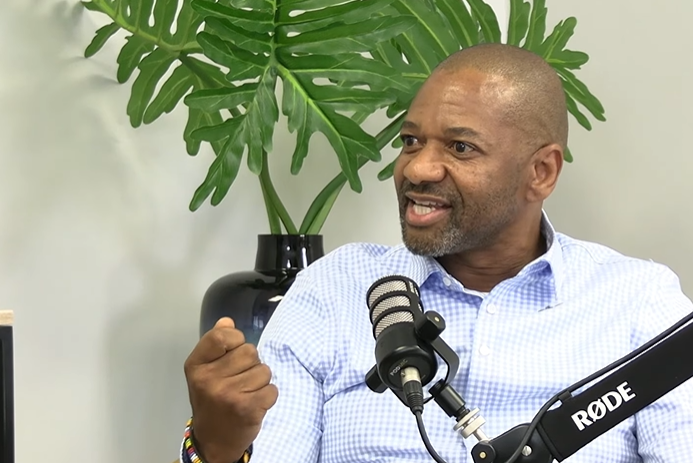
Speaking on the Inside Metros podcast, Mbanga said the review of the White Paper offered an opportunity to address structural weaknesses that had left many municipalities struggling to fulfil their responsibilities.
These include inadequate funding, skills shortages, poor accountability and a failure to properly recognise the different circumstances facing municipalities.
“There’s an opportunity for us to look at local government differently. I think most people do not understand that municipalities are not the same,” he said.
Mbanga believes that applying the same policies, legislation and support mechanisms to municipalities with vastly different capabilities has contributed to the difficulties they experience.
This is especially true for municipalities inherited from the former Transkei, Venda, Bophuthatswana and Ciskei (Bantustan) administrations. They were amalgamated into the democratic local government system without necessarily having the skills and capacity required to fulfil their responsibilities.
Mbanage said the current funding model remained a major obstacle because municipalities were responsible for delivering a substantial proportion of public services while receiving a comparatively small share of national revenue.
Salga wants municipalities to receive at least 18.5% of national revenue, instead of the current 10%.
“Unfortunately, this is far from what we require as local government. This is far,” Mbanga said.
Municipalities are responsible for around 42% of public services, but they historically receive about 8% of the national fiscal allocation.
Mbanga said municipalities also played a central role in economic development, with urban centres contributing around 80% of the country’s gross domestic product.
He challenged political leaders to reconsider the allocation of resources between the three spheres of government, arguing that municipalities needed sufficient funding to provide electricity, water, roads and land for businesses to operate.
Salga has identified five priority areas in its approach to reforming the sector: financing, professionalisation, economic development, climate change and spatial transformation.
Mbanga also highlighted accountability, particularly following deteriorating municipal audit outcomes, arguing that municipal managers and political leadership needed to work together more effectively.
He said Salga was strengthening its relationship with municipal managers. It recognised that professional administrators need to be involved in the organisation’s work.
“We can’t be asking for more money and on the other side, we are not accounting for those money,” he said.
The timing of the White Paper review is important because the consequences of South Africa’s broader economic and governance failures are increasingly being felt in municipalities.
This is further aggravated by coalition governments, frequent changes in municipal leadership and tensions between political office bearers and administrators.
The review will need to clarify what municipalities are expected to deliver, where national and provincial government must step in and how each sphere will be held accountable when it fails to fulfil its responsibilities.
Catch the full interview with Mbanga as he unpacks the urgent need for local government reform, sustainable funding model and priorities for strengthening municipalities.