LUCAS LEDWABA
THE cabinet lekgotla has instructed national departments and provinces involved in the District Development Model Plan to submit their projects and budgets by 7 February in what appears to be an effort to speed up implementation of the plan in the wake of growing discontent with service delivery.
The DDM was adopted by cabinet in August last year.
It has been piloted in the OR Tambo, eThekwini and Waterberg district municipalities since August last year with its aims among others being to build government capacity to support municipalities.
Crucially, it also aims to ‘exercise oversight over budgets and projects in an accountable and transparent manner.’
This is deemed a crucial intervention following Auditor General Kimi Makwetu’s report in June which highlighted municipalities’ noncompliance with regulations led to irregular expenditure of R62.6 billion during the 2017/18 financial year.
This was an increase from R51 billion announced by the AG a year earlier.
A recent cabinet lekgotla to update the implementation of the DDM appears to advocate for a crackdown on municipalities with more hands on intervention by provincial and central government.
“In light of persistent municipal dysfunctionality and failure by provinces to intervene timely, decisively and effectively… Cabinet through CoGTA to intervene directly in municipalities through Section 154 or (139) or 100 (1) (b) of the Constitution where necessary,” reads one of the resolutions.
Currently at least 40 municipalities out of the country’s 278 have been placed under administration due to various factors including corruption, maladministration and mismanagement.
The SA Local Government Association [SALGA] has previously raised concern about placing municipalities under administration, with its president Thembi Nkadimeng telling a session of the National Council of Provinces late last year that “there was a need to reflect on the efficiency of the process of placing struggling municipalities under administration through section 139 of the Constitution, in an effort to restore good governance and sound financial management.”
But the cabinet lekgotla appears to be taking a hard stance against non-performing municipalities in its bid to get the DDM up and running efficiently.
The lekgotla noted that ‘the successful implementation of the DDM depends on functional municipalities.’
It also resolved that CoGTA at national level will be deploying technical expertise to provide a shared service to district municipalities to address challenges of service delivery, financial management, governance and administrative issues.
Critically the lekgotla has resolved to ‘reorganise CoGTA to have a provincial and district footprint to provide hands on support.’
This may effectively mean that the national department will be required to me more hands on in implementation of projects under the DDM, an example of this being the lekgotla’s recommendation that all capacity building grants be coordinated at a district level to support municipalities.
Launching the initiative last year president Cyril Ramaphosa said the DDM aims to accelerate, align and integrate service delivery under a single development plan per district or metro that is developed jointly by national, provincial and local government as well as business, labour and community in each district.
Under the DDM ‘each district plan ensures that national priorities such as economic growth and employment; improvements to living conditions; the fight against crime and corruption and better education outcomes are attended to in the locality concerned.’
Ramaphosa said the DDM’s approach will ensure that planning and spending across the three spheres of government is integrated and aligned and that each district or metro plan is developed with the interests and input of communities taken into account upfront.
The DDM is due for implementation in all of South Africa’s 44 municipal Districts and eight metros.
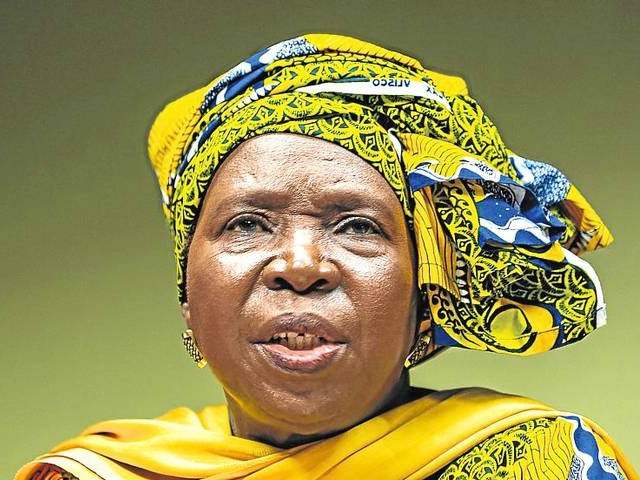
Inside Politics has seen a presentation of the plan made by Dr Nkosazana Dlamini-Zuma, Cooperative Governance and Traditional Affairs Minister.
Inside Politics has also learned that the plan faces major challenges which were highlighted during the cabinet lekgotla held last week.
The lekgotla acknowledged there were ‘cross-cutting lessons learnt in the pilot districts.’
These included poor integration and coordination of programmes and projects, lack of clarity on rationale of projects which included ‘schools built in villages with no enrolment of learners.’
The lekgotla also found that ‘sector departments do not collaborate when implementing their programmes leading to potential duplication and diluted impact.’
Some of the challenges highlighted included the fact that ‘opportunities in the districts are not being used to grow local economies and to support national growth.
It cited examples such as the fact that agriculture potential in the areas was not tapped into to promote job creation, that tourism is not unlocked as a sector to boost the economy of the said districts and that there was ‘no clear strategy to take advantage of potential in the blue economy sector.’
But perhaps crucially the lekgotla identified the lack of specialised institutions of learning necessary to support the economy of the districts in agriculture, tourism, oceans economy and mining.
This rings true for an area like Waterberg which despite being home to the biggest dry-cooled coal-fired power station in the world Medupi Power Station, and is also projected to experience a major mining boom in the next decade is bereft of any technical schools or training institutions to empower the populace to take advantage of resultant opportunities.
“The levels of poverty and unemployment exist in a region endowed with natural resources. This paradox could be as a result of a mismatch between opportunities that exist in the region and skills to take advantage of available opportunities,” the lekgotla says in its findings on the Waterberg where Ramaphosa launched the pilot in November.
The lekgotla found that in eThekwini there has been a general decline in the economy in the past 10 years, inefficiencies with the management of the port and congestion, negative impact of crime and grime on the tourism industry.
The lekgotla also resolved that the department of cooperative governance and traditional affairs [CoGTA], which is central to the DDM, should establish a National Programme Coordination Unit and District Hubs by end of March. The District Hubs are expected to coordinate all the support to the municipalities.
“Dedicated expertise to be deployed in the District Hubs to provide direct hands on support, monitoring and provide advisory services to the implementation of the District One Plan [central point of coordination]. The District Hubs will coordinate all the support to the municipalities.”
The lekgotla also recommended that the departments of human settlements, water and sanitation, minerals and energy, transport, environmental affairs and public works and infrastructure and CoGTA need to provide town, urban and regional planners, specialist engineers, artisans and environmental practitioners.
It said the team should provide hands on support to municipalities by addressing water, sanitation, solid waste management, roads and storm water and energy.
- INSIDE POLITICS