
By Charles Molele
Gauteng premier Panyaza Lesufi has announced new by-laws to govern spaza shops as the province responds to a rise in deadly food poisoning cases.
The announcement follows a meeting on Sunday with provincial executive council members, municipal leaders and heads of department to coordinate a provincial response.
It also comes after the announcement by Minister of Cooperative Governance and Traditional Affairs Velenkosini Hlabisa on 7 November 2024, when he introduced a new Standard Draft By-Law for Township Economies.
This by-law, issued in accordance with the Local Government: Municipal Systems Act of 2000, aims to create an enabling environment for small businesses in townships, supporting economic inclusion, job creation, and community empowerment.
After the meeting on Sunday with the provincial executive and municipal leaders, Lesufi said it was agreed that addressing the issue of deadly food poisoning at spaza shops required a comprehensive approach involving stricter regulations, better enforcement of existing laws, and increased public awareness about the potential dangers associated with purchasing from unregulated spaza shops and informal traders.
“All councils across municipalities will pass the new by-laws by the national department of COGTA which explain how to register a business and conduct business to ensure a uniform approach,” said Lesufi.
“We are going to start weekly stakeholder engagement and consultations. We are further starting the process of re-registration of spaza shops.”
Lesufi said MEC for Economic Development, Lebogang Maile and all MMCs are expected to develop a template of reregistration of business, especially businesses that were involved in illness and deaths of our children.
He said municipalities have a crucial role in ensuring the enforcement of by-laws.
“They are also instrumental in overseeing the informal sector, primarily through municipal policies and regulations governing informal trading. Some of the immediate interventions that we agreed on include implementation of enforcement and compliance to ensure adherence to relevant regulations and standards. Instituting food safety educational and awareness programmes,” said Lesufi.
He added that the meeting further recommended that municipalities, in addition to enforcing by-laws, they must implement a comprehensive strategy which will include education and training for spaza shop owners and staff on food safety practices.
This will include proper food handling, storage, and cooking techniques.
“Municipalities are expected to establish a system for regular health inspections by local health authorities to ensure compliance with food safety regulations,” said Lesufi.
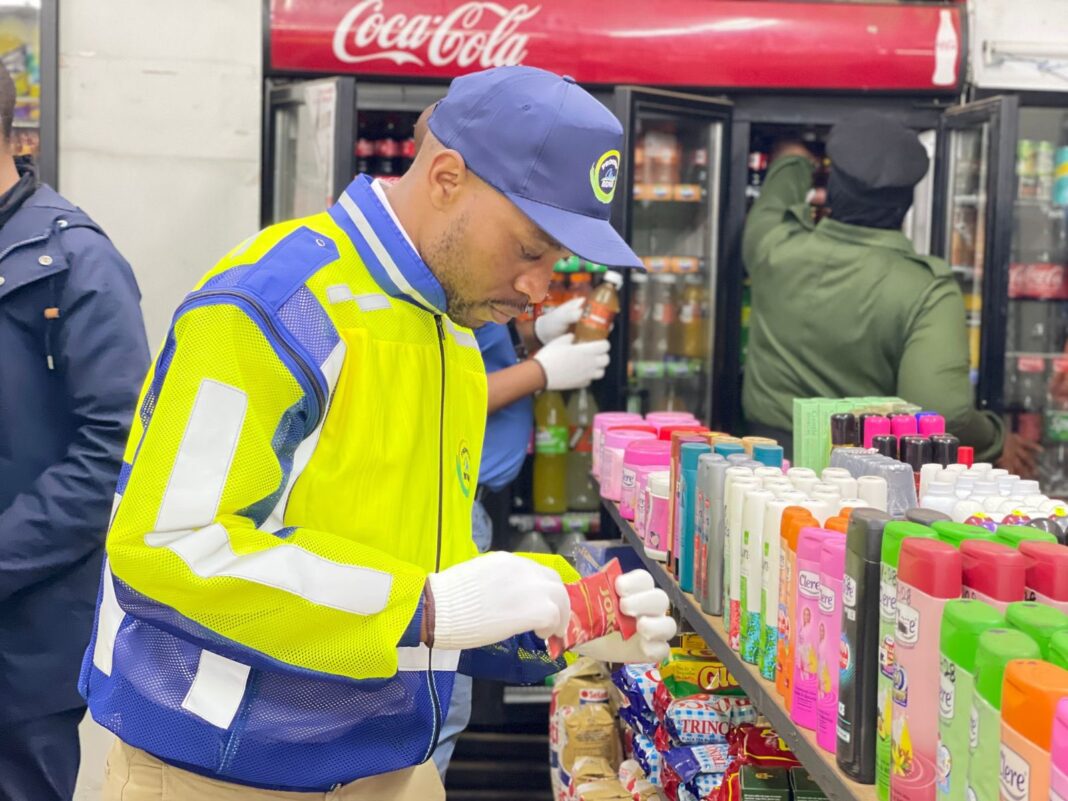
He said law enforcement will move with speed to close shops that do not comply.
“Government is aware that the informal sector is a vital component of our economy as it affects people’s livelihoods, provides opportunities for many who would otherwise be marginalised, and is essential for tackling the triple challenge of poverty, unemployment, and inequality,” said Lesufi.
“It is, however, the responsibility of informal traders to trade in accordance with legal requirements and in a manner that promotes public health and safety. We have found that some of these informal retail outlets often operate without proper licensing/certificates of acceptability and other regulations. We have also found that they sell a variety of products, including food and household items, that do not meet safety standards.”
In recent weeks, dozens of children have died after eating contaminated food allegedly purchased from spaza shops, resulting in 23 deaths and 441 reported cases since January.
Ekurhuleni recorded the highest number of incidents, followed by the West Rand, while Johannesburg saw the majority of fatalities.
Postmortem results indicate that organophosphate contamination contributed to at least seven of the 23 deaths.
Lesufi further announced that a decision was also taken in Sunday’s meeting that Members of the Executive Council and Mayoral Committees will embark upon a Community and Stakeholder Engagement Programme on an urgent basis.
Provincial leaders will hold weekly Saturday meetings with municipalities, with Sunday media updates to provide ongoing transparency, he said.
“This is our commitment to maintaining law and order while safeguarding public health and consumer rights. By enforcing regulations governing trading activities and product standards, we aim to protect consumers from potentially harmful or substandard goods,” said Lesufi.
“In addition to this, we are going to meet every Saturday with all municipalities and update media on Sundays. We call on Gauteng residents not to buy foodstuffs that have reached the expiry: use or sell by dates. When buying groceries please take your time and check the dates before buying.”
INSIDE METROS