

By Johnathan Paoli
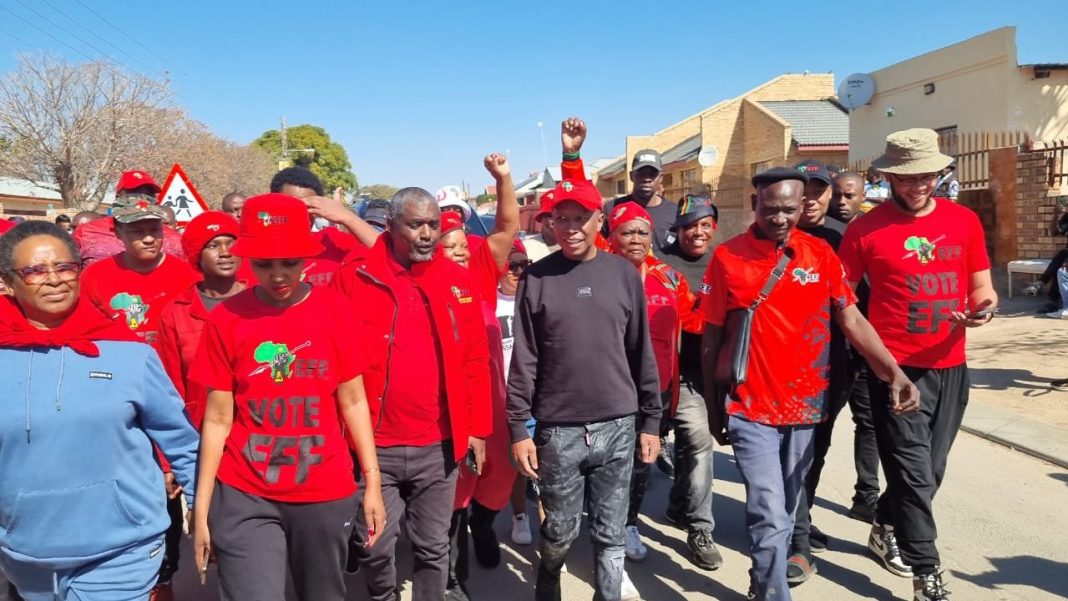
The EFF in Gauteng has called for the immediate termination of all government contracts awarded to Mafoko Security Patrols, accusing the private security company of failing to pay December wages and of exploiting security guards deployed at key public sites across the province.
The party said that Mafoko Security Patrols had “demonstrated beyond doubt its inability to manage its finances and meet its obligations to employees”.
The company’s continued presence at municipalities, the Gauteng Provincial Legislature, state properties and airport facilities posed a serious risk to both public safety and labour rights, the party said.
“It is deeply troubling that this same company continues to be awarded security contracts despite its notorious record, once again confirming the EFF’s long-standing position on the corruptibility of the tender system.”
The EFF highlighted complaints and documented cases against Mafoko, including allegations that the company had failed to pay statutory contributions to the Unemployment Insurance Fund and pension funds, despite deducting these amounts from workers’ salaries.
It said doing so was “nothing less than wage theft”, adding that security guards were being exploited while protecting public assets.
It said Mafoko’s contracts should be cancelled and the work insourced.
The party also demanded a full investigation into the legality and compliance of all Mafoko contracts, strict enforcement of court rulings, and the attachment of company assets to settle outstanding wages and statutory benefits, including compensation owed to families of deceased workers.
The EFF’s statements follow Gauteng DA health spokesperson, Jack Bloom, calling on the provincial health department to act decisively against Mafoko.
The company has a three-year contract worth R180 million to provide security at George Mukhari Hospital.
Bloom said the department had admitted, in a written reply to questions in the Gauteng Legislature, that it was unaware of a Ga-Rankuwa court judgment relating to Mafoko’s alleged failure to pay over provident fund contributions deducted from workers’ wages.
He said the department had since requested clarification from the company and promised to implement corrective measures in line with the service agreement and general contract conditions.
Citing the South African Federation of Trade Unions general secretary Zwelinzima Vavi, Bloom said Mafoko had allegedly ignored hundreds of complaints from security guards who claimed their provident fund deductions were never paid over.
Vavi estimated that the company could owe workers between R111 million and R330 million in unpaid contributions.
Bloom warned that non-compliance with the Pension Funds Act could result in criminal sanctions, including fines and imprisonment.
He also pointed to a TikTok video alleging that Mafoko failed to pay December salaries to guards stationed at the Gauteng Provincial Legislature.
Bloom said hospital security costs had increased dramatically from R655 million in 2022 to R2.54 billion this year, describing the spike as “suspicious” and suggesting possible corruption in the sector.
He said strikes by unpaid security guards had become increasingly common, while workers remained underpaid, adding that the DA would continue to push for a review of hospital security contracts to ensure value for money and prioritise healthcare delivery.
Mafoko Security Patrols has rejected the claims.
Company director Lebo Nare said Mafoko employs more than 6,000 workers and has consistently complied with labour and pension regulations.
Nare said the company had moved contributions from the Private Security Sector Provident Fund (PSSPF) to Alexander Forbes after governance failures at the PSSPF, which was later placed under statutory management.
She said more than 90% of affected employees had already received their benefits, and that the only disputed amount, around R9 million, was linked to payment delays by government clients rather than theft.
She criticised structural problems in the private security sector, saying that delayed client payments and punitive interest charges created a cycle of debt that did not benefit workers.
INSIDE METROS