

By Johnathan Paoli
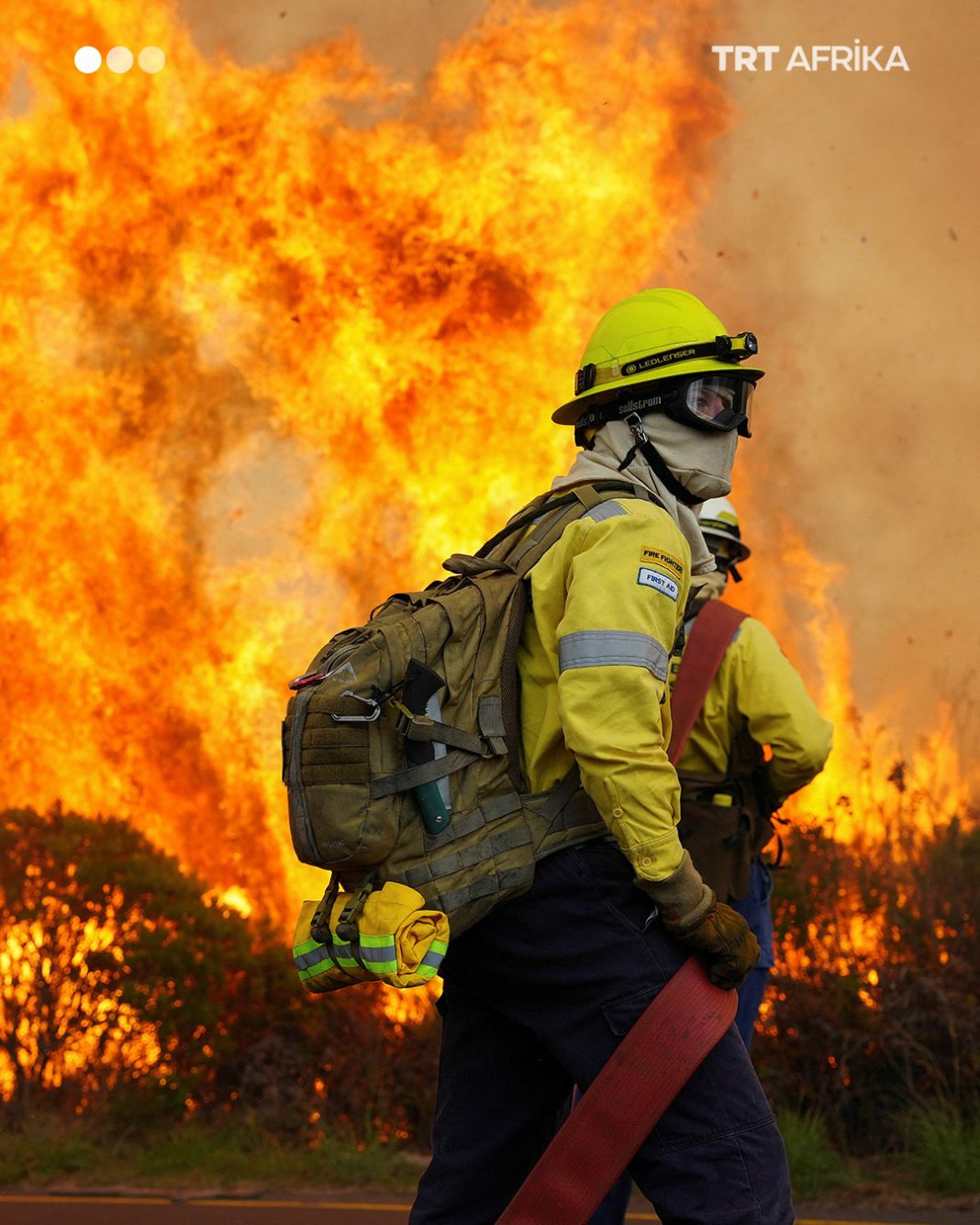
Firefighters across the Eastern and Western Cape remain under extreme pressure as widespread wildfires continue to burn out of control in several regions, driven by high temperatures, strong and shifting winds, and prolonged dry conditions.
Authorities in both provinces have issued urgent evacuation orders, closed major transport routes and mobilised extensive aerial and ground firefighting resources as the fire season intensifies.
In the Eastern Cape, the Kouga Municipality has issued an immediate evacuation order for residents in several high-risk areas as fires rage uncontrollably.
Residents of the Zwartenbosch area along the R330 towards Hankey were instructed to evacuate without delay after flames spread on both sides of the road, threatening homes, farms and nearby infrastructure, including a poultry farm in the area.
The municipality said the cause of the fire remains unknown, but worsening weather conditions have significantly hampered containment efforts.
Dense smoke has also forced the closure of the N2 between Jeffreys Bay and Humansdorp, with motorists urged to avoid the area entirely.
Kouga Mayor Hattingh Bornman said firefighters were dealing with multiple active fire fronts as winds repeatedly changed direction.
“With the increasing wind and change of direction, the fire has flared up again and currently we have two situations; on the R330 between Humansdorp and Hankey, as well as between St Francis and Humansdorp. The fire on the Kromme River is out of control, and we are asking residents who live close by to evacuate with immediate effect so that we don’t suffer any loss of life,” Bornman said.
The evacuation order also extends to residents along Oyster Bay Road, surrounding farming areas, and the Kromme River and Riverside communities.
Authorities urged residents not to delay and to follow instructions from emergency services, confirming that temporary accommodation would be made available for displaced families.
The Eastern Cape fires form part of a broader escalation of fire activity along the southern coastline, with authorities warning that hot, windy conditions could fuel further flare-ups in the coming days.
In the Western Cape, firefighters are battling multiple major wildfires across the Overberg, Garden Route and Cape Town regions, placing severe strain on municipal and provincial resources.
In the Overberg alone, three large fires are burning in Stanford, Pearly Beach and Greyton, while additional wildfires continue in Mossel Bay and Tsitsikamma.
The Pearly Beach fire has entered its fifth day and has spread as far as the Stanford wine farms.
Overberg District Municipality Fire Chief Reinard Geldenhuys said the Greyton fire was initially contained but jumped containment lines due to strong westerly winds, spreading into the mountains near Riviersonderend.
Smaller fires are also burning near Villiersdorp, further stretching firefighting capacity.
In Stanford, a fire burning between the Die Kop informal settlement and Stanford Industria remains out of control in dense, inaccessible vegetation.
A helicopter was dispatched from Stellenbosch to assist ground crews, while Working on Fire teams and municipal firefighters continue efforts to establish firebreaks.
Overstrand municipal manager Dean O’Neill warned landowners to “prepare for any eventuality” and remain on high alert.
In the Garden Route, Mossel Bay has been one of the hardest-hit areas.
A devastating wildfire that began earlier this week destroyed at least 10 homes and burned approximately 19 square kilometres before a fire stop was called in the early hours of Thursday, indicating that the blaze is under control but not yet fully contained.
Firefighters continue mop-up operations, particularly in Vakansieplaas, Aalwyndal and Island View, where flare-ups remain a concern.
The N2 between Dana Bay and Langeberg Mall, which had been closed in both directions due to smoke, has since reopened.
Evacuated residents were allowed to return home on Wednesday, and the Mossel Bay Municipality confirmed that no further evacuations had been carried out.
Fire crews remain on full deployment as high fire danger conditions persist.
Further east, one of the largest active fires in the province is burning in the Keurbooms–Soetkraal area of the Tsitsikamma section of the Garden Route National Park.
The fire, believed to have been caused by lightning, has burned an estimated 10 000 hectares in remote mountainous terrain managed by South African National Parks.
Firefighting teams are focusing on containment rather than full suppression due to the terrain and prevailing conditions.
Provincial authorities confirmed that the Western Cape is experiencing an exceptionally severe fire season.
Western Cape MEC for Local Government, Environmental Affairs and Development Planning Anton Bredell said the province had already recorded double the number of aerial firefighting callouts compared to the same period last year, warning that hot and dry conditions could extend the fire season beyond March.
Authorities in both provinces have urged residents to heed evacuation orders, comply with road closures and remain vigilant, warning that volatile conditions mean further flare-ups remain a serious risk.
INSIDE METROS