

By Thapelo Molefe
Failing municipalities are at the heart of South Africa’s worsening water crisis, with the majority unable to maintain infrastructure, manage water systems or deliver reliable services, Water and Sanitation Minister Pemmy Majodina said on Tuesday.
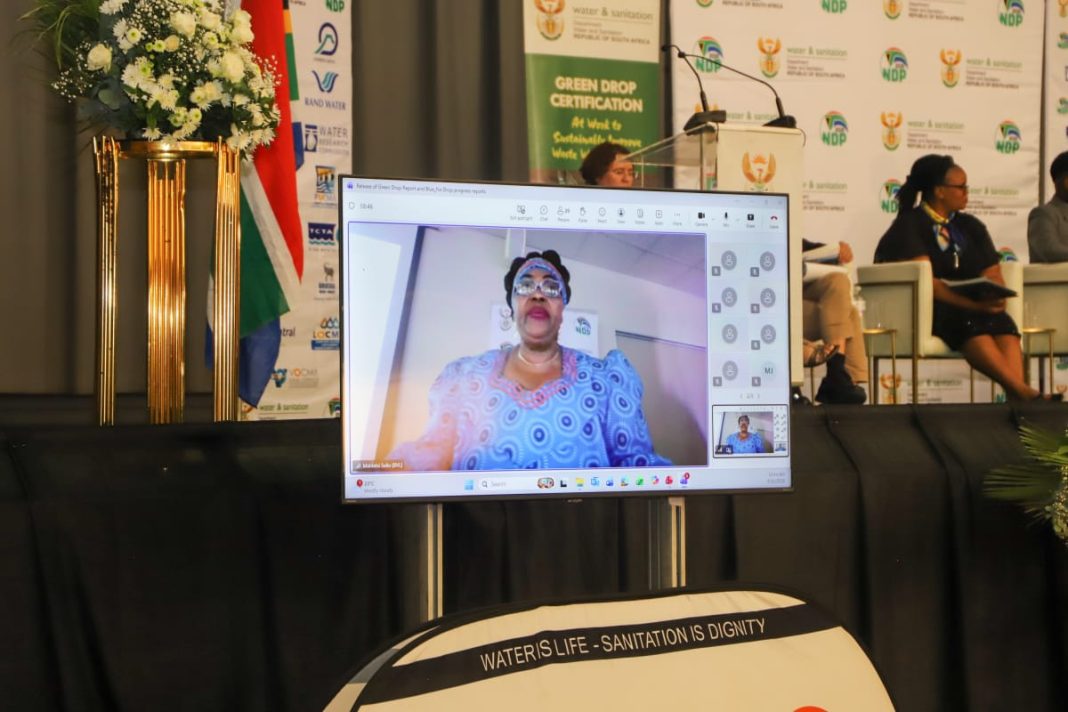
Presenting the latest 2025 Full Green Drop, Blue Drop and No Drop reports, Majodina said poor municipal performance is driving declining water quality, infrastructure collapse and widespread service delivery failures.
“A deterioration in municipal wastewater performance is one of the serious highlights that we are bringing today,” she said.
According to the report, 105 out of 144 water services authorities are performing poorly, leaving only a small number of municipalities operating effectively.
The minister pointed to a combination of governance failures, weak technical capacity and poor financial management as key drivers of the crisis.
“Many municipalities lack the capability to discharge their mandate in terms of governance and service delivery,” she said.
Among the core problems identified are ageing and poorly maintained infrastructure, failure to reinvest water revenue into maintenance, weak billing systems and a shortage of skilled personnel.
“There is no priority given to the budget for maintenance… and no reinvestment of revenue back into water and sanitation infrastructure,” Majodina said.
She also highlighted operational failures, including municipalities not adhering to basic treatment standards and in some cases failing to employ qualified staff to run critical systems.
The consequences are severe, with communities facing water shortages, unreliable supply and contamination of rivers and water sources.
Deputy Minister David Mahlobo said some residents go “for days, for weeks” without water due to system failures, while others witness water leaking into streets due to broken infrastructure.
In some cases, basic operational breakdowns have left infrastructure unusable.
“I attended a funeral where we were told there is water, there are boreholes, there is diesel, but there is no operator,” Majodina said.
Beyond technical failures, the minister warned that corruption and criminal activity are further undermining municipal performance.
“There is theft, sabotage, fraud and maladministration, which robs communities of their constitutional right to safe water,” she said.
Government is now moving to tighten oversight and enforcement. Proposed legislative amendments will give the department greater authority to act against failing municipalities and compel them to appoint capable water service providers.
Funding has also been prioritised for struggling municipalities through infrastructure grants, with a focus on turnaround interventions.
Despite this, Majodina stressed that accountability ultimately lies with local government.
“The water crisis… is not the mandate of the Department of Water and Sanitation. That is the mandate of the local government,” she said.
She urged municipalities to treat the report as a turning point and implement urgent corrective measures.
“This report must be your turning point… restore discipline, strengthen operations and act with urgency,” she said.
Failure to do so, she warned, would deepen the crisis and further erode public trust.
“A happy client is a client that will pay for services,” she said.
INSIDE METROS