By Simon Nare
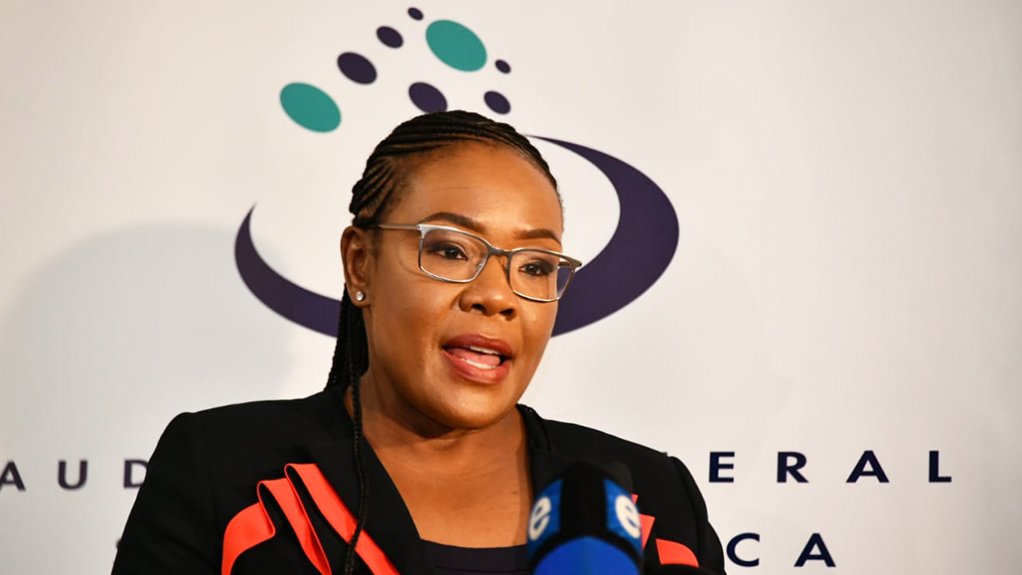
The office of Auditor-General Tsakani Maluleke has painted a grim picture of governance failures across four major metros, with audit outcomes presented to the Standing Committee on Public Accounts (SCOPA) in the National Assembly of South Africa on Tuesday.
The presentation, covering Mangaung, Ekurhuleni, Tshwane and eThekwini, revealed recurring issues of weak accountability, wasteful spending, irregular expenditure and critical skills shortages.
Maluleke also raised concerns about water quality in some municipalities, warning that it poses a health risk to residents.
“I could not verify water revenue from conventional meters due to unreliable consumption data. Additionally, incomplete billing caused a material understatement of revenue. I could not verify water distribution losses due to unreliable units sold,” she told SCOPA.
She highlighted widespread non-compliance in areas including misstatements in submitted financial statements and annual reports, weak consequence management, poor revenue controls, and deficiencies in procurement, contract and environmental management.
Maluleka identified the root causes as systemic failures in internal controls, which are not embedded as a performance responsibility.
This results in controls being applied reactively during audits rather than continuously.
She further noted that user departments are not held accountable for preparing and safeguarding supporting evidence, leading to unreliable information only being tested at audit stage. Legislative compliance, she added, is treated as a reactive exercise rather than an operational duty.
Unauthorised expenditure declined to R1.36 billion from R1.81 billion in the previous financial year.
However, irregular expenditure increased to R324 million from R277 million, while fruitless and wasteful expenditure decreased to R67 million from R130 million.
In Mangaung, audits of water, electricity, roads and housing projects revealed a breakdown in internal controls, weak leadership accountability, chronic late payments, severe skills shortages and failure to safeguard completed assets, many of which were vandalised.
Maluleka recommended tighter controls over overtime and urgent intervention to address prolonged estimated water consumption.
In Ekurhuleni, compliance remained a concern, with repeat findings on procurement and contract management. She found weak contract monitoring and signs of possible collusion between officials and bidders.
“Due diligence procedures are insufficient to reliably detect potentially fraudulent documentation. The lack of timely consequence management for transgressions further undermines ethical behaviour and institutional integrity,” she said.
A similar pattern was identified in Tshwane, which received a qualified audit. The metro was flagged for internal control failures and a lack of daily and monthly controls to ensure accurate financial reporting.
“The quality of financial statements remains concerning due to material misstatements in significant balances and disclosures.
“Both qualification areas are repeated, indicating that action plans have not been effective and system improvements have not adequately addressed previously identified weaknesses,” Maluleka said.
eThekwini received an unqualified audit opinion, but with findings on compliance with legislation.
While its financial statements were free of material misstatements, performance reporting remained a concern.
She said actual achievements did not align with reported results for some indicators, and that performance claims were not adequately supported by evidence.
“The findings raise questions about the credibility of in-year reporting and the effectiveness of performance reporting. There was no reporting on eight indicators due to a lack of systems to reliably track them. Management must implement recommendations to ensure readiness for future reporting periods,” she said.
Maluleka concluded that weak oversight and inadequate monitoring by leadership continue to undermine the control environment, resulting in persistent non-compliance with legislation.
INSIDE METROS