-Advertisement-spot_img
spot_img

AG finds ‘concerning regression’ in metros  

-Advertisement-spot_img

Must read

By Akani Nkuna

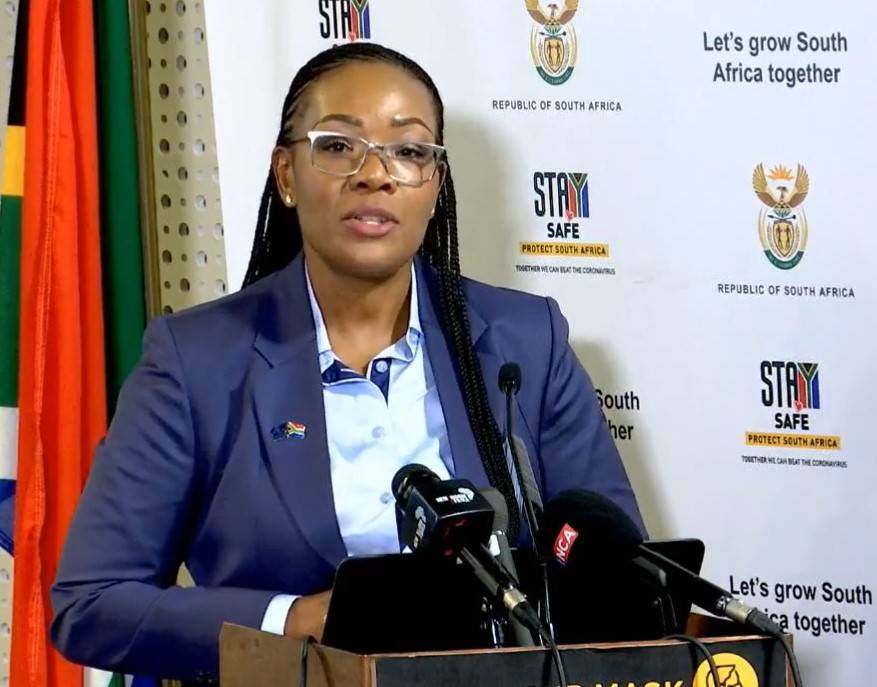
Auditor-General Tsakani Maluleke has warned that South Africa’s metros are regressing on audit outcomes, financial health and service delivery, saying weaknesses in institutional capability are undermining their ability to deliver and maintain infrastructure.

Maluleke was briefing Parliament’s Portfolio Committee on Cooperative Governance and Traditional Affairs on Wednesday during the tabling of the 2024-25 local government audit outcomes.

ALSO READ: Mkhwanazi denies sharing proceeds from Killarney precious-stones theft

“In fact what we are seeing is that, on the whole Metros are regressing not just on audited outcomes, but importantly on financial health and also on service delivery,” she said.

“We looked at how they were managing the grants that were available to them to build houses and we found that there was a big struggle in ensuring that projects are delivered on time, at the right cost, and at the right value. Simply put, it tells us that the metros do not have the institutional capabilities that we can depend upon to drive infrastructure investment.”

The Auditor-General’s report found that none of the country’s eight metros achieved a clean audit in the 2024-25 financial year, while the number of metros with qualified audit opinions increased.

The metros are responsible for service delivery to about 8.9 million households and manage R335.97 billion, representing 54% of the total local government expenditure budget.

For the 2024-25 audit cycle, only 39 of South Africa’s 257 municipalities received clean audits, while 117 received unqualified audit opinions with findings. A further 86 municipalities received qualified audit opinions with findings, five received adverse opinions with findings, eight received disclaimed opinions with findings, and two audits were outstanding at the cut-off date.

The AG said that too many municipalities remained stuck in the unqualified-with-findings category, which is often misunderstood as a good outcome despite material findings on compliance, performance reporting and financial controls.

ALSO READ: Ngobese-Zuma says 30 June protests will pressure illegal immigrants to ‘go home’

Maluleke said municipalities such as the City of Cape Town, which regressed from a clean audit to an unqualified audit opinion with findings, should not be lamented “too loudly”, but she warned that prolonged stagnation in that category pointed to weak financial management and accountability.

At metro level, the City of Cape Town, eThekwini and the consolidated City of Johannesburg group received unqualified audit opinions with findings. However, the standalone City of Johannesburg, excluding its municipal entities, regressed to a qualified audit opinion.

The City of Tshwane, Ekurhuleni, Buffalo City, Mangaung and Nelson Mandela Bay all received qualified audit opinions with findings.

“As we think about how we are going to drive the expansion of our infrastructure, as well as the maintenance of our existing infrastructure, we are going to have to think about how we support metros because the assumption that we would have made that they have the institutional capabilities has proven to be incorrect,” Maluleke said.

The Auditor-General’s report also raised concerns about the condition of municipalities that received unqualified audit opinions with findings.

Of the 117 municipalities in that category, 96, or 82%, submitted financial statements with material misstatements, while 110, or 94%, had repeat material non-compliance with key legislation.

“[This] tells us that the information that’s reaching the provincial treasury and the national treasury is not information that can be relied upon, thereby weakening the ability of province and national to oversee and monitor local government,” Maluleke said.

Financial health remained one of the central concerns. The report found that only 35% of municipalities had good financial health, while 40% were assessed as concerning and 25% as unfavourable.

The AG said 116 municipalities adopted unfunded budgets, committing themselves to R288.17 billion in expenditure they had no means to fund. It also found that 177 municipalities incurred R36.05 billion in unauthorised expenditure in 2024-25.

Maluleke said many municipalities were facing a serious financial health crisis, marked by unfunded budgets, high levels of unauthorised expenditure, poor revenue collection and persistent deficits.

She called on mayors and councillors to put firm measures in place to ensure that governance arrangements at municipal level function as required.

Infrastructure delivery also emerged as a major concern. The AGSA audited 129 infrastructure projects with a combined estimated cost of R14.16 billion at 59 municipalities and three municipal entities, and reported findings on 101 of those projects. The average project delay was 25 months.

Housing projects were among the worst affected, with findings reported on 85% of projects and average delays of 39 months.

ALSO READ: Matlala tender fraud trial separated from co-accused

The Auditor-General has recommended that local government leaders be better capacitated, with every councillor subjected to a thorough induction programme and capacity-building process to ensure office readiness.

“We are starting with ensuring that the executive leaders who are deployed by political parties be people who have the capability and the integrity, who are equal to the task. If we do not do that, the accountability failures in local government will continue to get worse,” Maluleke said.

INSIDE METROS

-Advertisement-spot_img

More articles

LEAVE A REPLY

Please enter your comment!
Please enter your name here

Inside Education Quarterly Print Edition

spot_img

CATHSSETA

spot_img

QCTO

spot_img

AVBOB STEP 12

spot_img

Inside Metros G20 COJ Edition

spot_img

JOZI MY JOZI

spot_img

Inside Education Quarterly Print Edition

spot_img

Latest article