-Advertisement-spot_img
spot_img

Majodina urges bold reforms to secure South Africa’s water future

Must read

By Levy Masiteng

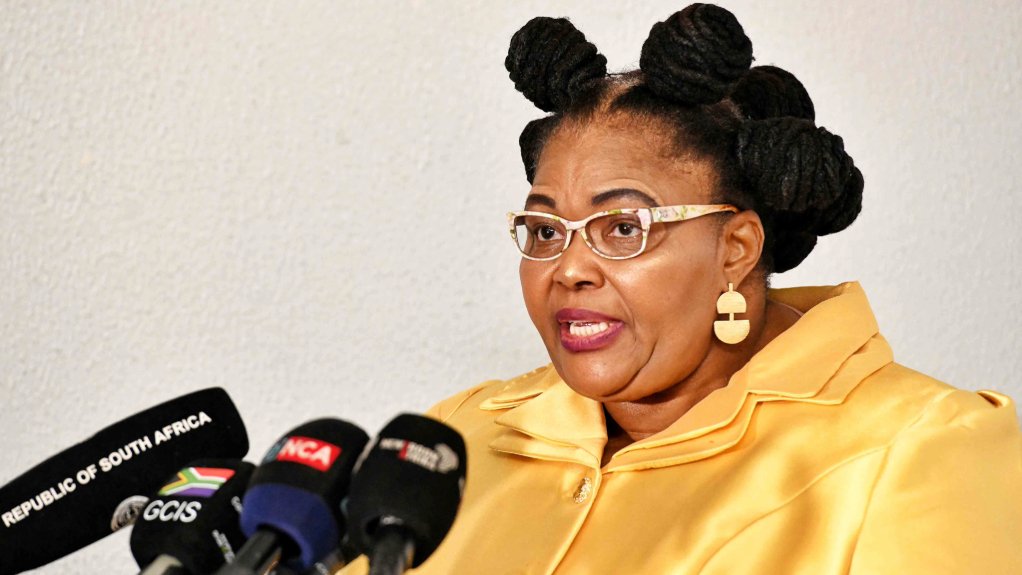
Water and Sanitation Minister Pemmy Majodina has called for a fundamental shift in how South Africa manages its water resources, saying the country can no longer rely on traditional approaches to address mounting pressure from climate change, ageing infrastructure and rising demand.

Delivering the keynote address at the Water Institute of Southern Africa (WISA) 2026 Biennial Conference and Exhibition at the Cape Town International Convention Centre on Wednesday, Majodina said government was moving beyond responding to recurring water crises and was instead implementing long-term reforms focused on innovation, stronger governance, modern technology and infrastructure investment.

The three-day conference, which runs until Friday, has attracted more than 2,000 delegates from South Africa, across the continent and abroad, including engineers, scientists, researchers, policymakers, municipal officials and private sector stakeholders.

The conference is being held under the theme, “Rethink Amanzi – Securing Our Future.”

“The theme of this conference could therefore not be more timely,” Majodina said.

“It challenges us to question conventional assumptions, embrace new ideas and imagine a future in which water is managed differently – more intelligently, more sustainably and more collaboratively.”

Majodina said South Africa’s water challenges could not be resolved simply by building more dams and pipelines.

“It will demand new forms of leadership, new governance models, new financing mechanisms, new technologies and, perhaps most importantly, a renewed commitment to collective action,” she said.

She warned that South Africa, already among the world’s 30 driest countries, faces increasing pressure from climate change, deteriorating infrastructure, pollution, invasive alien plants and growing water demand, making water security one of the country’s most pressing economic and development challenges.

“Without secure water supplies, industries cannot expand. Without secure water supplies, agriculture cannot guarantee food production. Without secure water supplies, investment confidence weakens,” she said.

Majodina outlined a series of reforms aimed at strengthening the sector, including implementing the National Water and Sanitation Master Plan, establishing the National Water Resource Infrastructure Agency, amending the Water Services Act and National Water Act, improving municipal performance and attracting greater public and private investment.

She said reducing non-revenue water remained a priority, with every litre lost through leaks and poor management representing a significant waste in a water-scarce country.

Majodina also urged municipalities to adopt digital technologies, including artificial intelligence, predictive analytics and smart monitoring systems, to improve maintenance, reduce water losses and strengthen service delivery.

While technology would play an increasingly important role, she said skilled professionals remained central to the sector’s future.

“If infrastructure is the backbone, people are the heart of the water sector,” she said, calling for greater investment in engineers, scientists and young water professionals.

Majodina also announced the publication of the Department of Water and Sanitation’s National Polluters Register, an online platform providing public access to pollution incidents, enforcement actions and compliance information.

“The platform strengthens stewardship, encourages compliance, empowers communities and reinforces that our rivers, wetlands and aquifers are national heritage belonging to all South Africans,” she said.

She highlighted South Africa’s growing regional role in water governance, noting that the country recently co-chaired the 44th SADC Joint Meeting of Ministers Responsible for Water and Energy, where member states agreed to strengthen cooperation on shared water resources, climate resilience and infrastructure development.

South Africa has also proposed the establishment of a SADC Water Week to promote regional collaboration, innovation and knowledge sharing.

The proposal is expected to be considered at next month’s SADC Summit.

“The true success of this conference will be measured by partnerships formed, innovations adopted, institutions strengthened and tangible improvements for millions of South Africans,” Majodina said.

The biennial WISA conference is one of Africa’s largest gatherings of water professionals, bringing together government, researchers, municipalities, industry leaders and international partners to develop solutions to the region’s growing water security challenges through research, innovation and collaboration.

INSIDE METROS

-Advertisement-spot_img

More articles

LEAVE A REPLY

Please enter your comment!
Please enter your name here

Inside Education Quarterly Print Edition

spot_img

CATHSSETA

spot_img

QCTO

spot_img

AVBOB STEP 12

spot_img

Inside Metros G20 COJ Edition

spot_img

JOZI MY JOZI

spot_img

Inside Education Quarterly Print Edition

spot_img

Latest article