
By Thapelo Molefe
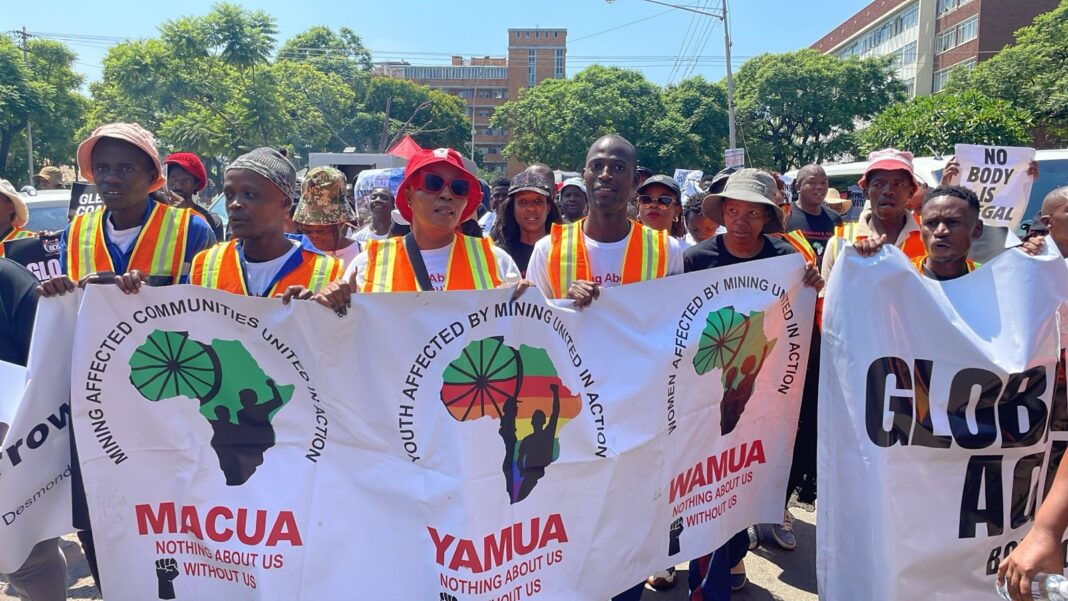
Mining-affected communities have called on government and Parliament to rethink proposed mining law reforms after a Constitutional Court judgment reaffirmed that communities must be meaningfully consulted before decisions affecting their land and livelihoods are made.
Mining Affected Communities United in Action (MACUA) said the judgment in Sustaining the Wild Coast NPC and Others v Minister of Mineral Resources and Energy and Others; Natural Justice and Another v Minister of Mineral Resources and Energy and Others should be a turning point for mining-affected communities across South Africa.
The organisation said the ruling made it clear that communities cannot be treated as obstacles to mineral development, but must be recognised as rights-holders whose participation is central to decisions affecting their land, livelihoods, culture and environment.
The case also rejected the idea that consultation can take place after a decisive mining decision has already been made.
“Government cannot grant first, consult later and then expect communities to accept the consequences,” MACUA said.
MACUA said the judgment comes as the Department of Mineral and Petroleum Resources (DMPR) advances the Mineral Resources Development Amendment Bill (MRDAB) and the General Mining Laws Amendment Bill (GLAB).
The organisation warned that parts of the proposed legislation could weaken protections that have been developed through court judgments over more than a decade.
It said the MRDAB should be reconsidered to ensure that its definition of “meaningful consultation” does not reduce participation to simply giving communities an opportunity to comment.
According to MACUA, communities must receive enough information to participate meaningfully and must be given a genuine opportunity to influence decisions while those decisions can still be changed.
The organisation also raised concerns about proposed definitions of “community” and “interested and affected persons”, arguing that these could exclude people whose land, water, livelihoods or environment are affected by mining.
MACUA said the distinction between consultation and consent under the Interim Protection of Informal Land Rights Act (IPILRA) must also be properly addressed in the legislation.
The organisation’s concerns extend beyond community consultation to the treatment of artisanal miners.
It said the GLAB would expand criminal offences linked to unauthorised mining, increase the reach of criminal liability to people who assist or provide services to prohibited mining operations, strengthen the role and powers of the South African Police Service and introduce penalties of up to R100 million and 30 years in prison.
MACUA said it recognised the damage caused by organised criminal mining, including violence, exploitation, environmental destruction, corruption and illicit mineral trafficking.
However, it warned against treating organised criminal syndicates and impoverished artisanal miners in the same way simply because they operate without permits.
“An organised criminal syndicate and an impoverished artisanal miner trying to survive are not the same thing simply because neither possesses a permit,” the organisation said.
MACUA also questioned whether the proposed formalisation system would be accessible to people currently involved in artisanal mining.
It said formalisation should not simply mean creating an “artisanal mining permit”, but should provide a realistic pathway for miners to obtain legal status and remain within the regulated system.
“Formalisation that exists only on paper is not formalisation. It simply redraws the boundary of illegality,” MACUA said.
The organisation further accused government of creating an imbalance in how unlawful conduct is dealt with.
While the proposed legislation strengthens criminal penalties for people operating outside the mineral-rights system, MACUA said communities often have to approach the courts themselves when government makes unlawful decisions in granting mineral rights.
It said this creates an “institutional asymmetry” in the mineral governance system.
“The rule of law cannot operate only at the point of enforcement against the marginalised. It must apply with equal seriousness to the State’s own exercise of mineral regulatory power,” MACUA said.
MACUA is now calling on the DMPR and government to reconsider both bills in light of the Constitutional Court judgment and existing case law on meaningful consultation, informal land rights, consent and community participation.
It also wants Parliament to scrutinise whether the proposed legislation properly reflects constitutional standards.
Among its demands are informed participation before mining decisions are made, recognition of consent requirements under IPILRA, protection of affected communities from exclusion through narrow statutory definitions, and a more accessible pathway for artisanal miners to enter the legal mineral economy.
MACUA said the Constitutional Court ruling should be used to ensure that mining legislation complies with the Constitution from the outset rather than merely attempting to survive future legal challenges.
“The Constitution does not stand in the way of mineral development. It determines the conditions under which mineral development may lawfully take place,” the organisation said.