
By Lebone Rodah Mosima
Joburg Parks and Zoo says it is increasingly being asked to remove mature trees to make way for solar panels and property development, as the city tries to replenish its ageing urban forest.
JCPZ managing director Thanduxolo Mendrew said mature trees should be incorporated into development plans rather than automatically regarded as obstacles.
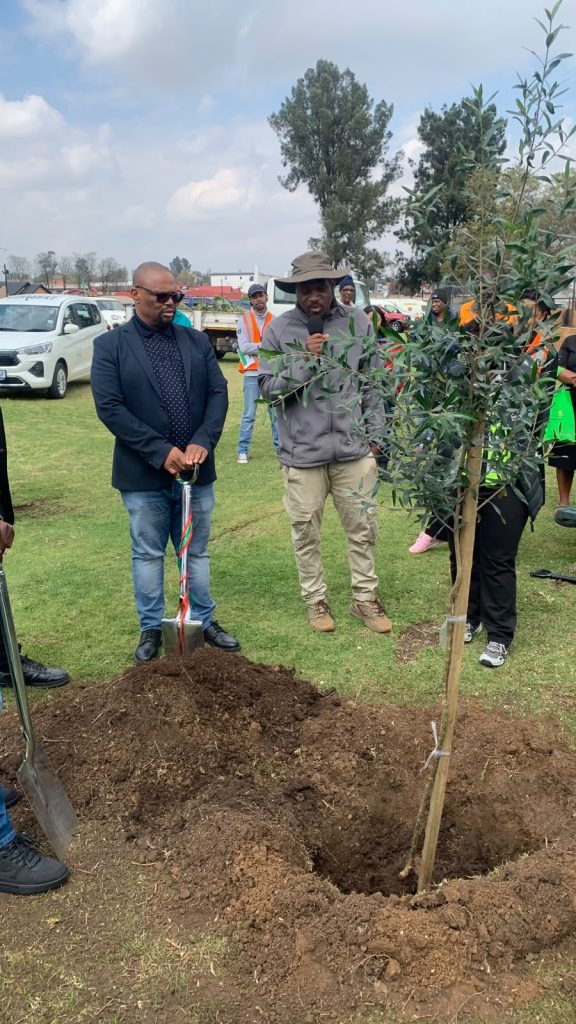
“We increasingly receive requests to remove mature trees to make way for solar panels, new driveways and entrances, extensions, renovations, walls and other development,” Mendrew said during an Arbor Week event at Moletsane Park in Soweto.
ALSO READ: Legal association takes Phala Phala impeachment committee to court over Madonsela removal
“Of course Johannesburg must develop. We need housing. We need renewable energy. We need transport and infrastructure.”
But he said developers should instead ask at the design stage: “What mature trees are already here, and how do we design around them?”
“A mature tree is an asset, not automatically an obstruction. We need to design our city around nature instead of designing nature out of our city.”
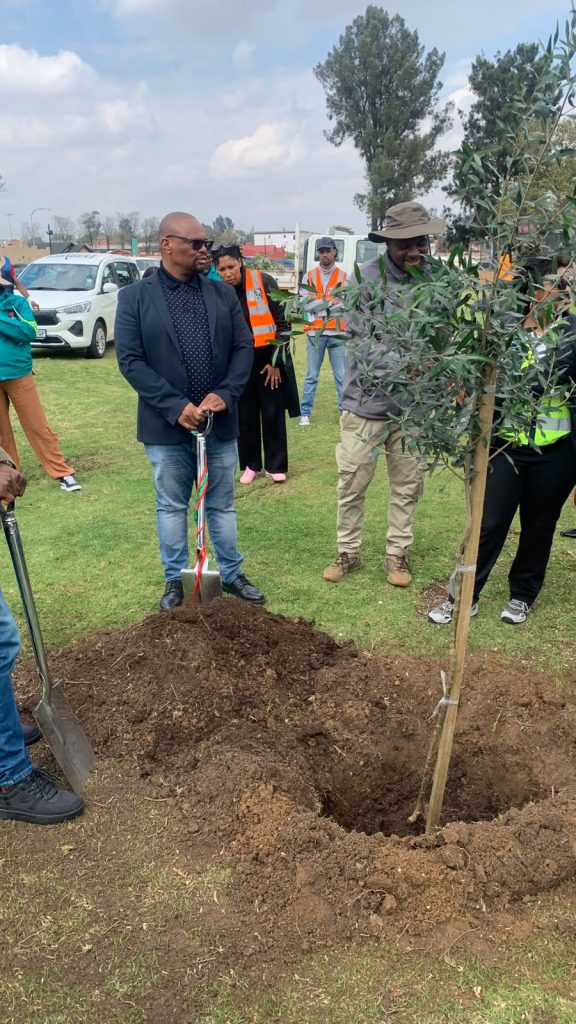
The city is trying to expand its urban forest via a call to plant five million trees.
At Moletsane, 2,000 trees and 200 spekboom plants were being distributed as part of a partnership that has already distributed and planted 47,000 trees, funded by Global Affairs Canada and involving SUNCASA, the World Resources Institute and the Johannesburg Inner City Partnership.
Mendrew said the five-million-tree target would require buy-in from residents, schools, businesses, universities, developers, community organisations and the private sector.
“The call to plant five million trees cannot be delivered by government alone,” he said.
“Five million trees must become five million acts of environmental ownership.”
Johannesburg’s existing tree population is ageing and faces pressure from urbanisation, increasing population density, climate variability, water stress, pests and diseases, fires, vandalism and illegal tree removal.
“The City’s tree-valuation methodology means the value associated with an illegally removed tree can rise to approximately R327,000, depending on the circumstances,” he said.
“That is intended to be a deterrent. Because money cannot buy back time.”
He said replacing established trees with new saplings did not immediately restore the ecological benefits accumulated over decades.
“Destroy a 50-year-old tree today and we cannot plant a sapling tomorrow and magically recover those 50 years.”
ALSO READ: Legabe claims he was tortured to implicate police in R216m Port Shepstone cocaine heist
Mendrew also rejected calls to remove healthy trees because residents believed they could provide cover for criminals.
“Criminals unfortunately climb walls, jump fences and find ways around security systems. The meek tree is not the problem.”
He said genuine safety concerns should be professionally assessed and selective pruning considered where it could improve visibility, rather than cutting down a healthy tree as a default response.
“We need to address the root causes of crime — not the roots of an innocent tree.”
Mendrew said Soweto’s Greening Soweto Legacy Project as an example of what sustained urban greening could achieve.
Launched in 2006 to address the historic disparity between Johannesburg’s traditionally leafy suburbs and communities that received less environmental investment, the programme resulted in more than 200,000 trees being planted across Soweto, alongside the development and upgrading of parks and green spaces.
“Greening is not the cosmetic layer we add after development. Greening itself can become a catalyst for dignity, investment and community pride,” he said.
“The real Arbor Week statistic is not how many trees go into the ground in September. It is how many are still alive and thriving five, ten and twenty years from now.”