-Advertisement-spot_img
spot_img

Fikeni: PSC can now investigate municipalities without waiting for ministers

Must read

By Thapelo Molefe

The Public Service Commission (PSC) will be able to investigate municipalities and state entities on its own initiative without first relying on the ministers responsible for those institutions.

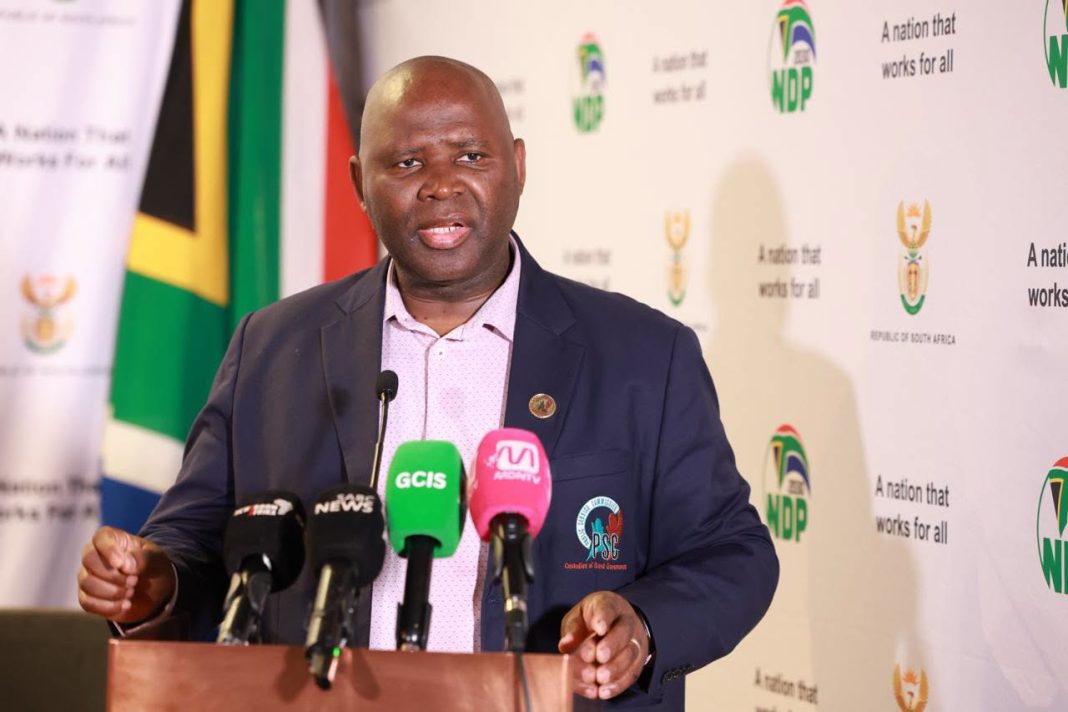
Briefing the media in Pretoria on Sunday, PSC chairperson Professor Somadoda Fikeni said the expanded oversight would allow the commission to intervene more directly in governance and administrative problems across local government and public entities.

“The PSC is empowered to have its own accord investigation without having to depend on the shareholder,” Fikeni said.

The new Act, signed into law by President Cyril Ramaphosa this month, extends the PSC’s mandate to local government and public entities.

The Presidency said the law strengthens the commission’s independence and its role in promoting professional ethics and effective public administration.

Fikeni said the change was important because ministers are often responsible for appointing the boards or councils of state entities, creating a situation where a minister could be expected to investigate people or institutions they had appointed.

He said the PSC would nevertheless continue working with affected institutions and other stakeholders rather than operating in isolation.

“We will work with all the institutions concerned, we’ll do the stakeholder engagement,” he said.

The commission has already been engaging with the South African Local Government Association (Salga), the Department of Cooperative Governance and Traditional Affairs and other stakeholders as it prepares for its expanded role.

Fikeni said the PSC’s ability to operate across national, provincial and local government would also allow it to help address problems between municipalities and national or provincial departments.

“If the municipality says, my problem is that departments A, B, C,  have not paid me, we are able to go to them,” he said.

He said the commission could also intervene when municipalities failed to meet their obligations to entities such as Eskom or bulk water providers.

“Since we are now interfacing with all of them, we become a conduit or even mediating or even assisting the ministers to say, let’s make this thing work,” Fikeni said.

The PSC will have an initial 12-month period to prepare for the implementation of its expanded mandate, with the full mandate to be phased in progressively and subject to available resources.

However, Fikeni warned that the commission would need additional resources to take on the responsibilities.

He said the PSC had already submitted its funding requirements to Parliament and would now engage National Treasury on the costs of transforming the commission from a government department into an independent institution.

Fikeni said the transition would require the development of a new organisational structure, change-management processes and a legal unit to deal with the commission’s expanded responsibilities.

“We will now be given 12 months to start consulting, to start helping with the unfolding, to meet with Treasury to say we had costed this particular Act. We now need resources to make it happen,” he said.

He warned that without the necessary funding, the expanded mandate could struggle to achieve its intended purpose.

“If there are no resources, it’s a Rolls Royce without an engine,” Fikeni said.

The commission will also be able to scrutinise inefficiencies within municipalities, including the use of overtime.

Fikeni questioned whether employees claiming substantial overtime were completing their normal working hours before becoming active during overtime periods.

The expanded oversight will also see the PSC reporting to additional parliamentary structures because of its involvement in local government. Fikeni said the commission would continue reporting to the National Assembly while also reporting to the National Council of Provinces (NCOP).

He said discussions were also underway with Parliament’s leadership on improving the way constitutional bodies report on their work.

“We need to relook our reporting mechanism,” Fikeni said.

INSIDE METROS

-Advertisement-spot_img

More articles

LEAVE A REPLY

Please enter your comment!
Please enter your name here

Inside Education Quarterly Print Edition

spot_img

CATHSSETA

spot_img

QCTO

spot_img

AVBOB STEP 12

spot_img

Inside Metros G20 COJ Edition

spot_img

JOZI MY JOZI

spot_img

Inside Education Quarterly Print Edition

spot_img

Latest article