The International Monetary Fund (IMF) said South Africa is restoring fiscal credibility despite geopolitical risks, but needs to deliver faster economic reforms to lift investment and growth.
Africa’s largest economy has shown genuine resilience in the face of an energy shock caused by the Iran war, Tidiane Kinda, the IMF’s resident representative to South Africa, said in an interview at Bloomberg’s Johannesburg offices on Tuesday. What is missing is investment.
“There is a bit of a wait-and-see sort of attitude,” toward infrastructure spending, he said. “Increasing public investment would help support growth.”
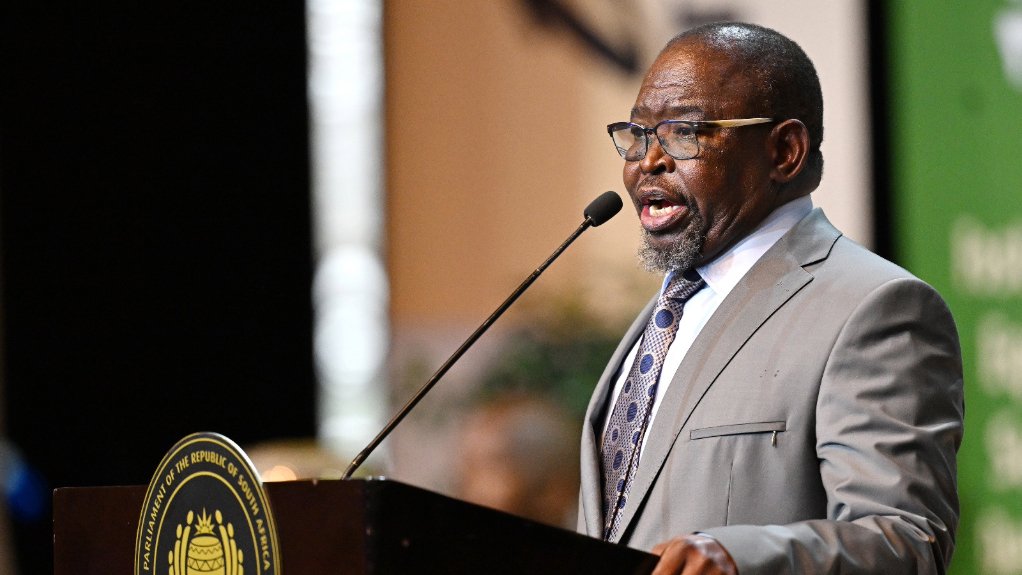
Finance Minister Enoch Godongwana cheered investors last week with a midterm budget outlook that showed debt peaked in 2025-26 and would decline in the years ahead, supported by better-than-expected revenue collection and moderate spending growth.
Kinda said the budget update reaffirmed the government’s commitment to spending prudence and debt stabilisation. He also gave the National Treasury credit for unveiling a fiscal anchor to entrench spending discipline and keep public debt on a sustainable path.
South Africa’s progress marks a turning point after grappling for years with the huge debt burden incurred during the scandal-marred rule of former President Jacob Zuma.
The growing credibility of South Africa’s fiscal policies, as well as the decision last year to lower the central bank’s inflation target to 3%, have also helped shrink the country’s risk premium – or the extra return that investors demand to lend it money.
The IMF sees South Africa growing 1% this year, 0.2 percentage point less than Treasury’s estimate, and 1.8% over the medium term.
To get the growth rate to as high as 4%, South Africa will need to do better on several fronts, including fast tracking reforms to attract more private investment in the key sectors of power generation and logistics, Kinda said.
Doing those things sooner rather than later could raise economic growth by an additional 1.8% percentage points within the next two years.
“Reform is progressing, but very gradually,” he said. “It’s taking time.”
Other areas ripe for reform include overhauling governance and procurement processes to squeeze out corruption, which the IMF estimates could bump growth up by another 1.2 to 1.4 percentage points, while fixing the business environment would add another 0.5 percentage point.
The IMF also has a more conservative estimate of the outlook for debt as a share of gross domestic product than the government.
It projects debt to GDP stabilising over the next five years at around 80%. That is contrary to Treasury’s projected path, which sees debt already having peaked at 78.4% of GDP and declining to 77.5% in 2028-29.
“Fiscal consolidation is needed to reduce debt to more prudent levels but doing it in an environment of relatively weak growth is quite a challenge,” he said.
BLOOMBERG