By Thapelo Molefe
The ANC is expected to sign coalition agreements with the uMkhonto weSizwe Party (MKP) and other political parties as it moves towards finalising arrangements to constitute hung municipal councils in KwaZulu-Natal, the party’s national spokesperson Mahlengi Bhengu-Motsiri has confirmed.
Bhengu-Motsiri said the ANC was adopting a differentiated approach to coalition negotiations, with agreements being considered according to the political dynamics in individual provinces, regions and municipalities.
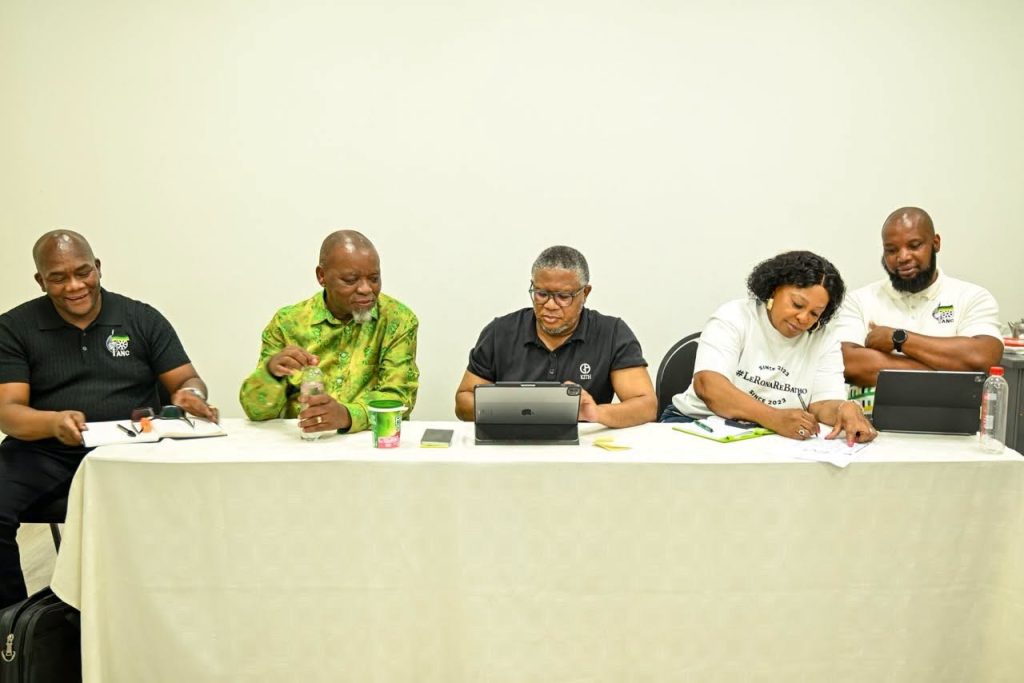
She was speaking on Friday after a meeting between the ANC’s national negotiating team and its KwaZulu-Natal structures, including regional task team convenors and coordinators, to assess the party’s position in municipalities where no political party secured an outright majority.
The meeting comes amid reports of disagreements within the ANC’s KwaZulu-Natal structures over whether to enter into coalition arrangements with the MKP or pursue an alternative partnership involving the Democratic Alliance (DA) and Inkatha Freedom Party (IFP).
However, Bhengu-Motsiri dismissed suggestions of a rift between the provincial leadership and regional structures, saying discussions had taken place in a spirit of unity.
“I don’t think there’s a lack of synergy. Anybody that suggests that regions are rebelling, I haven’t seen any rebellion in the meeting today,” she said.
“The meeting was conducted in the true spirit of [camaraderie], and in the true spirit of observing, and taking guidance and counsel from the provincial task team.”
She also defended KwaZulu-Natal Provincial Task Team convenor Mike Mabuyakhulu, whose position has come under scrutiny following allegations that he was attempting to undermine a proposed ANC-MKP coalition in eThekwini in favour of an arrangement involving the DA and IFP.
Bhengu-Motsiri said Mabuyakhulu continued to lead a cohesive provincial task team and rejected suggestions that he was being isolated over the coalition discussions.
“Comrade Mike Mabuyakhulu continues to lead quite a cohesive PTT, if the discussions at this meeting today is anything to go by,” she said.
The ANC spokesperson said the party’s national leadership had instructed its structures to engage all political parties while maintaining its own conditions for entering into coalition arrangements.
She said the national negotiating team would present a detailed report on the coalition negotiations to the party’s National Executive Committee (NEC) meeting on Monday, outlining proposed arrangements and the conditions guiding its decisions.
“We do have our own red lines, and we will ventilate those red lines on Monday,” Bhengu-Motsiri said.
She said the ANC was not negotiating simply to secure mayoral positions or seats in municipal councils, but to maintain its influence in local government and advance its transformation programme.
Bhengu-Motsiri also confirmed that the ANC would cooperate with the MKP in municipalities where such arrangements were necessary, but cautioned against interpreting the engagement as an exclusive partnership with the party.
“We are going to be signing agreements with other political parties as well,” she said.
“However, yes, we are going to be cooperating with MKP where it is required for us to cooperate with MKP.”
She said the ANC had also held discussions with the DA, describing Friday’s engagement as a follow-up to an earlier exploratory meeting. Further engagements with the party are expected.
The coalition negotiations come as political parties face pressure to constitute municipal councils following the local government elections, with KwaZulu-Natal among the provinces where several municipalities have hung councils.
In eThekwini, where no party secured an outright majority in the 223-seat council, the coalition negotiations have drawn particular attention. An ANC-MKP partnership and an arrangement involving the ANC, DA and IFP have both been discussed as possible governing configurations.
Bhengu-Motsiri said the ANC would continue engaging different political parties but would ultimately make decisions based on what it considered to be in the interests of its election manifesto.
“Have conversations with them, but ultimately, it is upon us to take a decision that is in the best interest of the manifesto that we took to the people of South Africa,” she said.
INSIDE METROS