
Staff Reporter
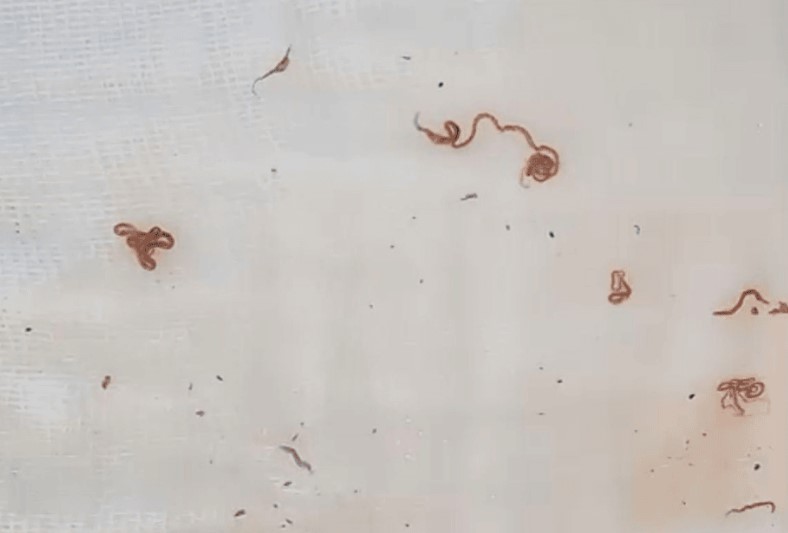
Marakong Village residents in the Free State’s QwaQwa region were left without tap water after a local water utility shut supply to the area when live bloodworms were found in household water, civil society group WaterCAN said on Friday night.
Civil society group WaterCAN said on Friday that more than 100 families are facing a public health emergency after residents reported finding worms in the water flowing from their taps.
Free State water activists working with the group visited Marakong Village, collected samples from several households and confirmed the presence of bloodworms, it said, adding that authorities were immediately alerted.
Maluti a Phofung Water (Pty) Ltd, known as MAP Water, attended the site, confirmed the worms and shut off the water supply to the affected area.
WaterCAN said it had been informed the piped system was being flushed and that valves would only be reopened once the water is declared safe for human consumption.
MAP Water told activists residents may have to wait up to two weeks for laboratory results.
Nomsa Daele, WaterCAN’s citizen science and training coordinator, said the shutdown and flushing response was welcome but criticised the expected turnaround time for testing.
“The water testing should be fast tracked. Fourteen days is extremely long. The testing should take no more than three days. There has also clearly been a failure of maintenance and oversight.
“Bloodworms develop where there are high levels of decomposing organic matter. Those conditions should never exist in a water treatment and supply system. The cause must be identified, fixed, and verified fast,” Daele said.
Local water activist Tabi Moloi, who was on the ground with residents along with fellow activist Dipuo Hlalele, said residents were already reporting illness.
“People are scared. Children and the elderly are getting sick. Even if the system is flushed, we fear the worms will return. The reservoirs and the entire infrastructure must be urgently inspected. The community cannot be told to wait two weeks while their health is at risk,” Moloi said.
Hlalele called for an urgent investigation by the Department of Water and Sanitation.
“This is a grave case of mismanagement. The fact that conditions at the area’s water treatment facilities were allowed to deteriorate to this state raises serious red flags about oversight. This time it is bloodworms, but next time it could be cholera,” Hlalele said.
WaterCAN demanded immediate provision of safe alternative drinking water to every affected household, a full inspection of reservoirs, storage, and the local distribution network, and immediate identification of the root cause of contamination and a plan to prevent recurrence.
It demanded “transparent, daily communication with residents on progress and results” and accelerated laboratory testing and immediate release of results due to the serious health risk.
INSIDE METROS