- Advertisement -

Xhakaza anchors delivery agenda on Ekurhuleni’s R4.6bn repair push

- Advertisement -

Must read

By Johnathan Paoli

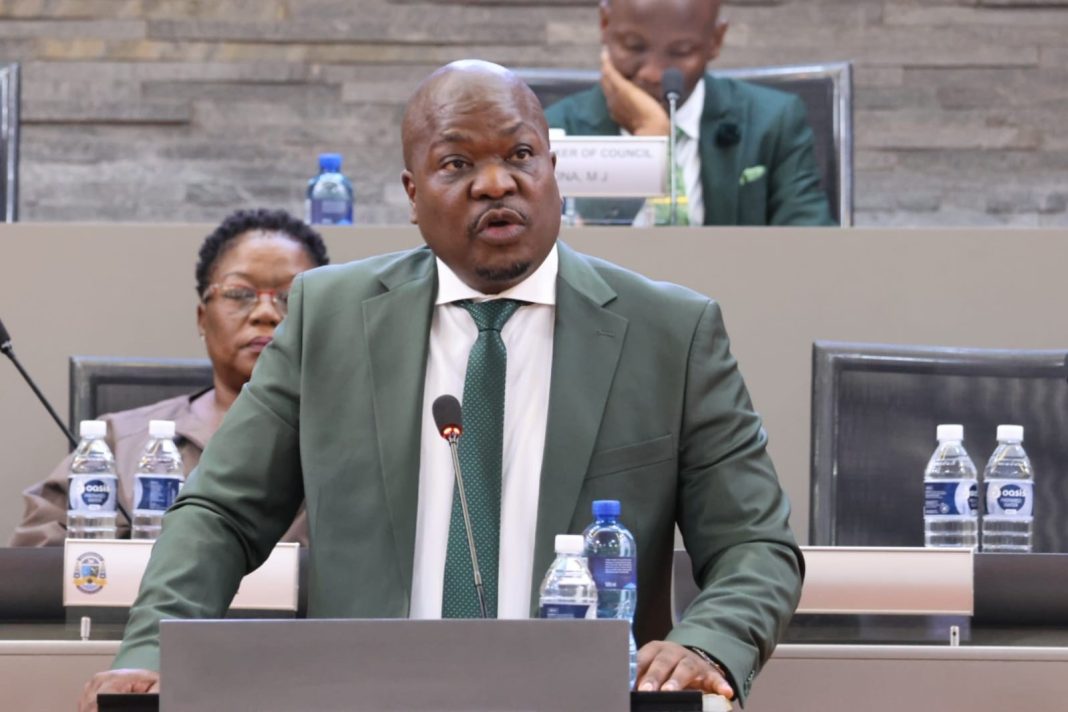
Executive mayor Nkosindiphile Xhakaza has placed service delivery at the centre of the City of Ekurhuleni’s agenda, declaring an “unapologetic commitment” to restoring reliable basic services and accelerating infrastructure investment across the metro.

Delivering the 2026 State of the City Address (SOCA) in Germiston on Wednesday, Xhakaza framed the municipality’s programme as part of a broader national push to stabilise local government, aligning the city with President Cyril Ramaphosa’s infrastructure drive and the designation of 2026 as the “Year of Decisive Action”.

“This State of the City Address therefore will demonstrate our clear, unapologetic commitment to continue with the relentless acceleration of service delivery, restoring the trust in our city, and reclaiming the developmental mandate we received from our people,” he said.

He emphasised that residents would judge the administration on tangible outcomes rather than plans.

“The people of Ekurhuleni do not measure governance by plans and intentions but with tangible outcomes The city has resolved to confront systematic structural challenges that undermine service delivery,” Xhakaza said.

Xhakaza outlined progress in human settlements, positioning housing delivery as a key pillar of restoring dignity.

Since April 2024, the city has delivered 2,980 houses, with a further 839 nearing completion, while 2,890 serviced stands have been handed over.

“Our people continue to receive proper housing, serviced stands and security of tenure – all owing to our unwavering understanding of their challenges,” he said.

The mayor highlighted flagship projects such as the John Dube Mega Housing Project, alongside developments in Chief Albert Luthuli and Helderwyk, as evidence that the city is “not only planning but delivering systematically restoring dignity, expanding access, and building sustainable human settlements”.

He added that the city had distributed 1,220 title deeds since 2024, with another 800 planned before the end of the financial year, although thousands remain uncollected due to disputes and untraceable beneficiaries.

Efforts to upgrade informal settlements will intensify, including the re-blocking of the Mgongo settlement in Brakpan.

“This will significantly improve spatial planning, access to services, and the overall living conditions for residents,” he said.

On water and sanitation, Xhakaza said Ekurhuleni was outperforming other metros in Gauteng in water conservation, while investing heavily in long-term supply security.

“To keep our high standards we are deliberately investing in long-term resilience to secure a reliable and sustainable water future for our City,” he said.

Five reservoirs and eight pump stations are under construction, while R125 million has been allocated to bulk water infrastructure projects.

In addition, R165 million is being spent on sewer upgrades across multiple areas.

Addressing service backlogs, the mayor acknowledged the challenge of approximately 113,000 unmetered stands.

“A targeted programme to address this backlog will commence in the current financial year, ensuring improved billing accuracy, enhanced revenue management, and more responsible water usage,” he said.

He confirmed plans to replace mobile toilets in informal settlements, in order to restore the dignity of communities as well as eliminating the controversial mobile toilets.

In the energy sector, the city has exceeded targets for electrification and public lighting, delivering over 3,200 new electricity connections and installing more than 200 streetlights.

However, he acknowledged persistent challenges in key industrial nodes.

“We still have major electricity challenges to address mainly in Germiston, Benoni, Isando and Kempton Park,” he said.

To address this, the city is investing more than R500 million in substations, cable replacements and refurbishment projects.

Xhakaza reported progress in road rehabilitation and public transport infrastructure, including upgrades to major routes and the expansion of the Integrated Public Transport Network, noting an additional R40 million allocation.

The city is also investing in traffic signal maintenance, with more than R120 million spent annually, although vandalism remains a concern.

More than 7,800 stormwater systems have been serviced to mitigate flooding risks, while key infrastructure such as the Flint Mazibuko Bridge in Thembisa has been rebuilt and reopened.

Xhakaza described waste management as a service that had moved “from instability to stability” following a period of decline.

Refuse removal services are now being delivered consistently across formal and informal areas, with 131 informal settlements receiving regular collection.

The city has also expanded its fleet of waste compactor trucks from 14 to 44.

Linking service delivery to financial stability, Xhakaza said the city had made significant progress in revenue collection and system reforms following a R2.1 billion shortfall.

Improved billing accuracy, now at 97%, and enhanced collection efforts have resulted in hundreds of millions of rand being recovered.

The mayor stressed that sustained investment in infrastructure would underpin service delivery improvements, with repairs and maintenance spending set to increase from R3.8 billion to R4.6 billion.

He concluded by reaffirming that the administration’s legacy would be judged on delivery, saying his administration refuses to be remembered as the “leadership of words and phrases”, but rather that of “tangible and impactful outcomes”.

INSIDE METROS

- Advertisement -

More articles

LEAVE A REPLY

Please enter your comment!
Please enter your name here

AVBOB STEP 12

Inside Metros G20 COJ Edition

JOZI MY JOZI

Inside Education Quarterly Print Edition

- Advertisement -

Latest article