By Lebone Rodah Mosima
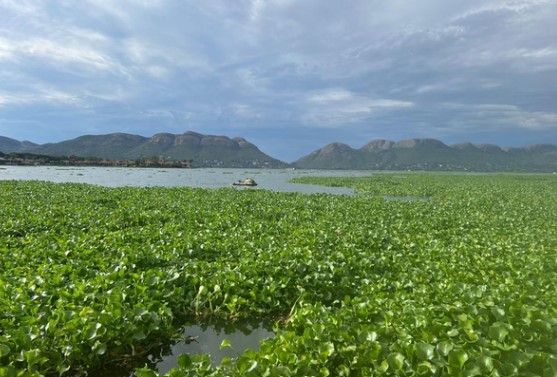
Water hyacinth coverage on Hartbeespoort Dam has been contained to 9.77% of the reservoir’s surface area, despite heavy rains and nutrient-rich inflows that accelerated growth this season.
Magalies Water and the Department of Water and Sanitation (DWS) said on Thursday that this was significant progress in a nearly three-year effort to restore one of South Africa’s most troubled dams.
ALSO READ: Department says work-from-home not policy as fuel hike looms
Recurring algal blooms, sewage-fed nutrient loading and invasive water plants have long undermined water quality, recreation and ecosystem health in the popular dam.
Magalies Water was appointed by DWS in April 2023 as the implementing agent for water resource planning and management in the upper Crocodile West River Catchment and Hartbeespoort Dam.
Its turnaround strategy centred on 10 objectives: managing alien invasive species, tracking pollution, improving water quality monitoring, remediating hyacinth and algae, revamping inlet controls, engaging stakeholders, supporting research and innovation, curbing nutrient loading at source and implementing an integrated water resource management plan.
The control of the invasive water hyacinth has been a primary focus, and has been tackled through “manual, mechanical and biological control”.
Contractor Hyamatla Organics was appointed to remove floating plants and debris from the dam and its shoreline. Rhodes University biological control specialists were brought in to deploy control agents, including Megamelus scutellaris, a sap-feeding insect used to suppress the hyacinth.
Physical removal efforts were stepped up during the peak regrowth period between September and January, when germination and spread usually accelerate.
“To address this, a ramp-up strategy was implemented to boost the removal rate, along with additional booms and noodles aimed at trapping and maximizing removal at specific locations,” Magalies Water said.
ALSO READ: DHET urges business to back youth skills at Midvaal imbizo
Although heavy rains disrupted operations and increased nutrient inflows from upstream, the programme had still removed more than 1,292.43 hectares of hyacinth from the dam.
On the biological front, 350,000 Megamelus scutellaris insects had been released into the dam since September 2025.
“Additionally, the biological control agent’s feeding activity prevents the plants from producing flowers, so no new seeds are added to the system,” it said.
Nanobubble technology was also used at the dam inlet.
“The Nanobubble system has demonstrated measurable improvements in key water quality indicators in the treatment zone, including statistically significant reductions in ammonia, nitrite and orthophosphate concentrations compared to pre-intervention levels,” Magalies Water said.
It added that dissolved oxygen levels had remained “consistently within healthy aerobic conditions”, helping support beneficial microbial activity and improve oxidation-reduction balance in the inlet waters.
Enforcement work targeting upstream pollution, which remained a primary cause of the dams problems, had also borne results, according to the department.
ALSO READ: Rwanda edge SA Under-19 Women by four runs in Lagos
“Twenty-seven (27) authorised water users were audited as part of this project. Twenty-five (25) facilities were investigated, twenty (20) notices were issued, and two (2) directives were given to the users,” it said.
“Six (6) criminal cases were opened against the municipalities, and one (1) against the individual, with cases that were initiated before the project began.”
Magalies Water said longer-term recovery would depend on continued pollution control upstream and public support for the remediation effort.
“Engaging stakeholders is a crucial component of this initiative, and we urge the community to support and participate in our efforts to ensure that Hartbeespoort Dam is remediated during this critical period.”