By Johnathan Paoli
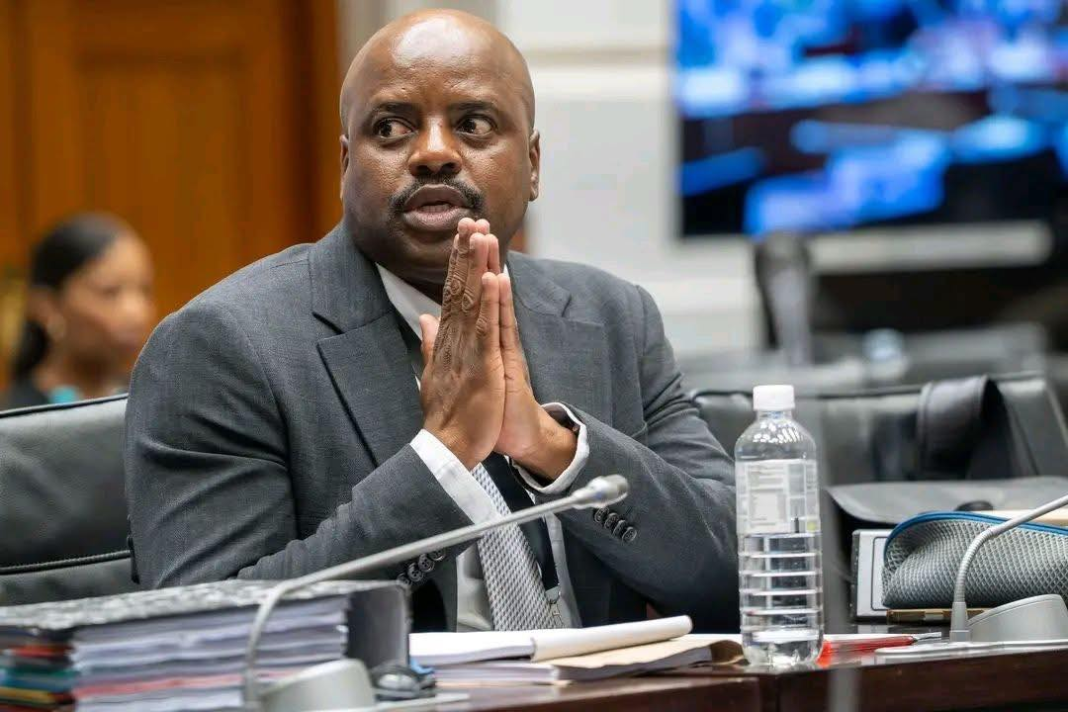
Suspended Ekurhuleni Metro Police Department (EMPD) Deputy Chief Julius Mkhwanazi has denied allegations of interference and procedural irregularities in promotions within the EMPD, claiming that he had full authority and followed processes started by suspended Chief Isaac Mapiyeye.
Following a rock start on Tuesday morning, with evidence leader Sello accusing Mkhwanazi of misleading and possibly lying to the court regarding his reason for a postponement of continuing his testimony in January, the commission considered a supplementary affidavit addressing subsequent issues and allegations as well as gaps and correct aspects of his earlier testimony last year.
Focusing on how promotions within the EMPD were handled, Mkhwanazi said the department adhered to protocols, with the city’s HR division overseeing the recruitment and appointment process.
“On promotions, one must mention that we followed all the correct procedure and processes as it was started by Chief Mapiyeye, from appointing Directors as he was the Chairperson of the panel of the HR long list, shortlisting, interview panel and appointments,” Mkhwanazi said.
This follows previous testimony from Mapiyeye who testified earlier that Mkhwanazi had promoted 55 candidate to senior positions within May and July 2024, with some positions allegedly filled without being advertised.
Mkhwanazi said that his involvement in these processes was formally sanctioned and continued when he assumed the role of acting chief.
“As the Deputy Chief of Police Operations and Specialised Services, he [Mapiyeye] also appointed me to sit with him in this panel, I continued with processes as approved by the City since I was appointed as the Acting Chief of Police and HOD of Community Safety,” he said.
Mkhwanazi said that the HR department remained the custodian of all recruitment procedures, rejecting suggestions that he acted outside his authority.
He provided the commission with acting and appointment letters, saying he had proper delegation to carry out decisions related to appointments.
Addressing contradictions in testimony before the commission, Mkhwanazi rejected claims by Mapiyeye that he lacked authority to make appointments.
Similarly Mkhwanazi lashed out to former EMPD Deputy Chief Revo Spies, accusing him of failing in his responsibilities as head of training and of raising concerns about candidate qualifications selectively.
Mkhwanazi said Spies had criticised a successful candidate for lacking certain competencies, despite broader systemic failures within the department that fell under his watch.
Mkhwanazi went further, accusing both Spies and Mapiyeye of failure to implement a national directive aimed at improving officer qualifications, saying this failure undermined later objections to promotions, as many officers across the department lacked the same qualifications now being used to discredit certain candidates.
He told the commission that a 2012 directive from the then National Police Commissioner Riah Phiyega required metro police departments to retrain officers who lacked proper qualifications, but alleged that this was not implemented in Ekurhuleni.
“Our training division under Commissioner Isaac Mapiyeye, Revo Spies and the then Director of Government intentionally ignored the implementation of a law enforcement skills programme for metropolitan police departments, which should have skilled those, all those who need law enforcement, all those who need law enforcement skills refreshed and retained metro police officers and those who were recruited and promoted by the chief of police coming from traffic departments,” Mkhwanazi said.
He argued that the failure to implement training programmes had left many officers without required competencies, yet this issue was only raised in specific promotion disputes.
Mkhwanazi further alleged that some officers had submitted fraudulent qualifications, citing the case of a senior official who, he claimed, had not worked in law enforcement for nearly two decades but was later appointed to a senior EMPD position using falsified credentials.
“And I’m trying to mention that some of the people that were promoted, like Deputy Director Ivan du Plessis, he had more than 19 years not working for EMPD,” he said.
Mkhwanazi maintained that the department’s challenges were systemic rather than individual, and that the processes he followed were lawful and consistent with institutional practice.
INSIDE METROS