By Simon Nare
The Standing Committee on Public Accounts has heard evidence of rampant corruption in municipalities, with tender fraud, procurement irregularities, unlawful appointment of service providers, missing tender documents and widespread irregular expenditure emerging as recurring trends.
This came as the Special Investigating Unit (SIU) briefed the committee in the National Assembly on Wednesday.
The SIU presented findings from investigations conducted in municipalities across Gauteng, Free State, North West and KwaZulu-Natal, revealing that it had probed 11 of the 13 municipalities identified for investigation.
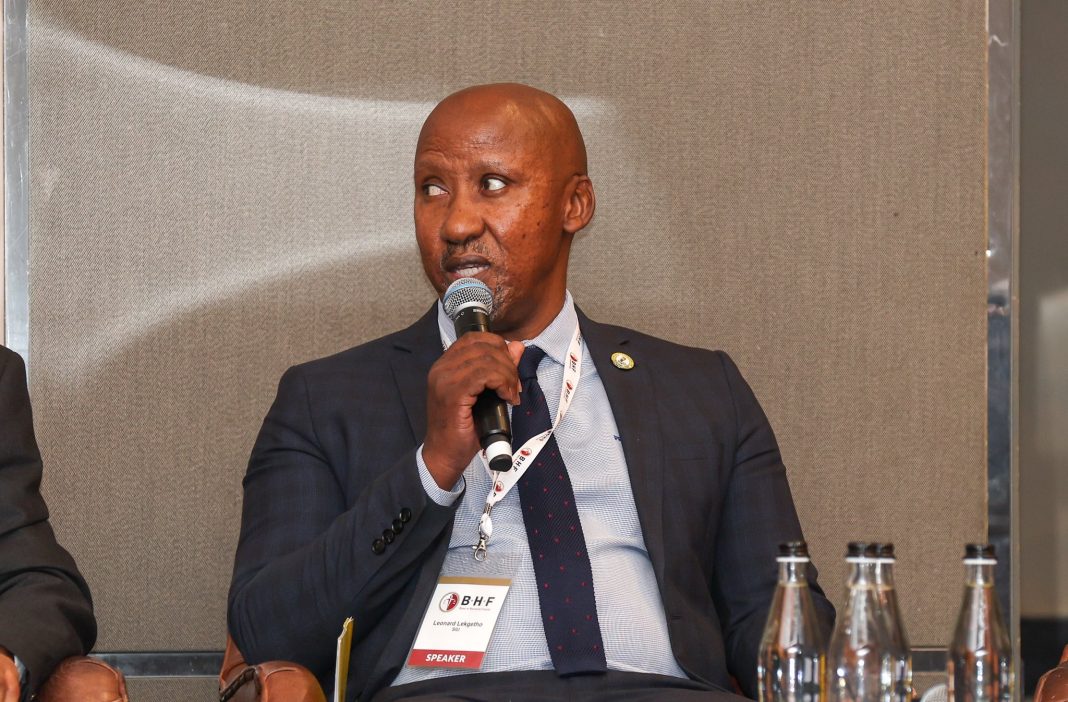
Acting SIU head Leonard Lekgetho said the investigations uncovered widespread contraventions of the Municipal Financial Management Act (MFMA), including failure to follow due processes, misconduct by bid committee members, financial mismanagement, non-compliance with municipal policies, inflated pricing and irregular conduct by officials.
He said these issues were consistent across municipalities in all four provinces.
In total, 19 investigations were conducted involving 11 municipalities, with 15 already finalised. Contraventions of the MFMA were evident in all cases.
The SIU estimates that more than R58 billion in cash or assets could potentially be recovered, with over R1 billion already identified for recovery. The investigations have led to 362 referrals to the National Prosecuting Authority, 222 officials and executives recommended for disciplinary action, and 629 officials referred for administrative action.
Lekgetho said the SIU had made several systemic recommendations to municipalities, including ensuring that delegations of powers and functions are properly approved by municipal councils.
“Municipalities should issue circulars providing clear guidelines on the implementation of Supply Chain Management (SCM) policies and must strictly enforce procurement rules to establish firm boundaries,” he said.
He added that municipalities should develop contract management policies aligned with the National Treasury Contract Management Framework and establish centralised systems to store, track and manage all contracts and related documentation.
Lekgetho further recommended that project management principles be applied to all contracts awarded to service providers, and that municipalities implement handover policies to safeguard information when officials resign, are transferred or leave office.
He also called for proper verification processes before registering municipal services for new properties.
Accounting officers, he said, must ensure that bid committees are properly constituted in line with SCM regulations and that effective internal control systems are in place to ensure compliance with Section 65 of the MFMA.
“Municipalities should improve record management and adhere to legislative prescripts. They must develop and implement formal policies for managing SCM records,” Lekgetho said.
He stressed that SCM policies must be aligned with the MFMA, the Municipal Supply Chain Management Regulations (revised in 2017) and Treasury regulations to prevent irregular appointments of service providers.
Lekgetho added that financial systems must be strengthened and tighter controls implemented to ensure compliance with procurement processes, particularly Regulation 32 of the Municipal SCM Regulations.
Finally, he said internal audit capacity should be reinforced to curb irregular expenditure and improve overall compliance.
INSIDE METROS