Simon Nare
Parliament’s Standing Committee on Public Accounts (Scopa) heard on Tuesday how the City of Tshwane is still struggling to recover from years of financial instability caused by unfunded budgets, weak revenue collection and poor audit outcomes, even though some areas of expenditure control have improved.
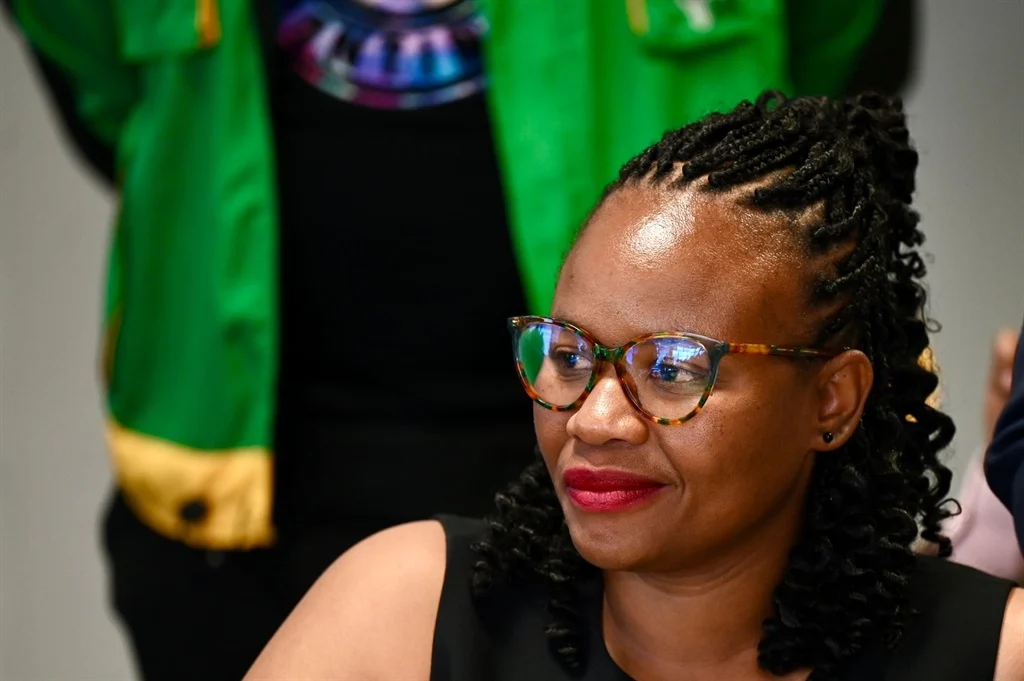
Tshwane Executive Mayor Dr Nasiphi Moya, of ActionSA, told the committee that the metro’s financial troubles could be traced back to the 2020/2021 financial year, when the city adopted an unfunded budget with an average deficit of about R4 billion.
ALSO READ: Another 2 million foot-and-mouth doses arrive in SA
Moya said the trend continued for four years, affecting the city’s ability to deliver on its promises to residents. Although the deficit was later reduced to about R2 billion, the municipality was unable to secure a loan to augment its finances because of its audit findings.
“So, while we were looking at how do we then stabilise the finances of the institution, we had to take a deep dive in terms of the data’s book. What is it that we can do differently so that we can get more residents to pay for their services?
“The municipality wasn’t collecting enough to boost council funding. But in terms of the root cause of this financial instability, also was the issue of revenue collection,” she said.
Moya admitted to the committee that Tshwane had battled financial instability for several years and had suffered poor audit outcomes, including an adverse audit opinion in 2021/2022 and qualified audit opinions in subsequent years.
She said the municipality had begun to turn the corner in the past financial year, although the city still received a qualified audit opinion with findings.
Moya said the municipality adopted a debt relief scheme, which helped improve revenue collection and enabled it to return to a funded budget for the 2025/2026 financial year, even though some compromises had to be made.
The city heightened its revenue collection drive by working with businesses and households and assisting some customers through the writing off of a portion of their debts in order to encourage more regular payment for services.
Moya said the municipality adopted this stance because the indigent basket had grown in a city facing high unemployment. She said Tshwane had also increased the property-value threshold for indigent households from R150 000 to R250 000.
ALSO READ: Western Cape storms leave six dead
The executive mayor said water tankers were costing the municipality millions of rand, especially tankers used for emergency services, and that the city had decided to cut spending in this area.
She said when the water-tanker scandal broke, it forced the municipality to investigate what had gone wrong.
“While we could explain when the expenditure happened, how it happened and the root causes for it, we did say that we could not justify the amount of money we are spending on water tankers, especially for emergency services. So, what we decided chair, was to cut the expenditure on water tankers,” she said.
Moya told the committee that irregular expenditure remained a serious concern, with the city reporting that irregular expenditure had risen sharply over recent years. The municipality said a large portion of this had been investigated, but the increase continued to point to weaknesses in financial controls.
In its presentation to the committee, the municipality said its internal processes had improved over time, and that the downward trend in new material irregularities issued by Auditor-General Tsakani Maluleke showed progress.
The city said only 14 material irregularities had been issued against Tshwane since the 2018/2019 financial year audit, and that no new material irregularity was issued in the past financial year. Of the 14 previously issued, the city said it had adequately addressed 12.
On audit outcomes, Tshwane received a qualified audit opinion with findings for the previous financial year.