Staff Reporter
The City of Johannesburg has collected nearly R100 million in revenue in a matter of months after intensifying a crackdown on illegal outdoor advertising.
The city said on Wednesday that the increase followed compliance and law enforcement operations aimed at ensuring outdoor advertising companies obey municipal by-laws and pay the required fees.
ALSO READ: Tshwane reeling from unfunded budgets
The enforcement campaign is being carried out through the Joburg Property Company (JPC), which manages the city’s property portfolio.
“When we started this operation in January, many media owners came forward to engage with the city and enter into formal agreements. We started from a base of about R4 million per annum, and we are now reaching close to R100 million. This demonstrates that there was significant revenue leakage within the outdoor advertising portfolio, money that rightfully belongs to the city to support service delivery,” said JPC Chief Executive Officer Musah Makhunga.
Makhunga said the city would continue intensifying enforcement operations across Johannesburg.
“We will continue pushing hard because there are still areas where illegal outdoor advertising is mushrooming. The revenue collected through compliance will assist the city in addressing critical service delivery challenges, including infrastructure maintenance, fixing potholes, and improving urban management.”
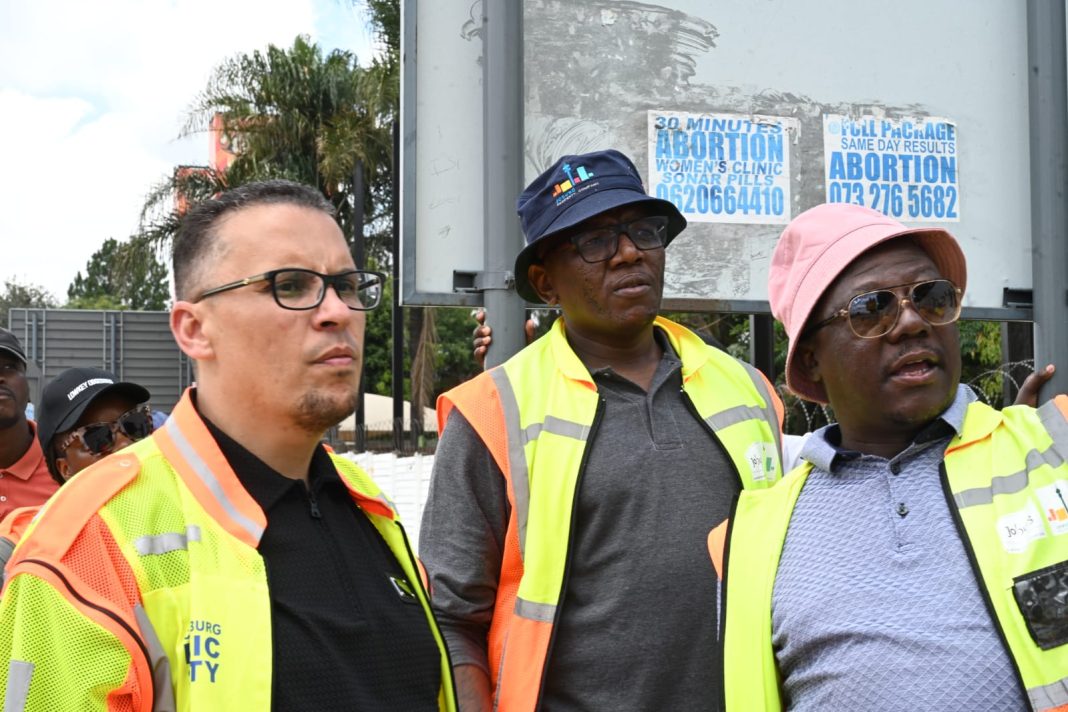
Senior Law Enforcement Officer for Development Planning dealing with outdoor advertising infringements, Tembinkosi Mvelase, said the latest operation followed investigations after illegal billboard structures were identified at properties along Republic Road.
ALSO READ: Another 2 million foot-and-mouth doses arrive in SA
Mvelase said notices were issued to the responsible parties, but no corrective action was taken within the stipulated timeframe, leading to enforcement action by the city.
“The advertising structures are not approved by the City of Johannesburg. There is a detailed approval process that includes notifying the City, submitting applications, paying the required fees, and undergoing technical evaluations before any sign can be erected,” said Mvelase.
He said many advertisers continued to put up signs illegally despite being aware of the rules.
“The Outdoor Advertising By-Law of 2009 is clear. Companies must not erect signage before obtaining approval from the city. Unfortunately, many operators ignore the law, which is why these enforcement operations are necessary,” he said.