spot_img

ANC slams EFF, DA after Ekurhuleni council rejects budget

-Advertisement-spot_img

Must read

By Johnathan Paoli

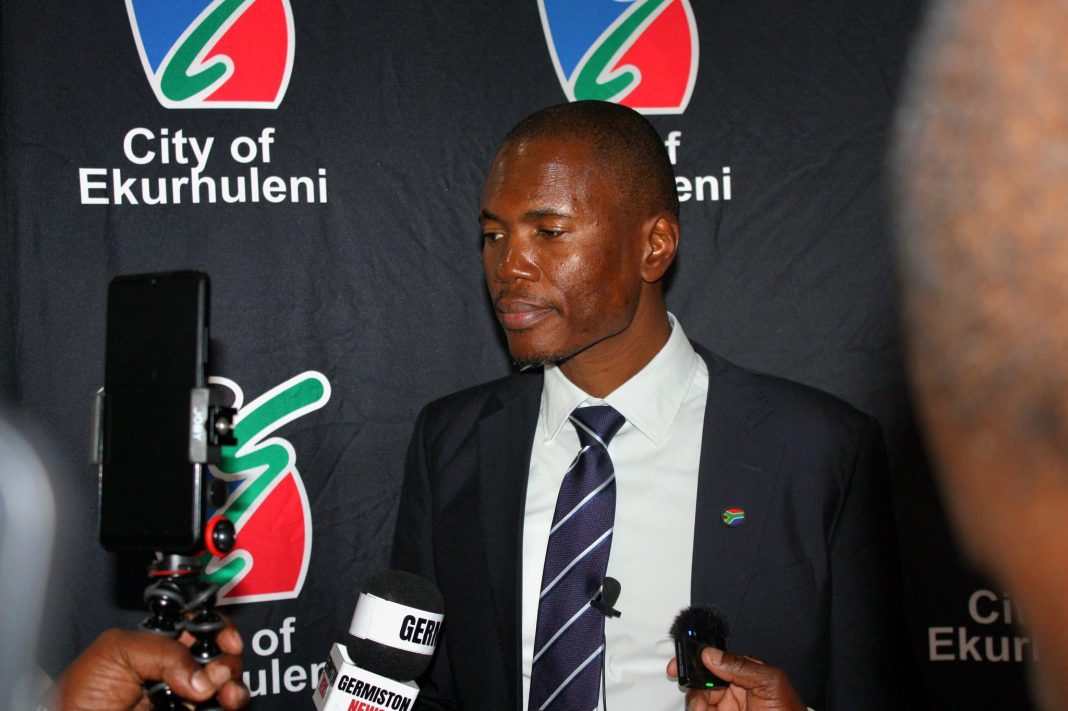
The ANC has criticised the Economic Freedom Fighters (EFF) and the Democratic Alliance (DA) after Ekurhuleni’s proposed R71 billion budget for the 2026/27 financial year was rejected by the city council.

During an extraordinary council meeting at the OR Tambo Government Precinct in Germiston on Thursday, the budget failed to secure the required support, with 96 councillors voting in favour and 105 against.

The rejection means Finance MMC and ANC regional secretary Jongizizwe Dlabathi must return with a revised budget for consideration at a future council sitting.

Following the vote, the ANC accused the EFF of aligning with the DA and FF Plus to block what it described as a pro-poor budget aimed at accelerating service delivery and improving residents’ lives.

Dlabathi said the budget complied with all legislative requirements and was developed through extensive public consultation involving residents, stakeholders and organised labour.

“The people of Ekurhuleni deserve to know that this budget reflects their priorities and aspirations. By opposing it, these parties have effectively turned their backs on the voices of residents who participated in the consultation process and expressed their urgent need for improved service delivery,” he said.

He warned that delays in approving the budget could affect infrastructure projects and municipal operations, including efforts to stabilise electricity supply in areas such as Kwa-Thema and the implementation of agreements affecting municipal workers.

“The ANC rejects the politics of obstruction and self-righteous posturing that continue to undermine progress in our city,” Dlabathi said.

The EFF welcomed the budget’s defeat, describing it as a victory for accountability, constitutional governance and democratic oversight.

In a statement, EFF Gauteng provincial chairperson Nkululeko Dunga said the party opposed the budget because it failed to address the worsening conditions faced by residents and relied on unrealistic revenue assumptions.

“Despite the municipality’s worsening financial position and repeated failures to meet revenue collection targets, the budget continued to rely on unrealistic revenue projections while presenting itself as a credible financial plan,” Dunga said.

The EFF also criticised what it said were significant spending and policy changes introduced after the public participation process had concluded.

Among its concerns were the proposed establishment of an Ekurhuleni Development Agency (EDA) with a budget allocation of R15 million and the transfer of R62 million from Service Delivery Coordination to the Enterprise Project Management Office.

Dunga said these changes represented substantial shifts in spending priorities that should have been subjected to further public scrutiny.

He also argued that the budget failed to address the municipality’s reliance on outsourcing and contracted services while residents continued to experience infrastructure failures, sewage spillages, electricity outages, water interruptions and illegal dumping.

“The rejection of this budget is not a rejection of service delivery. It is a rejection of poor planning, unrealistic assumptions, misplaced priorities, and governance that continues to fail the people of Ekurhuleni,” Dunga said.

The DA also welcomed the budget’s rejection, arguing that it would have imposed an additional financial burden on residents already struggling with the rising cost of living.

DA Ekurhuleni mayoral candidate Khathutshelo Rasilingwane said the party voted against what it called an ANC-led coalition budget because it proposed tariff increases without addressing the city’s structural challenges.

“The Democratic Alliance in the City of Ekurhuleni has voted against the budget presented by the ANC-led coalition which would have pushed cash-strapped residents further into financial despair through increased rates and taxes while failing to address the systemic collapse of the city,” Rasilingwane said.

She cited proposed tariff increases of 11% for water, 8.35% for sanitation, 9% for electricity and 4% for refuse removal, saying residents could not absorb additional financial pressure.

“These hikes, coupled with successive interest rate increases and fuel price hikes, would have only made life more difficult for residents in the city,” she said.

The DA said the outcome vindicated its position, arguing that councillors had exercised sound judgement in rejecting a budget that would not resolve the municipality’s governance and service delivery challenges.

The budget impasse follows disputes over voting procedures and legal requirements that led to the collapse of a council meeting last week.

The council is now expected to consider a revised budget, as pressure mounts on political parties to reach consensus on the city’s spending plans.

The delay leaves uncertainty over funding for key infrastructure projects, service delivery programmes and operational commitments in one of South Africa’s largest metropolitan municipalities.

INSIDE METROS

-Advertisement-spot_img

More articles

LEAVE A REPLY

Please enter your comment!
Please enter your name here

Inside Education Quarterly Print Edition

spot_img

CATHSSETA

spot_img

QCTO

spot_img

AVBOB STEP 12

spot_img

Inside Metros G20 COJ Edition

spot_img

JOZI MY JOZI

spot_img

Inside Education Quarterly Print Edition

spot_img

Latest article