-Advertisement-spot_img
spot_img

Colloquium probes planning, participation and political instability in Joburg

Must read

By Lebone Rodah Mosima

Johannesburg may have to accommodate about 500,000 additional residents over the next five years while grappling with political instability, fragmented planning and weak community participation, panellists told the Governing Gauteng Colloquium at Wits on Wednesday.

SALGA director Seana Nkhahle highlighted the scale of urbanisation in Johannesburg and the pressure on city leadership to accommodate continued population growth.

ALSO READ: R1.4 million boost strengthens SA’s poison emergency helpline

Nkhahle estimated that if Johannesburg continued gaining about 100,000 residents a year, the city would need to accommodate roughly 500,000 additional residents over a five-year council term.

“The city of Johannesburg has to contend with the fact that every single year, it receives 100,000 new residents just from urbanisation,” he said.

“South Africa, by the way, is the most rapidly urbanising country on the continent and largely in the global south. With the city of Johannesburg gaining 100,000 new residents, if you interpolate that and project that over a five-year term that the new leaders of the city will need to contend with over that five year period, it’ll be 500,000 – half a million. That is the population of both Drakenstein and Stellenbosch combined.”

He said city leaders needed to plan within that period to accommodate population growth equivalent to that of sizeable municipalities.

He also said that when planning for people equivalent to two major cities, leaders need to have the right calibre – both in terms of people, politicians, systems, and institutional mechanisms – to absorb that growth.

Nkhahle also discussed institutional mechanisms within human settlements, noting that housing is constitutionally a concurrent responsibility of national and provincial government.

He said accommodating rapid population growth nevertheless required an integrated response across all spheres of government, including municipalities responsible for planning, infrastructure and basic services.

“If the system doesn’t work well together, we create unintended problems that add more challenges than we already face.”

He said that administrative delays in the release of housing-related grants could hamper the city’s ability to spend its allocations effectively.

Metros receive the Urban Settlements Development Grant, with funding linked to approved plans and programmes, and Nkhahle said delays in approvals could significantly shorten the period available for implementation.

“Because approvals for these plans are delayed, money only begins flowing around September or October, leaving just six months to plan and deliver houses, which are already in limited supply.”

“By the end of the financial year, you haven’t been able to spend the money because you’ve spent in six months what should have been spent in 12.”

ALSO READ: How changes in Knysna Estuary habitat put endangered seahorse under pressure 

He said that South Africa has created over five million housing opportunities since democracy, but that poor location remained one factor contributing to continued housing pressures.

“The system has built homes far from opportunities. People leave and move into Johannesburg’s city centre, attracted by perceived jobs.”

He also referred to the home of Lesedi Local Municipality Mayor Mluleki Nkosi, which was set alight during protests over water shortages in Ratanda in July.

“Unless government can fix the system to make it integrated and coherent, it will continue to face these challenges,” he said.

City of Johannesburg Deputy Director Dr Mpho Tladi discussed how political instability within coalition governments hampers long-term strategy.

Tladi noted the World Commission on Environment and Development’s definition of sustainability: development that meets current needs while preserving the ability of future generations to meet theirs, as the core of long-term planning.

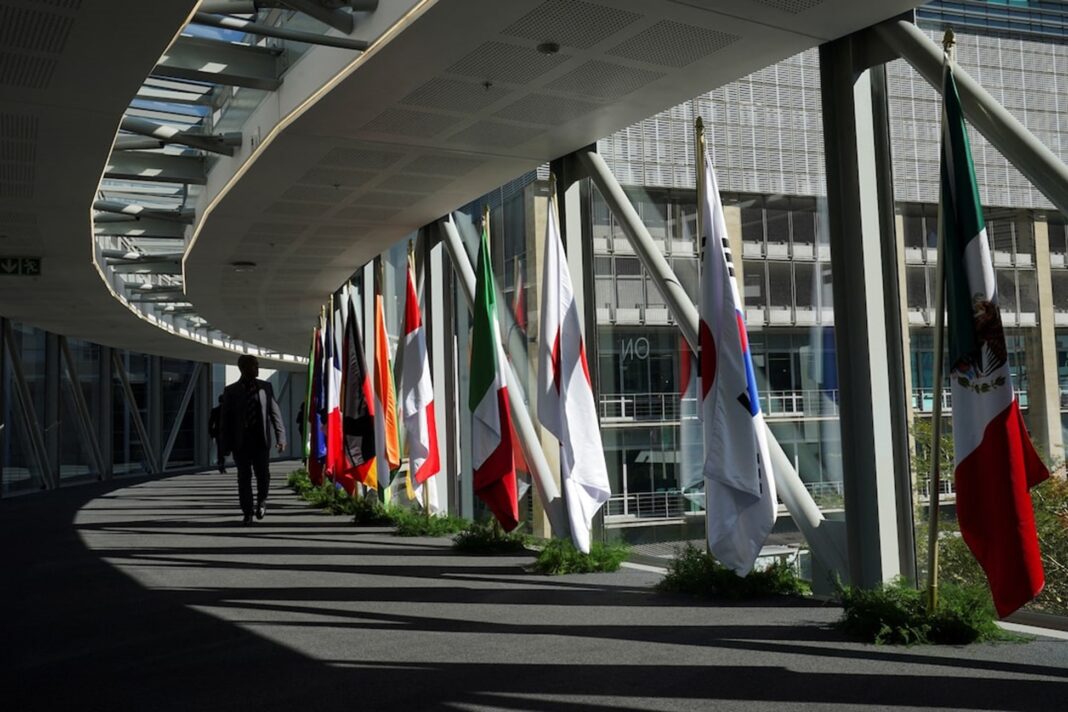
“Last November, this city hosted the G20 Summit under the themes of ‘Solidarity, Equality and Sustainability’,” he said.

“If you leave this room today believing that Johannesburg fails because it does not know how to deliver, you will have misdiagnosed the city and proper diagnostics is at the centre of planning.”

He said the council adopted the Growth and Development Strategy 2040 in October 2011 and that it had not been superseded as of August 2026.

“Since 2016, every attempt to review it has stalled and that departments and entities still reference it, but nobody drives it,” he said.

He said that since the 2016 local government elections, Johannesburg had experienced 10 mayoral tenures involving eight different individuals.

“What it all cost was deferred maintenance, frozen procurement, departments run by acting heads, entity boards suspended mid-term, capital plans never signed,” he said.

“Political instability cannot be the sole or sufficient cause for infrastructure decline.”

He said that the GDS2040 strategy was not officially rejected, but it gradually lost political relevance and ownership, becoming merely symbolic.

“It was not fought over. It was emptied of usefulness altogether, which is a different and a more final, deadly fate,” he said.

He said that the G20 summit succeeded because it had three elements: a fixed date, external authorisation, and unchallengeable credit.

“That is why a city that cannot adopt a plan can host a wonderful summit,” he said.

He proposed that the city’s entire strategic framework should shift from diagnosis to solutions and should de-authorise the long-term plan, draw its authority directly from residents through meaningful public consultation, and give it statutory teeth.

He said each incoming administration should surrender the right to author the city’s future, and that electoral cycles should not determine long-term planning.

“If we do it the way we have done it every single time since 2016, it will be authored by whoever holds the executive chair, resented by whoever does not, and dead by next election,” he said.

“That vicious cycle runs contrary to any vision for Joburg.”

Public Affairs Research Institute Just Transition Programme Lead Tracy Ledger spoke about community participation challenges and opportunities.

Ledger said that participatory democracy is central to developmental local government, involving communities and organisations in decision-making in municipalities.

“We have this requirement for community participation in our legislation, but it’s actually failed to deliver in terms of on-the-ground change,” she said.

“In fact, you actually see at the beginning of each five-year cycle, things are actually quite good, and then it just deteriorates over time. So one of the key things is how to keep up that momentum across a five-year cycle.

ALSO READ: Specialised teams deployed to Rustenburg mining site collapse

She said that documents, policies, and programmes need to be owned by the community to ensure accountability.

“You need transparency, you need communication, you need information and that’s what’s lacking in municipalities. That’s being gate kept purposefully from communities,” she said.

Ledger said that ward committees currently suffer from politicisation and contestation.

“They are just, first of all, not taken seriously. I mean, that’s the sort of biggest thing that people will tell you about them. They are there because they have to be there in terms of the law.”

She said that the committees lack proper training and support, turning participatory processes into perfunctory exercises.

She said the review of the Integrated Development Plan (IDP), a five-year municipal plan that is reviewed annually, is often superficial, with meetings held more as formalities than meaningful exchanges, leaving communities fatigued.

“Councillors often lack the necessary information or training for participatory work. The role of the municipality Speaker is crucial in this regard,” she said.

Ledger stressed the importance of encouraging youth involvement, as young people are increasingly disengaged due to a lack of tangible benefits.

“People in settlements are often excluded or not engaged in the same way or not taken as seriously as those who are living in in the suburbs.”

She warned against relying solely on ICT for participation, as it risks creating distance from communities.

“Public meetings remain vital. We must find ways to preserve their importance,” she said.

She highlighted legal issues related to public participation, noting that there’s very little monitoring or enforcement of community engagement around KPIs or performance management in many municipalities.

“Legislation intends for participation to influence KPIs and performance management but often it doesn’t happen,” she said.

Ledger suggested that government should protect legal spaces for participation, revitalise community partnerships, and explore innovative ways for communities to be involved in water and sanitation projects.

South African Cities Network Programme Manager for Productive Cities Siphelele Ngobese discussed the gap between progressive urban policies and their actual implementation.

Ngobese noted that policies often enable positive outcomes, but their implementation at the governance level is inconsistent.

“Interdepartmental connections that should be seamless are not well institutionalised,” she said.

She said that many cities focus heavily on surveillance technology, despite research showing that its effect on reducing crime can be modest and highly dependent on how and where it is used.

“What we don’t invest in are the things that you know will have long-term effects in terms of social fabric, family disruption, social fragmentation and what it means for equal or equitable economic participation in a city when we have a situation in which you know gender- based violence becomes overwhelming,” she said.

For instance, she said, some departments responsible for lighting install fixtures without recognising their role in safety.

She stressed that rigid performance systems reinforce siloed work, which hinders collaboration.

“KPIs tend to focus on component delivery rather than holistic urban outcomes,” she said.

She warned that poor community engagement leads to strained relationships and voter apathy.

“Things like communication, not just to inform but to make sure that your residents see themselves in the system and as key stakeholders, is essential,” she said.

Ngobese outlined procurement as a significant point of contestation. Although under scrutiny for corruption, it also reflects broader issues of inclusivity.

“Our procurement systems can lock out a large segment of our society from being able to tap into doing business with the state,” she said.

She also referred to ongoing criminal investigations arising from matters exposed by or linked to the Madlanga Commission.

Ngobese said she supports a regional approach to development — one that leverages shared resources across cities and improves regional planning.

“Cities should work together through regional corridors to enhance transport, rail, and knowledge sharing,” she said.

She said that future development will require coalitions of willing cities that collaborate beyond formal legislation.

INSIDE METROS

-Advertisement-spot_img

More articles

LEAVE A REPLY

Please enter your comment!
Please enter your name here

Inside Education Quarterly Print Edition

spot_img

CATHSSETA

spot_img

QCTO

spot_img

AVBOB STEP 12

spot_img

Inside Metros G20 COJ Edition

spot_img

JOZI MY JOZI

spot_img

Inside Education Quarterly Print Edition

spot_img

Latest article