By Johnathan Paoli
Ekurhuleni Finance and Strategy MMC Jongizizwe Dlabathi has called on the metro council to put aside political differences and work together to stabilise the metro and improve service delivery.
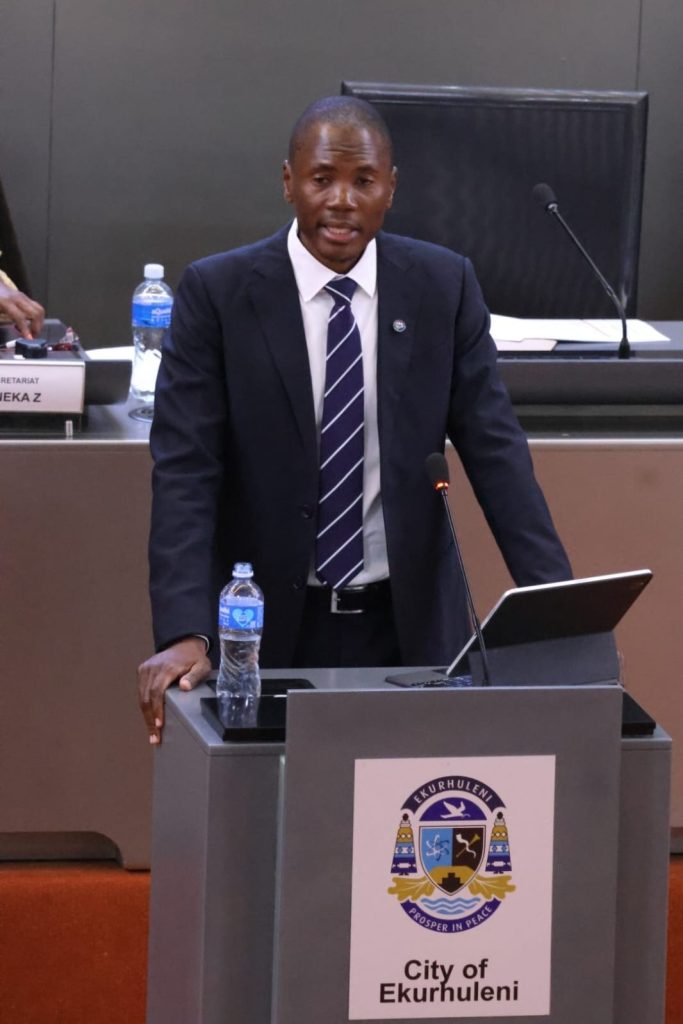
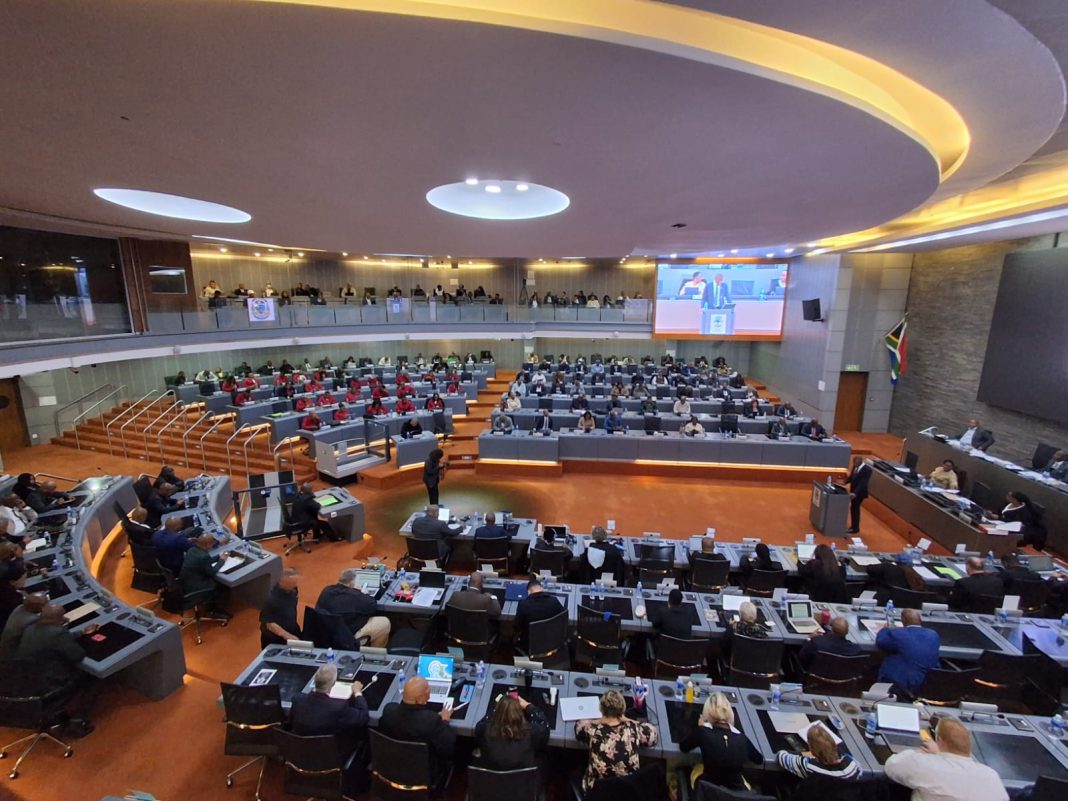
Presenting the R71 billion budget for the 2026/27 financial year on Thursday at the OR Tambo Government Precinct in Germiston, Dlabathi said the municipality’s financial plan was designed to restore public confidence, rebuild infrastructure and strengthen the city’s internal capacity after years of governance instability.
“What we need in this council is for egos to be suppressed in favour of the well-being of our communities, the communities we so claim to represent. On the 1st of July 2026, residents of Ekurhuleni will be expecting clean running water in their taps. They will be expecting flushing toilets, electricity supply, waste collection, fixing of potholes, and ensuring an environmentally friendly city,” he said.
Despite the tabling of the budget, the council meeting later collapsed amid disputes over voting procedures, leaving the budget unadopted.
Dlabathi described the budget as a “realistic, practical and impactful” financial plan focused on repairs and maintenance, infrastructure investment, insourcing municipal functions and improving revenue collection.
The budget proposes several tariff increases from July, although the municipality said some increases had been reduced following public consultations over affordability concerns.
Property rates will increase by 2%, below the current inflation rate of 4%, while sanitation tariffs will rise by 8.35% and water tariffs by 11%, down from the initially proposed 14%.
Refuse removal tariffs for households and businesses will rise by 3.7%, while burial and cemetery tariffs for residents will remain unchanged.
He said the budget was shaped by concerns raised during 23 public consultation meetings, where residents demanded improved roads, better maintenance, stronger electricity supply and improved water infrastructure.
A major focus of the budget is infrastructure maintenance and service delivery.
The city increased its repairs and maintenance budget from R3.8 billion to R4.6 billion, surpassing National Treasury’s benchmark of spending 8% of property, plant and equipment value on maintenance.
Among the key allocations is R702 million for electricity infrastructure maintenance, R830 million for roads and stormwater systems, and R1.9 billion for sanitation and water infrastructure maintenance.
The city also allocated R67 million for traffic light repairs and maintenance, particularly at congestion hotspots, while R5 million has been earmarked for the establishment of an internal asphalt batching plant to reduce reliance on contractors and speed up pothole repairs.
The budget also includes R55 million for repairs to the long-damaged Kwa-Thema transformer and R15 million to begin reconstruction of the Rabasotho Customer Care Centre in Tembisa, with a further R60 million planned in the following financial year.
In a move aimed at reducing outsourcing and strengthening internal municipal capacity, the city plans to recruit 700 permanent cleaners and 290 permanent EMPD officers.
Dlabathi reaffirmed the metro’s commitment to implementing a 70/30 service delivery model, under which 70% of key services would be delivered internally and only 30% outsourced.
The budget also includes R24 million for technical skills development and tertiary education support for young people, while informal settlement upgrading projects received major allocations.
The city allocated R38.5 million for the re-blocking of four informal settlements expected to benefit nearly 4 900 households, while R6.8 million was earmarked for relocating 6 000 households to serviced stands.
Dlabathi outlined efforts to recover municipal revenue after the city uncovered over R2.5 billion in electricity revenue losses linked to weak billing controls and account manipulation.
According to the MMC, about R2 billion had already been billed and R819 million recovered through back-billing by the end of the third quarter of the current financial year.
Opposition parties, however, sharply criticised the budget during debate proceedings.
DA caucus leader Fanyana Nkosi described the budget as “imaginary” and accused the ANC-led administration of repeatedly making promises it could not deliver.
“The budget may sound impressive on paper, but practically it is not achievable under the current ANC government in Ekurhuleni,” Nkosi said.
DA councillor Brendon Pretorius criticised the tariff increases, particularly the increase in property rates.
“The increase in property tariffs will make residents poorer at a time when many households are already under severe financial strain,” Pretorius said.
However, IRASA councillor Izak Berg supported the medium-term budget proposal, saying it focused on key service delivery priorities including water infrastructure, electricity supply and traffic light maintenance.
The council sitting later descended into procedural disputes during voting proceedings after the EFF raised concerns over whether the voting process complied with constitutional requirements.
EFF caucus leader Thembi Msane argued that the municipality had failed to properly apply Section 160(2) of the Constitution regarding voting procedures on budgets and by-laws.
“There was absolutely no need for any confusion. The voting process should have continued,” she said.
The ANC caucus then challenged the process, arguing that the council secretary had improperly taken over functions reserved for the speaker.
Chief whip Pelisa Nkunjana said the ANC requested a caucus break after raising concerns about how the process was handled.
“The Speaker always has to practice his powers in council. We had to come up with a decision that the Speaker must go and get external legal advice,” Nkunjana said.
Speaker of Council John Senona subsequently postponed the budget voting process to the next council sitting pending legal advice, leaving the metro’s R71 billion budget hanging in limbo.
INSIDE METROS