By Charmaine Ndlela
Residents of Daggakraal in Mpumalanga have called for urgent government intervention to address elder abuse, improve accessibility for people with disabilities and expand economic empowerment programmes for women, saying these challenges continue to affect vulnerable members of the community.
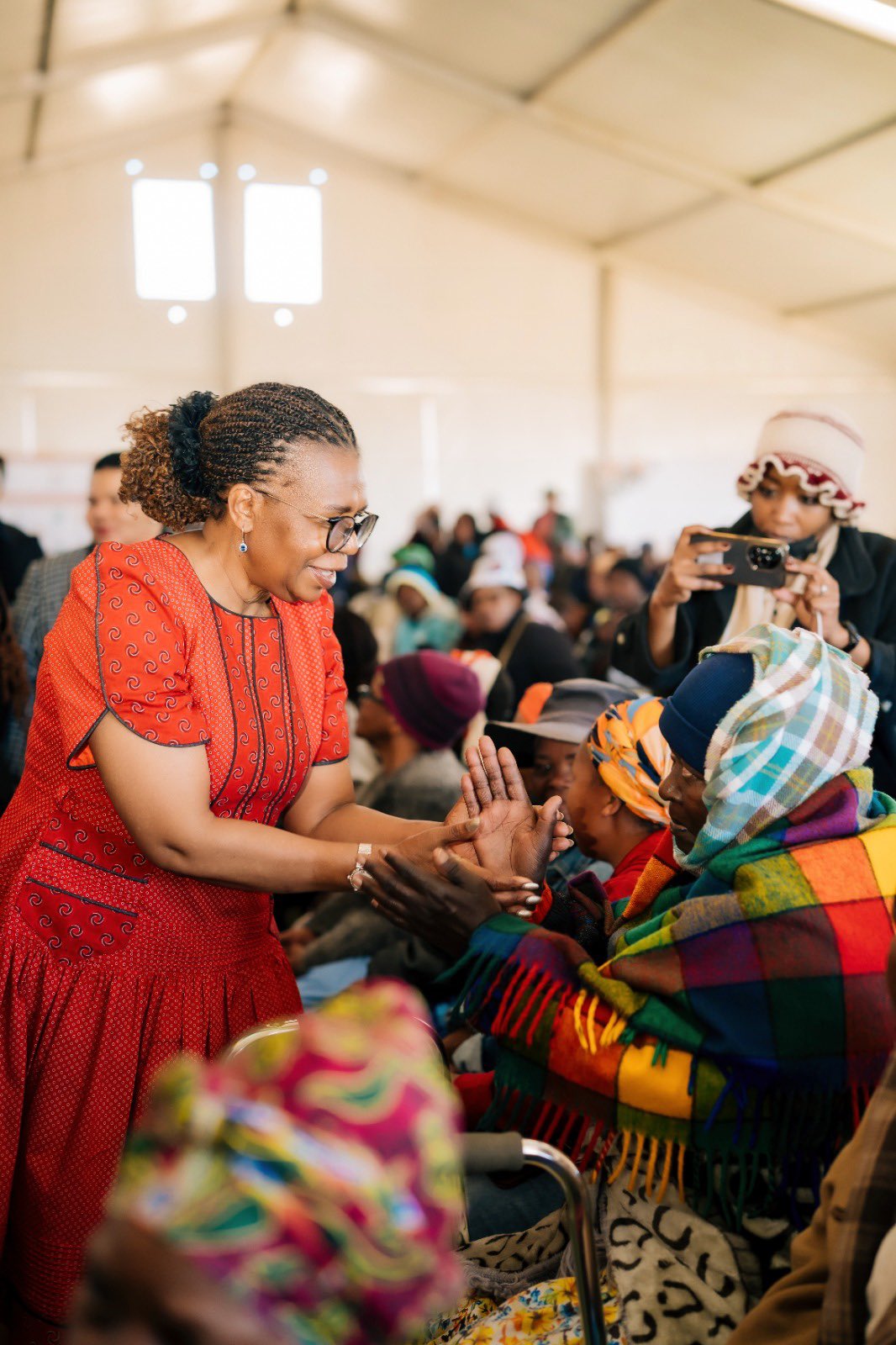
The concerns were raised during the Integrated Community Registration Outreach Programme (ICROP) in Daggakraal on Friday, where Minister of Social Development Dina Pule led a government outreach initiative aimed at bringing essential services closer to communities.
The outreach brought together national, provincial and local government representatives, traditional leaders and strategic partners to provide integrated services while giving residents an opportunity to engage directly with government on issues affecting their daily lives.
Pule was joined by Mpumalanga MEC for Social Development Nompumelelo Hlophe, Dr Pixley Ka Isaka Seme Local Municipality Executive Mayor Bheki Mahlanga, Gert Sibande District Municipality Executive Mayor Mathukuthela Mgomezulu, Kgosi Morena L.E. Moloi and senior officials from the Department of Social Development.
During the engagement, older persons raised concerns about the alleged misuse of social grants, saying funds intended to support vulnerable households were, in some cases, being spent on gambling, alcohol and drugs instead of meeting families’ basic needs.
They also expressed concern over incidents of elder abuse, including the alleged rape and subsequent death of an elderly resident, saying older people continue to face neglect and violence within their communities.
People with disabilities called for greater inclusion and respect, saying they continue to experience discrimination, derogatory name-calling and social stigma. They also appealed for improved road infrastructure, arguing that poor roads make it difficult for wheelchair users to move around safely and independently.
Women attending the outreach highlighted the prevalence of gender-based violence and noted that many households in Daggakraal are headed by women. They urged government to strengthen programmes that promote women’s economic empowerment, saying financial independence would enable more women to leave abusive relationships and build sustainable livelihoods.
The concerns formed part of broader community engagements under ICROP, which seeks to improve access to government services while creating a platform for residents to influence government interventions through their lived experiences.
Ahead of the community dialogue, Pule and Hlophe visited the Department of Social Development-funded Thembalethu Protective Centre, which provides care, shelter and support services to people with disabilities.
Centre representative Tembi Sithole thanked the Departments of Social Development and Health for their continued support, saying the partnership had enabled the facility to continue providing essential care and services.
The minister also visited the department-funded Masisizane Aged Home, where residents welcomed the delegation with songs, dance performances and displays of handcrafted items produced through the centre’s activities.
Established in 2003, the centre has 70 members who participate in weekly exercise sessions, arts and crafts, and programmes aimed at promoting healthy ageing, social inclusion and wellbeing.
Chairperson Gogo Nonzwakazi Thela appealed to the minister to revive the national Active Ageing Programme, saying it had previously given older people opportunities to showcase their talents, compete with peers and remain socially active.
“We always looked forward to Active Ageing. It gave us a stage to sing, dance, compete and show what older persons are capable of. We hope it can return,” she said.
Responding to the concerns raised, Pule said government remains committed to protecting vulnerable groups and ensuring they receive the support they need.
The Department of Social Development said programmes such as ICROP demonstrate government’s commitment to taking services directly to communities, listening to residents and ensuring their experiences inform responsive, people-centred interventions.
INSIDE METROS